
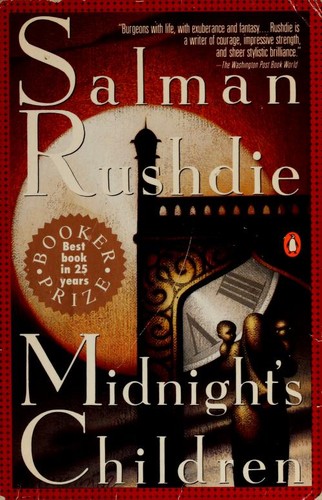
Midnight's Children
Salman Rushdie · b. 1947 · India / England
Why it matters
Saleem Sinai, born at the stroke of India's independence, telepathically bound to his thousand and one midnight twins. It won the Booker of Bookers: magical realism wired to the subcontinent, and the English novel permanently rewired.
At a glance
Digressive, unreliable narration and dense allusive wordplay across a sprawling cast.
Deep dive
Why Saleem insists he's 'handcuffed to history' while quietly admitting he's an unreliable narrator of his own life, and what that says about who gets to own India's story.
Written for readers who have finished the book. No plot recap, and nothing here is safe to read first.
Themes & symbolism
Saleem is born, famously, "handcuffed to history," but the novel's real joke is that he isn't who he claims: a nurse, Mary Pereira, switches him at birth with Shiva, so the boy raised as heir to a prosperous Muslim family is biologically the slum-born son of a street singer and a departed Englishman. Identity in Rushdie's India is revealed as a swap that nobody notices and nobody can undo — invented and administered, not inherited by blood. The Midnight Children's Conference, the telepathic parliament of the thousand and one children born in independence's first hour, starts as a hopeful image of pluralist India and curdles into the same class and religious rivalries splitting the country outside Saleem's head.
The Emergency of 1975–77 and Indira Gandhi, recast as "the Widow," supply the novel's darkest passage: the historical mass-sterilization campaign becomes, in the book, a literal sterilization of the midnight children themselves, the state surgically ending the possibility they represented. Saleem's own vasectomy drains him of memory and magic in the same stroke. His narration is compulsively, comically unreliable — he gets dates wrong, contradicts himself, corrects the record mid-sentence for his listener Padma — because the novel's whole method is to insist that history, personal or national, is always somebody's embellishment, told for an audience and never quite settled.
Padma, the Frame, and the Unreliable Narrator
Saleem narrates aloud, at a pickle factory, to Padma, who wants to marry him and who keeps interrupting his story with impatience and correction. His retractions and admitted errors — a Scheherazade forced to keep talking against his own body's ticking clock — turn narration itself into a survival act, and turn the novel's baggy, digressive shape into a demonstration rather than a flaw: no single teller can be trusted with a country this large.
Chutnification: Pickling as Historical Method
Saleem preserves his story in thirty jars of chutney that correspond to the book's thirty chapters, and names his own method "chutnification" — you can't preserve memory without flavoring, reducing, and distorting it in the process. The novel's own excess, its puns and digressions and magical overgrowth, is that same principle turned into prose style: history pickled rather than embalmed.
The last seal: what actually happens, and why it lands the way it does.
The ending, explained
Narrating from the pickle factory to Padma, who wants to marry him, Saleem predicts that he will disintegrate on his thirty-first birthday — cracking apart into as many pieces as India has people — a date he has arranged to also be his wedding day. The prophecy fuses his body's end to the nation's multiplicity: born as India's living synecdoche, he can only resolve by dissolving into the crowd he was always meant to stand in for, becoming "the dust of the multitudes" rather than remaining a single name. It lands less as plot resolution than formal one — five hundred pages have argued no single narrator can contain a country this large, so the book ends by having its narrator openly fail to stay singular, buffeted apart by too much history.
Where to go next
 Salman Rushdie · 1983ShameLvl 7Medium pace
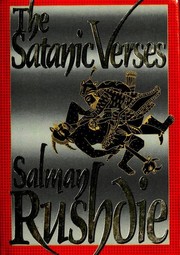 Salman Rushdie · 1988The Satanic VersesLvl 9Slow burn
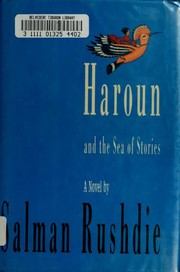 Salman Rushdie · 1990Haroun and the Sea of StoriesLvl 2Fast paced
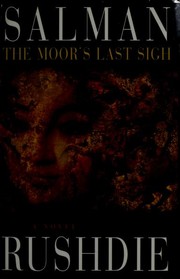 Salman Rushdie · 1995The Moor's Last SighLvl 7Medium pace
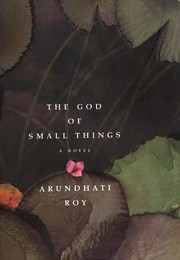 Arundhati Roy · 1997The God of Small ThingsLvl 7Slow burn
 Gabriel García Márquez · 1967One Hundred Years of SolitudeLvl 6Medium pace