

The Glass Palace
Amitav Ghosh · b. 1956 · India
Why it matters
An orphaned boy rises through Burma's teak trade and marries into the exiled royal family's orbit, his descendants scattering across Burma, India, and Malaya through a century of empire and war. Ghosh's warmest, most sweeping family saga.
At a glance
A large multigenerational cast spans a century, but the prose itself stays clear and accessible.
Deep dive
An orphaned street boy in 1885 Mandalay watches British cannon fire end a kingdom, falls for a girl in the exiled queen's household, and spends the next sixty years and three countries trying to make good on a promise made in one afternoon of chaos.
Written for readers who have finished the book. No plot recap, and nothing here is safe to read first.
Themes & symbolism
Rajkumar's rise from orphan to timber magnate is an allegory of colonial capitalism's opportunism running on a private motive: the fortune he builds trading Burmese teak exists, in his own account of it, entirely to make him a plausible husband for Dolly, the exiled queen Supayalat's attendant he glimpsed once as an eleven-year-old during the British sack of Mandalay's royal palace in 1885, so that decades of migrant labor, deforestation, and market speculation are all folded, in Rajkumar's mind, into a single act of romantic devotion.
The novel's geographic sprawl, Burma, India, Malaya, tracks how colonial infrastructure, railways, plantations, the teak and rubber trades, moved people and capital across a British Asia that treated national borders as administrative conveniences rather than real boundaries, until the Japanese invasion of 1942 makes those same migration routes into refugee corridors running in the opposite direction, carrying nearly a million people back out of Burma on foot.
Dolly's own arc, from palace attendant to genteel exile at Ratnagiri to Rajkumar's wife to eventual renunciate, runs as counterpoint to his acquisitive drive throughout, and her late withdrawal into Buddhist practice reads as a rejection of the very fortune Rajkumar spent his whole life building in her name, the novel's clearest statement that empire's material gains and its human costs were never actually the same ledger.
The Exiled Court at Ratnagiri
The historical King Thibaw and Queen Supayalat, last rulers of the Konbaung dynasty, were genuinely exiled by the British to the small coastal town of Ratnagiri in western India after the Third Anglo-Burmese War of 1885, living out decades of genteel house arrest, and Ghosh builds the novel's opening around this real, largely forgotten episode of colonial administration treating a deposed royal family as an inconvenience to be quietly warehoused.
Teak and Rubber, Empire's Twin Economies
The parallel worlds of Burmese teak logging, Rajkumar's fortune, and Malayan rubber plantations, where the family later has interests, show how the British empire's extractive economies across Southeast Asia depended on the same networks of migrant, largely Indian labor the novel's characters keep moving through, prosperity and displacement generated by the identical colonial machinery.
The last seal: what actually happens, and why it lands the way it does.
The ending, explained
Rajkumar's fortune collapses along with Burma itself: as the Japanese invasion sends nearly a million people fleeing overland into India in 1942, his timber yards are bombed and his son Neel, working to save the family's elephants, is crushed under falling logs. Dolly, unable to recover from Neel's death and from watching Rajkumar's life's work erased in weeks, eventually leaves him and enters a Buddhist nunnery at Sagaing, shaving her head and taking robes in a scene that reads as the novel's one clean act of renunciation after hundreds of pages of accumulation. She dies there quietly, years later, during the political isolation that follows Ne Win's 1962 coup, and it takes a full year for word to reach her family in India, a delay Ghosh lets stand for how completely Burma had by then sealed itself off from the very trade and migration routes that built Rajkumar's fortune in the first place.
Where to go next
 Amitav Ghosh · 1988The Shadow LinesLvl 7Slow burn
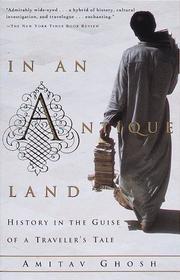 Amitav Ghosh · 1992In an Antique LandLvl 5Slow burn
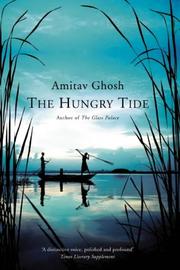 Amitav Ghosh · 2004The Hungry TideLvl 4Medium pace
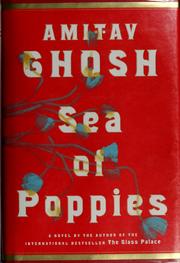 Amitav Ghosh · 2008Sea of PoppiesLvl 6Fast paced
 Salman Rushdie · 1981Midnight's ChildrenLvl 8Medium pace
 Vikram Seth · 1993A Suitable BoyLvl 3Medium pace