
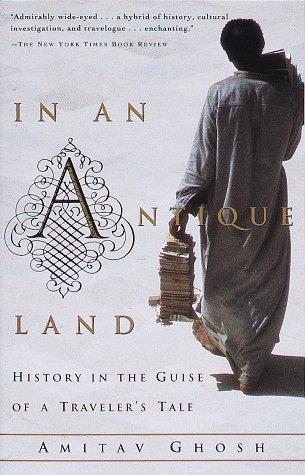
In an Antique Land
Amitav Ghosh · b. 1956 · India
Why it matters
Ghosh's own fieldwork in an Egyptian village braids with his archival reconstruction, drawn from Cairo Geniza documents, of a twelfth-century Jewish merchant and his enslaved Indian clerk. A genre-defying blend of anthropology, travel writing, and buried history.
At a glance
Braided timelines, medieval archival material set against contemporary fieldwork, ask readers to hold two eras at once.
Deep dive
A historian chasing one sentence about a twelfth-century Indian slave through Cairo's medieval trade archives ends up writing the most unlikely dual portrait of Egypt: one eight hundred years old, one from his own two years living in its villages.
Written for readers who have finished the book. No plot recap, and nothing here is safe to read first.
Themes & symbolism
Ghosh interweaves two narratives with no plot connecting them beyond his own presence in both: the reconstruction of Bomma, an Indian slave and trusted business agent of the twelfth-century Jewish merchant Abraham Ben Yiju, built entirely from documents preserved in the Cairo Geniza, and Ghosh's own fieldwork as a doctoral anthropologist living in two Egyptian villages in the 1980s.
The book's quiet argument is that the medieval Indian Ocean trade world, in which a Jewish merchant from Tunisia could do business for decades with a Malabar Coast trading house and entrust real authority to an Indian employee whose own name survives only as a fragment, was more genuinely cosmopolitan, more interconnected across faith and language, than the nation-state world Ghosh keeps colliding with in his fieldwork, where villagers repeatedly ask him whether he worships cows, certain that India and Egypt must be foreign to each other despite centuries of shared trade and Islamic history.
Ghosh's own position, an Indian scholar received by rural Egyptians with a mixture of hospitality and bewildered curiosity, doubles Bomma's: both men are itinerant, cross the same stretch of ocean and desert centuries apart, and depend on a host culture's willingness to make room for a stranger whose full story it will never quite know.
The Geniza: Nine Hundred Years of Paper Nobody Would Destroy
Jewish law forbidding the destruction of any paper bearing God's name left the storeroom of Fustat's Ben Ezra Synagogue accumulating everyday documents, business letters, marriage contracts, court records, for nine centuries without anyone meaning to build an archive at all, and it's this accidental hoard, later carried off piecemeal to Cambridge and elsewhere, that gives twentieth-century scholars like Ghosh their staggeringly detailed record of medieval Mediterranean and Indian Ocean life.
Bomma, Recovered from a Margin
Almost nothing survives of Bomma directly, mostly a handful of mentions in Ben Yiju's own letters naming an Indian slave and agent trusted with real commercial authority in Aden and Mangalore, and Ghosh treats the scarcity of the record as part of the story itself, building a portrait out of gaps and inference rather than pretending to a completeness the documents were never going to support.
Where to go next
 Amitav Ghosh · 1988The Shadow LinesLvl 7Slow burn
 Amitav Ghosh · 2000The Glass PalaceLvl 4Medium pace
 Amitav Ghosh · 2004The Hungry TideLvl 4Medium pace
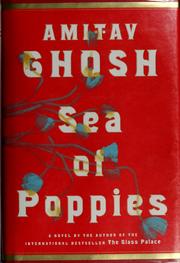 Amitav Ghosh · 2008Sea of PoppiesLvl 6Fast paced
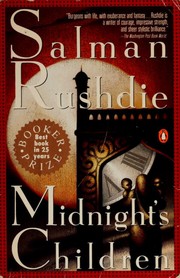 Salman Rushdie · 1981Midnight's ChildrenLvl 8Medium pace
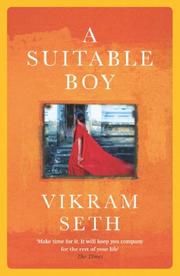 Vikram Seth · 1993A Suitable BoyLvl 3Medium pace