

Amitav Ghosh
India
Meticulous and far-ranging, weaving personal memory into documentary detail; sentences that trace how history's undertow moves individual lives.
Ghosh trained as a social anthropologist, earning a doctorate at Oxford and doing fieldwork in an Egyptian village before turning that discipline's attention to borders, trade routes, and migration into fiction. The Shadow Lines (1988) braids Calcutta, Dhaka, and London across generations, using a family's fractured memories of 1960s communal riots to argue that national borders are drawn in the mind before they're drawn on any map.
He later expanded his historical reach dramatically with the Ibis trilogy, following indentured laborers and opium traders across the nineteenth-century Indian Ocean, and turned increasingly toward climate writing, arguing in nonfiction like The Great Derangement that literary fiction has failed to reckon with ecological catastrophe.
He was the first English-language writer to win India's Jnanpith Award, and continues to divide his time between India and the United States.
Their books in the atlas
- 1988
 The Shadow LinesLvl 7postmodern
 - 1992
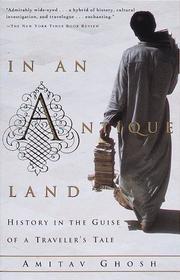 In an Antique LandLvl 5essay
 - 2000
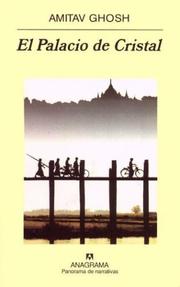 The Glass PalaceLvl 4family saga
 - 2004
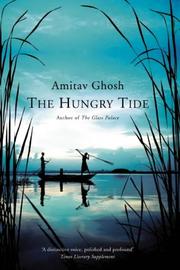 The Hungry TideLvl 4speculative fiction
 - 2008
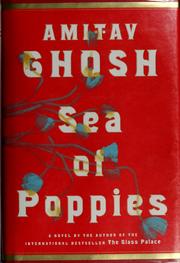 Sea of PoppiesLvl 6historical fiction
Meanwhile, elsewhere
 b. 1954Kazuo IshiguroEngland / JapanWestern Europe · England / Japan
 b. 1940Annie ErnauxFranceWestern Europe · France
 b. 1948Ian McEwanEnglandWestern Europe · England
 b. 1946Julian BarnesEnglandWestern Europe · England
 b. 1953Herta MüllerGermany / RomaniaWestern Europe · Germany / Romania
If you like Ghosh, try
 b. 1947Salman RushdieIndia / Englandshared movement: Postcolonial Literatures · kindred genres: historical fiction, postmodern · same region & era
 b. 1952Vikram SethIndiashared movement: Postcolonial Literatures · kindred genres: historical fiction, family saga · same region & era1956–2019Andrea LevyEnglandshared movement: Postcolonial Literatures · kindred genres: historical fiction, colonial & postcolonial
 b. 1957Geetanjali ShreeIndiashared movement: Postcolonial Literatures · kindred genres: colonial & postcolonial, family saga · same region & era
 1930–2012Barry UnsworthEnglandkindred genres: historical fiction, colonial & postcolonial · neighboring movements
 1939–2023Ayi Kwei ArmahGhanakindred genres: colonial & postcolonial, historical fiction · neighboring movements