
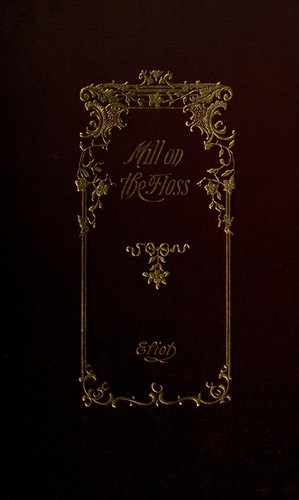
The Mill on the Floss
George Eliot · 1819–1880 · England
Why it matters
Eliot's most autobiographical novel: Maggie Tulliver, too intelligent and too loving for the world that made her. The great English novel of the gifted girl: its flood-borne ending has been argued over ever since.
At a glance
Dense psychological interiority and slow pacing before its abrupt tragic close.
Deep dive
Maggie Tulliver is smarter and hungrier than St Ogg's has any use for, and the book spends her whole life asking what a town like that does with a girl it can't place.
Written for readers who have finished the book. No plot recap, and nothing here is safe to read first.
Themes & symbolism
Maggie Tulliver's intelligence is the problem the novel keeps returning to: she reads faster, feels harder, and wants more than Dorlcote Mill or the town of St Ogg's has any place for a woman to want, and Eliot builds the whole first half of the book around the mismatch between Maggie's mind and the domestic roles, daughter, sister, eventually wife, that are the only shapes available to her. Her brother Tom, dutiful, literal, and increasingly rigid in the moral code he inherits from their bankrupted father, becomes both her closest bond and her harshest judge, and the sibling relationship, tender in childhood and adversarial after, carries more of the book's emotional weight than either of Maggie's two suitors.
Philip Wakem, the physically disabled son of the lawyer whose lawsuit ruins Mr Tulliver, gives Maggie a version of love built on shared intellectual life rather than convention, and their secret meetings in the Red Deeps read as the one relationship where Maggie is allowed to be entirely herself. Tom's furious veto, rooted in his father's dying vow of hatred against the Wakem family, forces Maggie to choose between her own happiness and her brother's idea of family loyalty, and she chooses Tom, a renunciation the novel neither fully endorses nor fully condemns.
Maggie's drifting, half-willed boat trip with her cousin Lucy's fiance Stephen Guest, carried further downriver than either intends until a return the same day becomes impossible, is punished by St Ogg's as though it were a seduction completed rather than a lapse of judgment interrupted; Eliot's real target is the town's refusal to distinguish between the two. Maggie's decision to come back and refuse Stephen, choosing scandal without the affair itself over a marriage built on Lucy's betrayal, is presented as her most genuinely moral act in the book, and it costs her everything a more conventional heroine's actual transgression would have cost her anyway.
The Floss as Inheritance
The river that names the book runs under nearly every plot turn: it powers the mill that is the family's whole identity and collateral, it drowns the Tulliver fortune in the lawsuit's aftermath as surely as any flood, and it finally rises to end the novel in fact rather than metaphor. Eliot spends four hundred pages establishing the Floss as something the Tulliver family has always lived by the grace of, prosperity and catastrophe both arriving on the same water, so that the flood which closes the book reads less as an authorial intervention than as the river finally calling in what it was always owed.
The last seal: what actually happens, and why it lands the way it does.
The ending, explained
Tom, having taken over the mill and repaid his father's debts through years of joyless discipline, is trapped there when the Floss floods catastrophically; Maggie, back in St Ogg's in disgrace after refusing Stephen, rows out alone to reach him. The two are briefly, wordlessly reconciled in the boat, Tom recognizing his sister again after years of coldness, before the flood's debris, a mass of machinery and timber swept downriver, overturns the boat and drowns them both, arms locked together. Eliot gives the siblings in death the unity that St Ogg's, and Tom's own rigidity, denied them in life, closing on the suggestion of a return to their first, unremembering childhood love, a reunion the plot could only grant them by ending both their lives at once.
Where to go next
 George Eliot · 1872MiddlemarchLvl 6Slow burn
 Thomas Hardy · 1891Tess of the d'UrbervillesLvl 4Medium pace
 Jane Austen · 1813Pride and PrejudiceLvl 3Medium pace
 Charlotte Brontë · 1847Jane EyreLvl 4Medium pace
 Elizabeth Gaskell · 1855North and SouthLvl 4Medium pace
 Charles Dickens · 1861Great ExpectationsLvl 4Medium pace