

Tess of the d'Urbervilles
Thomas Hardy · 1840–1928 · England
Why it matters
'A pure woman,' the subtitle insisted, and Victorian England raged. Hardy's Wessex tragedy (innocence destroyed by men, class, and cosmic bad luck) pushed the novel's sympathy past what its age could bear.
At a glance
Clear prose but heavy with fatalistic authorial intrusion and rural dialect.
Deep dive
How Hardy's subtitle turned a seduction plot into an argument with his whole century over what purity means and who gets to define it.
Written for readers who have finished the book. No plot recap, and nothing here is safe to read first.
Themes & symbolism
Hardy's subtitle, "A Pure Woman," is a direct polemic. By insisting on Tess's purity after Alec's assault — a scene Hardy keeps deliberately ambiguous, refusing readers the moral clarity that would let them file her safely as either victim or fallen woman — he attacks the sexual double standard head-on: Angel confesses a premarital affair of his own and is forgiven instantly by Tess, but cannot forgive the identical category of "impurity" in her. The novel's sympathy sits entirely with Tess against a social order — law, church, class, gender — that punishes her for what was done to her rather than anything she chose.
Underneath that social critique runs a colder, second register: Hardy's fatalism. Wessex's landscape charts Tess's decline — the fertile Var Vale, the mechanized threshing machine at Flintcomb-Ash, the pagan stones of Stonehenge — from natural abundance through industrial labor to sacrificial altar, and the narrator repeatedly frames her suffering as cosmic as much as social, with coincidence (a confession letter slipped under the wrong door) doing as much damage as any villain. The famous closing line, invoking "the President of the Immortals" ending his "sport with Tess," fuses both registers at once: Aeschylean fatalism dressed as divine justice, and a last indictment of the moral order that required exactly this outcome.
An Ending England Wouldn't Forgive
The novel's hostile reception — reviewers appalled by its subtitle, its sympathy for a "fallen" woman, and its indictment of respectable men — wounded Hardy badly enough that after the even more savagely received Jude the Obscure a few years later, he abandoned novel-writing for poetry altogether. The outrage wasn't really about plot; it was about Hardy refusing to supply the moral framework Victorian readers expected a story like this to carry, and insisting instead that the framework itself was the problem. Hardy had already been forced to cut and soften the serialized version to get it published at all, restoring the harsher original material only once it appeared in book form — a compromise that makes the finished novel's refusal to relent feel like a deliberate, hard-won correction rather than an accident of first publication.
The last seal: what actually happens, and why it lands the way it does.
The ending, explained
When Angel returns from Brazil repentant and finds Tess has yielded again to Alec out of destitution and family desperation, Tess kills Alec — the one act in the novel where she is agent rather than acted-upon, and it costs her everything. She and Angel share a few days of fugitive happiness before she's arrested asleep at Stonehenge, a site the novel has been steering her toward for chapters. Hardy reports her execution from a distance, a black flag raised over the prison, withholding the death-scene intimacy Tess was denied in life. Angel and Tess's younger sister Liza-Lu walk on together in the final image, honoring Tess's own wish — a muted substitution rather than a consoling ending.
Where to go next
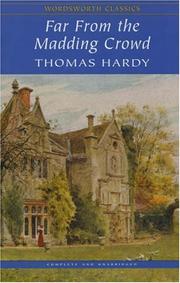 Thomas Hardy · 1874Far from the Madding CrowdLvl 4Medium pace
 Thomas Hardy · 1878The Return of the NativeLvl 6Slow burn
 Thomas Hardy · 1886The Mayor of CasterbridgeLvl 5Medium pace
 Thomas Hardy · 1887The WoodlandersLvl 5Slow burn
 Thomas Hardy · 1895Jude the ObscureLvl 5Slow burn
 George Eliot · 1872MiddlemarchLvl 6Slow burn