
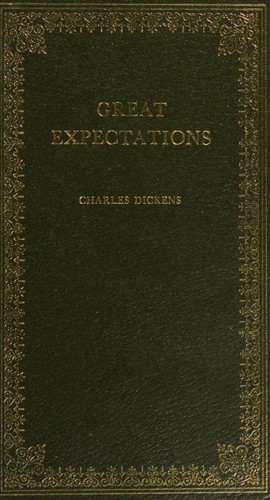
Great Expectations
Charles Dickens · 1812–1870 · England
Why it matters
Dickens's most perfect novel: a blacksmith's boy is anonymously funded into gentility and must reckon with what he owes, and to whom, for the life he never quite earned. Self-making and shame: the Victorian dream audited by its greatest dreamer.
At a glance
Long but linear plot with clear prose; some period diction and legal detail.
Deep dive
Why 'great expectations' reads, from the title on, as a diagnosis rather than a blessing — and what Dickens thinks inherited money does to a decent, unsuspecting boy.
Written for readers who have finished the book. No plot recap, and nothing here is safe to read first.
Themes & symbolism
Pip's shame about Joe and the forge is the novel's real subject long before the plot explains where his money comes from: 'great expectations' is presented, from the title on, as a corruption rather than a gift, and Dickens tracks with brutal precision how quickly inherited gentility curdles a decent boy into someone embarrassed by the man who loved him best. The reveal that his benefactor is Magwitch, the escaped convict he fed out of terror as a child, rather than Miss Havisham, is structured as a deliberate humiliation of every snobbish assumption Pip — and the reader — has been allowed to make about where gentlemanliness actually originates.
Miss Havisham has raised Estella explicitly as an instrument of revenge on men, stopping every clock in Satis House at the moment her own heart was broken and refusing to let time, or feeling, move again; Estella's famous coldness toward Pip isn't a character flaw so much as a successful education, and the novel is careful to make Miss Havisham recognize, too late, exactly what she's built. Pip's parallel guilt — that his own capacity to love got trained out of him by ambition rather than by design, the way Estella's was — is the quieter, more culpable version of the same lesson, since nobody forced his snobbery on him the way Miss Havisham engineered Estella's frigidity.
Joe Gargery's steady, unlettered decency, offered without a trace of reproach even after Pip's cruelest condescension, functions as the novel's moral yardstick precisely because he never develops or changes — everyone else's growth or corruption gets measured against a man who was fully formed and fully good from the first chapter, which is Dickens's rebuke to a plot organized around the idea that expectations, wealth, and education are what make a gentleman.
Two Endings, One Argument
Dickens originally wrote a colder final chapter — a chance, years-later street encounter in which Pip and the widowed Estella exchange a few words and part for good, no reconciliation implied. On his friend Bulwer-Lytton's advice, he rewrote it into the version now standard, ending instead in the moonlit ruins of Satis House with the ambiguous line 'I saw no shadow of another parting from her,' which reads as hopeful without committing to an actual reunion. Critics have argued the revised ending softens the novel's harder verdict on ambition and reward; Dickens's own choice to keep it in every subsequent printing suggests he came to prefer the ambiguity to either a clean marriage plot or a clean refusal of one.
The last seal: what actually happens, and why it lands the way it does.
The ending, explained
Magwitch, recaptured while trying to flee England with Pip's help, dies in prison from injuries sustained in his final struggle with Compeyson, and Pip is finally able to tell him, as he's dying, that the daughter he lost long ago — Estella — is alive, educated, and beautiful, without confessing that she's also the woman Pip loves. Pip loses his expectations along with his benefactor, is nursed through a long illness by the very Joe he once scorned, and rebuilds a modest working life abroad with Herbert rather than as a leisured gentleman. Years later, back at the derelict Satis House, he meets Estella, herself humbled by an abusive marriage to Drummle and finally capable of real feeling; the novel ends on the two of them leaving the ruined garden together in the mist, an ending that trades the false promise of inherited status for the harder-won kind of maturity the book has spent 500 pages earning.
Where to go next
 Charles Dickens · 1838Oliver TwistLvl 4Fast paced
 Charles Dickens · 1839Nicholas NicklebyLvl 4Fast paced
 Charles Dickens · 1843A Christmas CarolLvl 2Fast paced
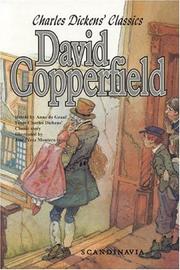 Charles Dickens · 1850David CopperfieldLvl 5Medium pace
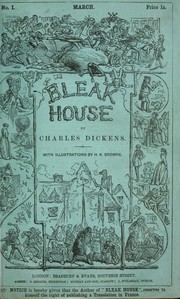 Charles Dickens · 1853Bleak HouseLvl 7Slow burn
 Charles Dickens · 1854Hard TimesLvl 4Medium pace