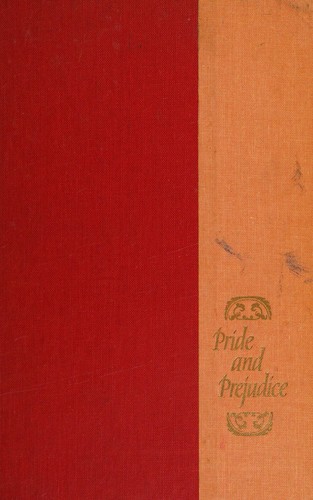
Pride and Prejudice
Jane Austen · 1775–1817 · England
Why it matters
The most perfect comic novel in English: courtship as a duel of intelligence, irony as a moral instrument. Its opening sentence is the most quoted in fiction, and its machinery of misjudgment and self-knowledge has never been improved upon.
At a glance
Elegant but accessible prose; irony requires attention but sentences are clear.
Deep dive
Why the title's two vices belong to both leads at once, and what Austen's narrator is doing every time it slips inside a character's head without announcing it.
Written for readers who have finished the book. No plot recap, and nothing here is safe to read first.
Themes & symbolism
The title names a chiasmus, not a pairing of one flaw to one person: Darcy's pride is the more visible sin, but Elizabeth's prejudice — her instant, satisfied conviction that Wickham's charm and Darcy's stiffness tell her everything she needs to know — does more damage to the plot, since it's what she has to unlearn before the marriage can happen. Austen keeps rearranging who holds which fault; Darcy has to unlearn a class-bound pride that mistakes rudeness for honesty, and both corrections have to land before either character is marriageable material by the novel's own standard, which treats self-knowledge, not attraction, as the real precondition for a good match.
Marriage in the novel is relentlessly an economic instrument before it's a romantic one — the Longbourn entail that will leave the Bennet women homeless on Mr. Bennet's death is the engine driving the whole plot, and Austen refuses to let readers forget it even inside the love story. Charlotte Lucas's frank, unembarrassed marriage to the ridiculous Mr. Collins for security rather than affection isn't played as a cautionary tale so much as a sober alternative reading of the same marriage market Elizabeth is navigating more romantically; Austen lets both choices stand without fully endorsing either, which is part of why the novel reads as clear-eyed rather than merely wish-fulfilling.
Austen's free indirect discourse — narration that slides into a character's own diction and judgment without a tag like 'she thought' — is doing the novel's real argumentative work: readers absorb Elizabeth's confident misreadings of Darcy and Wickham as if they were simply true, then get corrected exactly when she does, on receiving Darcy's letter. The technique makes the reader complicit in Elizabeth's prejudice rather than a spectator to it, which is why the letter scene lands as a genuine reversal rather than an obvious twist.
Lady Catherine's Failed Interference
Lady Catherine de Bourgh's furious visit to Longbourn to extract a promise that Elizabeth will never accept Darcy is structurally the novel's last obstacle, and Austen has it work in precisely the wrong direction for the person orchestrating it: Elizabeth's calm refusal to be bullied is reported back to Darcy and reads to him as proof his suit isn't hopeless, prompting the second, successful proposal. The most powerful character in the book, wielding rank as if it settles every question, gets outmaneuvered by exactly the plain-spoken independence she was trying to stamp out — a fittingly ironic exit for the novel's clearest embodiment of pride without any of Darcy's capacity to learn better.
The last seal: what actually happens, and why it lands the way it does.
The ending, explained
Darcy's second proposal succeeds where the first failed because both parties have done the necessary work in between: he has swallowed his class disdain enough to quietly pay off Wickham and salvage Lydia's ruined reputation without seeking credit, and Elizabeth has replaced her quick first impression with an accurate one. The proposal itself is almost anticlimactic by design — brief, plainly worded, free of the first proposal's insulting frankness — because the novel's real climax was the internal correction, not the sentence that formalizes it. Austen closes with the practical aftermath rather than a swoon: Bingley and Jane settled nearby, Mr. Bennet teasing his favorite daughter, Lady Catherine eventually reconciled once rank yields to the marriage's obvious success — a comic ending that keeps one foot in the economic realism the whole novel insisted on.