
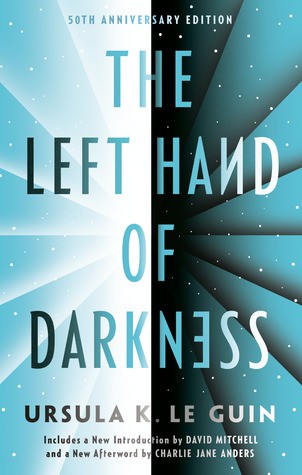
The Left Hand of Darkness
Ursula K. Le Guin · 1929–2018 · United States
Why it matters
An envoy visits a frozen planet whose people have no fixed sex, becoming male or female only in cycles. Le Guin's thought experiment reshaped both science fiction and how the novel could interrogate gender.
At a glance
Invented vocabulary, alternating narrators, and embedded myth slow the world-building.
Deep dive
The scene on the ice that finally shows Genly the person his own categories had been hiding all along.
Written for readers who have finished the book. No plot recap, and nothing here is safe to read first.
Themes & symbolism
Le Guin's central move is to make gender absence generative rather than merely absent: because Gethenians are neuter most of the month and randomly male or female only during kemmer, no one on Gethen can build a fixed identity, or a fixed set of expectations for someone else, on top of sex. Genly, for all his intellectual grasp of this, keeps defaulting to gendered pronouns and gendered assumptions when reading Estraven's motives — is he being devious the way Genly's culture has taught him to read "womanly" behavior, or ambitious the way it reads "manly" behavior — and the novel uses his persistent misreading as its real subject: not what Gethen is, but how hard it is for an outsider to stop importing his own categories onto it.
Estraven, meanwhile, is the novel's most patient rebuttal to Genly's confusion: a political actor whose loyalty to Genly's mission never wavers even while Genly keeps suspecting betrayal, and whose interiority (rendered in the chapters narrated in his own voice) is available to the reader long before Genly earns access to it. The bond that finally forms between them on the Gobrin Ice — undefinable by Genly's home categories of friend, ally, or lover — becomes Le Guin's argument that real intimacy requires abandoning the frameworks you arrived with, not fitting the other person into them.
The novel's political backdrop — Karhide and Orgoreyn circling each other in a slow, procedural rivalry rather than open war — matters because it shows a genderless society is not therefore a peaceful or utopian one; Gethenians still hoard territory, still imprison and interrogate, still produce a bureaucracy capable of sending Estraven into exile on a technicality. Le Guin's thought experiment isolates gender as one variable while leaving ambition, nationalism, and cruelty untouched, which is precisely what makes Gethen feel like a real place instead of a feminist utopia built to prove a point.
The crossing of the ice
The eighty-day trek across the Gobrin Ice strips away every social performance either man has left: no nation, no court, no rank, nothing but the tent, the sledge, and each other's survival. It's here, isolated from every institutional context that had been distorting his perception, that Genly finally sees Estraven whole — including during the one night Estraven enters kemmer and becomes, briefly, female, an attraction both men acknowledge and neither acts on. The restraint is the point: the novel isn't interested in resolving their bond into a familiar romance, but in showing that some intimacies exceed the vocabulary available for them.
The last seal: what actually happens, and why it lands the way it does.
The ending, explained
Having survived the ice and returned to Karhide, Estraven is killed at the border, shot unarmed by guards under the king's orders while trying to cross toward home and clear his own name of the treason charge that exiled him. Genly completes the diplomatic mission days later, bringing Karhide into the Ekumen — a success the novel treats almost as an afterthought. The final chapters, in which Genly visits Estraven's son and father to deliver his friend's own writings, make clear where the book's real weight lies: the political triumph matters far less than the fact that Genly finally learned to see one person clearly, only after that person was already gone.
Where to go next
 Ursula K. Le Guin · 1968A Wizard of EarthseaLvl 3Fast paced
 Ursula K. Le Guin · 1970The Tombs of AtuanLvl 4Medium pace
 Ursula K. Le Guin · 1971The Lathe of HeavenLvl 5Fast paced
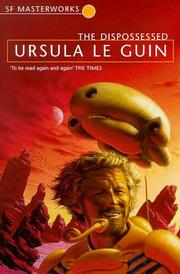 Ursula K. Le Guin · 1974The DispossessedLvl 6Medium pace
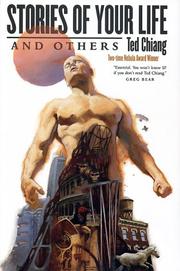 Ted Chiang · 2002Stories of Your Life and OthersLvl 5Medium pace
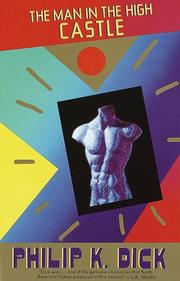 Philip K. Dick · 1962The Man in the High CastleLvl 6Medium pace