
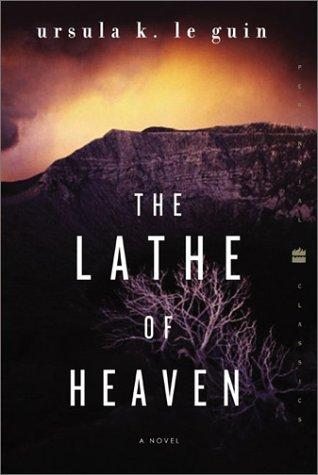
The Lathe of Heaven
Ursula K. Le Guin · 1929–2018 · United States
Why it matters
A man whose dreams literally reshape reality is placed under a psychiatrist eager to engineer utopia through his sleeping mind, with escalating, monstrous unintended consequences. Le Guin's tautest science-fiction novel, a Taoist warning against the will to fix the world.
At a glance
Reality shifts between chapters without warning, requiring readers to track which world is current.
Deep dive
What Dr. Haber actually wants George Orr's dreams to fix, one utopian correction at a time, and why every solution keeps arriving at a cost nobody asked to pay.
Written for readers who have finished the book. No plot recap, and nothing here is safe to read first.
Themes & symbolism
George Orr's effective dreaming retroactively rewrites reality itself, and only he, and eventually his own psychiatrist, remembers the world as it was before each change. Orr seeks treatment specifically because the power terrifies him and he wants it stopped, but Dr. Haber, recognizing an opportunity instead of a symptom, begins directing Orr's dreams through hypnotic suggestion toward large-scale utopian fixes: overpopulation, racial conflict, war.
Le Guin builds the novel on an explicitly Taoist premise, the title itself borrowed from Zhuangzi's warning against forcing heaven's own instrument to your will, and she stages every one of Haber's well-intentioned corrections as catastrophe wearing a straighter face. Ordered to dream away overpopulation, Orr's unconscious resolves it with a retroactive plague that erased billions of people years earlier. Ordered to dream away racial conflict, his mind erases racial difference altogether, making everyone uniformly gray, a solution the novel treats as its own species of violence rather than progress. Haber never reads the pattern as an indictment of his method, only as an engineering problem still awaiting a better instruction.
Heather Lelache, Orr's lawyer and eventually his ally, is one of the few characters who understands early what's happening and objects to it on principle rather than on results, and Le Guin uses her specifically to voice the argument Haber can't hear: that a world improved by force, even successfully, stops being anyone's actual world. The novel is short and moves fast for what it's doing, but its brevity is itself part of the argument, a taut demonstration rather than an epic, since sprawl would only give Haber's logic more room to sound reasonable.
Wu Wei Against the Augmentor
Haber's device, built to enhance Orr's dreaming for analysis, becomes the literal machinery of the will-to-fix the novel is arguing against. When Haber finally straps himself to it and tries effective dreaming himself, lacking Orr's innate psychic stability, reality begins to fray at the edges, and the crisis resolves only once Orr's alien allies restore balance by doing essentially nothing, letting the world's own pattern reassert itself the moment the machine's meddling stops.
Orr's own passivity, which read early in the novel almost as a diagnosable flaw, something Haber keeps trying to cure him of, turns out by the book's end to be the closest thing to wisdom on offer: he never wants to use his power at all, and every character who does, Haber above all, makes the world measurably worse for wanting it. Le Guin isn't arguing that George Orr is a hero in any conventional sense, only that his reluctance to act was, all along, more clear-sighted than anyone around him gave it credit for being.
The last seal: what actually happens, and why it lands the way it does.
The ending, explained
Haber's attempt to seize effective dreaming for himself nearly dissolves reality outright, an unraveling that stops only when the Aliens, part of an invasion Orr once accidentally dreamed into being and who turn out to be peaceable, help Orr re-stabilize the world through simple acceptance rather than correction. Haber is left catatonic, his mind unable to survive contact with the power he spent the book trying to master. Orr keeps an unglamorous, quietly restored ordinary life alongside Heather, no utopia, no triumph, just a world finally allowed to be itself again.
Where to go next
 Ursula K. Le Guin · 1968A Wizard of EarthseaLvl 3Fast paced
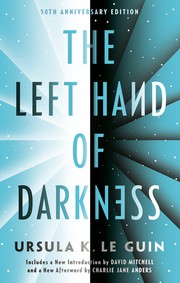 Ursula K. Le Guin · 1969The Left Hand of DarknessLvl 6Medium pace
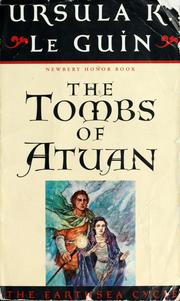 Ursula K. Le Guin · 1970The Tombs of AtuanLvl 4Medium pace
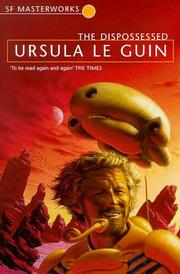 Ursula K. Le Guin · 1974The DispossessedLvl 6Medium pace
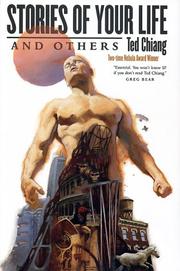 Ted Chiang · 2002Stories of Your Life and OthersLvl 5Medium pace
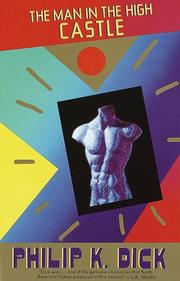 Philip K. Dick · 1962The Man in the High CastleLvl 6Medium pace