
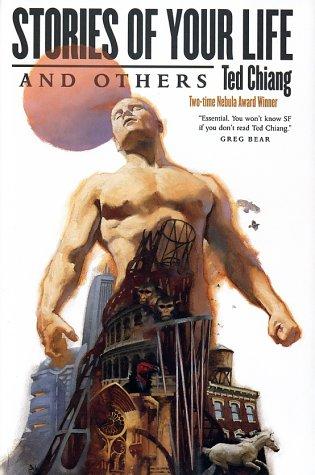
Stories of Your Life and Others
Ted Chiang · b. 1967 · USA
Why it matters
A linguist's work decoding an alien visitor's language begins to unstick her own experience of time, memory, and impending grief, in the collection's justly famous title story. Chiang's debut gathers a decade of meticulously reasoned speculative fiction that treats each story as a philosophical proof.
At a glance
Conceptually dense premises grounded in linguistics, physics, or mathematics reward careful, patient reading.
Deep dive
A linguist's alien-language project, a Babylonian tower that loops back to earth, and a world where miracles are as physically undeniable as weather, staged as rigorous thought experiments rather than metaphors.
Written for readers who have finished the book. No plot recap, and nothing here is safe to read first.
Themes & symbolism
The title story gives linguist Louise Banks a genuinely alien language to decode, Heptapod B, whose circular, semasiographic script encodes whole sentences at once instead of word by word, and Chiang grounds her growing fluency in a real physical principle: Fermat's least-time law, in which a beam of light can be described as choosing the fastest path between two points only if it already knows where it's going. Learning to think in Heptapod B reorganizes how Louise experiences time itself, and the second-person passages addressed to her daughter, which the reader gradually understands are not memory but foreknowledge, only land because Chiang has made the physics rigorous enough to earn the emotional payoff.
Tower of Babylon takes the cosmology of Genesis at face value rather than as myth: a crew of Babylonian miners, some born and raised in villages built partway up the structure itself, spends years climbing a tower to the vault of heaven, tunneling through solid rock at its summit, only to break through into their own familiar earth again, a loop that confirms the universe's actual shape rather than punishing anyone's ambition. Hell Is the Absence of God pushes the same literalism into theology: in a world where angelic visitations physically flatten city blocks and grant fleeting, verified glimpses of heaven, Neil Fisk sets out to love God without expectation of reward after his wife is killed in one such visitation, and Chiang follows the logic of unconditional devotion to its most punishing conclusion.
Fermat's Principle as the Argument, Not the Metaphor
Chiang refuses to let the physics decorate the grief: the essay on least-time optics that Louise translates for the aliens is reproduced in enough real detail that the story's teleological view of time, where an event's end justifies its beginning, has to be taken as a genuine account of how the heptapods perceive existence, not a poetic gesture toward Louise's own foreknowledge of her daughter's fate.
A Tower Built on Genesis, Read Literally
Chiang works out the engineering of a two-hundred-mile ascent with the same rigor he gives the linguistics elsewhere, vertigo, air pressure, the logistics of hauling food and tools to workers who will die before the tower is finished, so that when the miners break through at the top and land back on the earth's own surface, the twist reads as cosmology corrected, not narrative trickery.
Where to go next
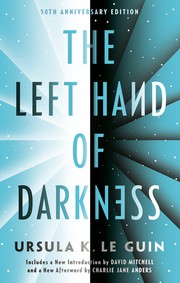 Ursula K. Le Guin · 1969The Left Hand of DarknessLvl 6Medium pace
 Jorge Luis Borges · 1944FiccionesLvl 7Slow burn
 Octavia Butler · 1979KindredLvl 4Fast paced
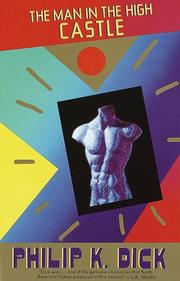 Philip K. Dick · 1962The Man in the High CastleLvl 6Medium pace
 Susanna Clarke · 2020PiranesiLvl 4Slow burn
 Liu Cixin · 2008The Three-Body ProblemLvl 5Fast paced