
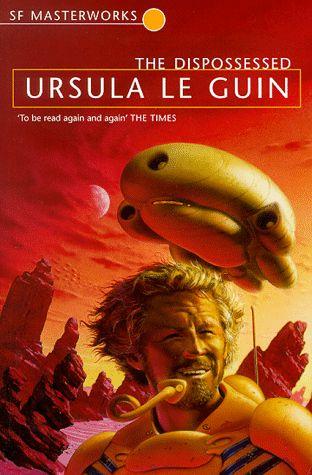
The Dispossessed
Ursula K. Le Guin · 1929–2018 · United States
Why it matters
A physicist travels between twin worlds (an anarchist moon and a capitalist planet), testing both against each other. Le Guin's 'ambiguous utopia,' the rare political novel that gives every side its due.
At a glance
Braided dual timelines and sustained political-philosophical argument require attention.
Deep dive
A physicist from the one anarchist society humanity ever actually built travels to its wealthy twin planet to finish the theory that could reconnect every world, and Le Guin makes you decide for yourself which of his two homes actually deserves him.
Written for readers who have finished the book. No plot recap, and nothing here is safe to read first.
Themes & symbolism
Anarres, the moon settled generations earlier by followers of the revolutionary Odo, runs without government, property, or hierarchy, organized instead around voluntary work syndicates and a constructed language, Pravic, deliberately built to make possessive statements awkward, no natural way to say 'my child' rather than something closer to 'the child, for the time being.' Le Guin doesn't present Anarres as utopia achieved so much as utopia under permanent strain, its founding ideals visibly curdling into their own quieter tyrannies, social pressure replacing law, ambitious or unusual people like Shevek finding that a society without formal hierarchy can still punish difference just as thoroughly, only informally.
Urras, Anarres's wealthy twin planet, splits between the opulent capitalist state of A-Io and the rival communist power Thu, and Shevek travels there to pursue physics unimpeded by an Anarres that has grown suspicious of his ambition and originality. Le Guin structures the whole novel by alternating chapters between Shevek's Anarresti past and his unfolding present on Urras, so the two societies' costs and comforts accumulate side by side rather than being ranked for the reader. Walls, literal and otherwise, run through both halves: the spaceport wall that opens the book, the class walls of A-Io's wealth, the ideological walls Anarres has built around acceptable ambition.
The Wall That Opens the Book
The novel opens on an actual wall ringing Anarres's spaceport, and Le Guin's narration pauses to note that whether the wall keeps something in or keeps the universe out depends entirely on which side of it you're standing on. That single ambiguous image sets the method for everything that follows: freedom, ownership, and order all get described from both sides across the book, Anarresti austerity and Urrasti abundance, revolutionary discipline and revolutionary conformity, with Le Guin declining to hand the reader a settled verdict on which world actually deserves the subtitle she gave the book, an ambiguous utopia.
Pravic and the Grammar of Belonging
Pravic, the language Odo's followers built for Anarres, has no easy possessive construction for people, and 'egoizing,' claiming excessive personal ownership over anything from ideas to relationships, functions as the society's sharpest insult. Even names are assigned randomly by computer at birth specifically to prevent any child inheriting status through a family name. Le Guin treats this linguistic engineering as the revolution's deepest layer, more thorough than any law could be, since it tries to make certain kinds of selfishness not just forbidden but nearly unsayable, and the novel's real tension is watching Shevek, brilliant and genuinely committed to Odonian values, keep running into the limits of what a changed grammar can actually change.
The last seal: what actually happens, and why it lands the way it does.
The ending, explained
Shevek completes his General Temporal Theory, the physics that will make instantaneous communication across space possible, and finds every faction on Urras eager to claim it as exclusive national property, exactly the kind of ownership his entire upbringing was built to make unthinkable. Rather than sell the theory to any single government, he broadcasts it freely and simultaneously to every inhabited world through the Terran and Hainish embassies, refusing anyone a monopoly on it. He then leaves Urras aboard a Hainish ship, accompanied by Ketho, a Hainish crew member curious enough about Anarres to request passage there himself, heading home to a society that may or may not still have room for the man who left it, argued with it, and is now returning changed. Le Guin ends on that unresolved return rather than a triumphant one, keeping faith with the whole novel's refusal to declare either world finished.
Where to go next
 Ursula K. Le Guin · 1968A Wizard of EarthseaLvl 3Fast paced
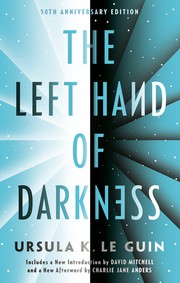 Ursula K. Le Guin · 1969The Left Hand of DarknessLvl 6Medium pace
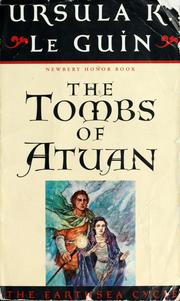 Ursula K. Le Guin · 1970The Tombs of AtuanLvl 4Medium pace
 Ursula K. Le Guin · 1971The Lathe of HeavenLvl 5Fast paced
 Ted Chiang · 2002Stories of Your Life and OthersLvl 5Medium pace
 Philip K. Dick · 1962The Man in the High CastleLvl 6Medium pace