

Ursula K. Le Guin
United States
Plain, unhurried prose that carries the weight of anthropology and myth: patient world-building married to a moral clarity that never turns didactic.
Daughter of the anthropologist Alfred Kroeber and the writer Theodora Kroeber, Le Guin grew up steeped in the ethnography of California's Indigenous peoples, a sensibility she carried into her invented anthropologies of imagined worlds. She met her husband, the historian Charles Le Guin, on a Fulbright-funded voyage to France, and the couple settled in Portland, Oregon, where she raised three children while writing.
Her Earthsea books, beginning with A Wizard of Earthsea, remade children's fantasy around a dragon-haunted archipelago and a brown-skinned hero decades before that was common. The Hainish novels, including The Dispossessed, used science fiction's furthest reaches to run thought experiments on anarchism, gender, and utopia.
She spent her later career arguing, in essays and public lectures, against literary fiction's condescension toward genre, accepting a National Book Foundation medal in 2014 with a speech denouncing publishers who valued profit over writers. She died in Portland in 2018.
Lines of influence
No ancestors recorded: a headwater.
Their books in the atlas
- 1968
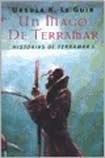 A Wizard of EarthseaLvl 3speculative fiction
 - 1969
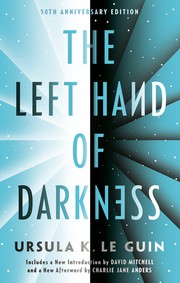 The Left Hand of DarknessLvl 6speculative fiction
 - 1970
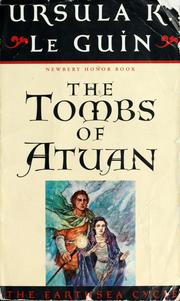 The Tombs of AtuanLvl 4speculative fiction
 - 1971
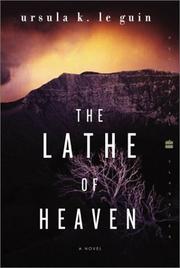 The Lathe of HeavenLvl 5speculative fiction
 - 1974
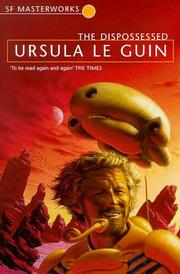 The DispossessedLvl 6speculative fiction
Meanwhile, elsewhere
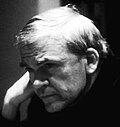 1929–2023Milan KunderaCzechia / FranceRussia & Eastern Europe · Czechia / France
 1930–2024Edna O'BrienIrelandWestern Europe · Ireland1928–2016William TrevorIrelandWestern Europe · Ireland
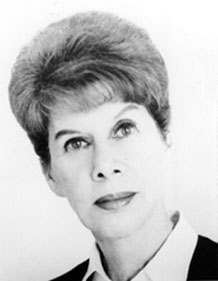 1928–2016Anita BrooknerEnglandWestern Europe · England
 1929–2016Imre KertészHungaryRussia & Eastern Europe · Hungary1925–2016Intizar HusainPakistanSouth Asia · Pakistan
If you like Guin, try
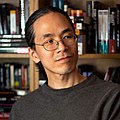 b. 1967Ted ChiangUSAshaped by Guin · shared movement: Literary Speculation · kindred genres: speculative fiction, philosophical novel
 1928–1982Philip K. DickUnited Statesshared movement: Literary Speculation · kindred genres: speculative fiction · same region & era
 1947–2006Octavia ButlerUnited Statesshared movement: Literary Speculation · kindred genres: speculative fiction · same region & era
 b. 1963Liu CixinChinashared movement: Literary Speculation · kindred genres: speculative fiction
 b. 1963Yann MartelCanadakindred genres: speculative fiction, philosophical novel · same region & era
 1899–1986Jorge Luis BorgesArgentinaboth shaped Chiang · kindred genres: philosophical novel, speculative fiction