
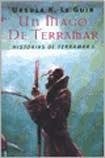
A Wizard of Earthsea
Ursula K. Le Guin · 1929–2018 · United States
Why it matters
A gifted, arrogant boy wizard looses a nameless shadow-thing into the world and spends the book learning to face it by its true name. Le Guin's foundational fantasy, decades ahead of its imitators, builds a magic system on language and humility rather than power.
At a glance
Clean, spare prose and a straightforward quest structure make this Le Guin's most accessible book.
Deep dive
Why the shadow chasing Ged across every sea in Earthsea only stops being dangerous once he stops trying to defeat it, and what that has to do with a magic system where every spell costs something real.
Written for readers who have finished the book. No plot recap, and nothing here is safe to read first.
Themes & symbolism
A wizard's power in Earthsea comes entirely from knowing a thing's true name in the Old Speech, the language dragons still speak natively and that humans mostly lost, which makes magic here not a fantasy of doing whatever you want but an act of precise, humbling knowledge. Le Guin ties this directly to Equilibrium, a Taoist-inflected principle that every spell disturbs a balance somewhere and must be paid for. The first serious lesson Ged receives on Roke isn't a spell at all, it's when not to cast one, a lesson he ignores exactly once, catastrophically, when he raises a spirit from the dead to outdo his rival Jasper and tears the world open instead.
What escapes through that tear is unnamed and formless, and Le Guin spends the back half of the book with Ged fleeing it across island after island rather than fighting it, a structural choice that argues real maturity isn't about defeating an external threat but recognizing an internal one. When Ged finally turns to hunt the shadow instead, sailing beyond every charted island into open water, the name he speaks when they meet is his own: Ged. The shadow was never a monster to be defeated, only the untranslated, disowned part of himself, and naming it is the only kind of victory the book considers real.
A Magic System Built on Restraint, Not Power
Roke's archmage Nemmerle and the island's weatherworkers refuse to alter a storm for hire because changing weather in one place changes climate somewhere else, a principle that runs directly against the genre's usual instinct to make wizards more powerful as a story goes on. Le Guin's innovation is to make competence synonymous with restraint: the measure of a good wizard here isn't how much he can do, it's how much he knows better than to attempt.
Ogion embodies the same ethic before Ged ever reaches Roke, walking the goatherd boy through years of watching weather and naming plants rather than casting a single showy spell, an apprenticeship Ged finds maddeningly slow precisely because it withholds the power he's impatient for. Le Guin plants the book's whole argument in that early frustration: the wizard who wants power for its own sake, as Ged briefly does, is the one who ends up tearing a hole in the world, while the ones who've learned to want nothing more than balance never do.
The last seal: what actually happens, and why it lands the way it does.
The ending, explained
Guided by the dragon Yevaud's cryptic counsel and his old master Ogion's advice to turn and hunt rather than keep running, Ged sails with his friend Vetch beyond all known islands into open sea, where the shadow is finally waiting for him on the water itself. He speaks its name, his own name, and it speaks his name back, and the two forms merge into one, Ged whole and scarred but no longer split against himself. Le Guin denies the scene any trophy or triumphant flourish, just a boat turning home; the victory is entirely internal, and the book insists that's the only kind worth having.
Where to go next
 Ursula K. Le Guin · 1969The Left Hand of DarknessLvl 6Medium pace
 Ursula K. Le Guin · 1970The Tombs of AtuanLvl 4Medium pace
 Ursula K. Le Guin · 1971The Lathe of HeavenLvl 5Fast paced
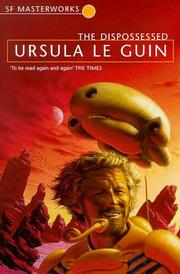 Ursula K. Le Guin · 1974The DispossessedLvl 6Medium pace
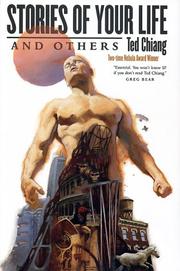 Ted Chiang · 2002Stories of Your Life and OthersLvl 5Medium pace
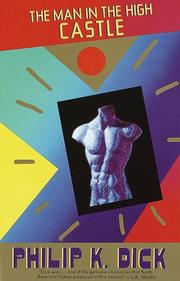 Philip K. Dick · 1962The Man in the High CastleLvl 6Medium pace