
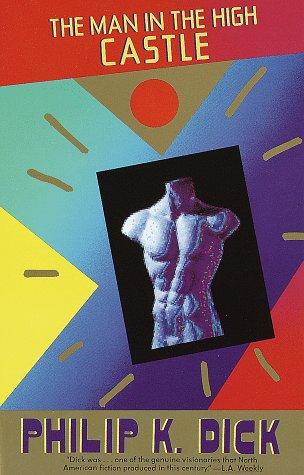
The Man in the High Castle
Philip K. Dick · 1928–1982 · United States
Why it matters
An America that lost the Second World War is divided between Japanese and Nazi occupation, while a banned novel imagines an alternate history closer to our own. Alternate history used to interrogate what makes any reality authentic.
At a glance
Alternate-history worldbuilding and a novel-within-the-novel conceit.
Deep dive
Why a banned novel-within-the-novel keeps unsettling everyone who reads it, and what the I Ching is really doing embedded in the plot of a book about who gets to write history.
Written for readers who have finished the book. No plot recap, and nothing here is safe to read first.
Themes & symbolism
Dick's occupied America runs on forged authenticity: Robert Childan sells fake Americana antiques to status-hungry Japanese collectors who can't tell a genuine Civil War pistol from a factory reproduction, and the novel keeps returning to the anxiety that nothing — an object, a marriage, a national identity — can be verified as real once the systems that used to guarantee meaning (a war's outcome, a government's legitimacy) have been swapped for their opposite. Frank Frink's handmade jewelry, valued by a Japanese buyer precisely because it has no history and no forgery to imitate, becomes the novel's odd answer: authenticity might live in the present tense of making, not in provenance.
The banned novel Hawthorne Abendsen has written, The Grasshopper Lies Heavy, imagines an Allied victory — but not our victory, a different alternate history again, close enough to reality to feel uncanny and wrong enough to remind everyone inside Dick's book that they're already living one layer of fiction removed from whatever 'really' happened. Characters on both sides of the occupation consult the I Ching to make decisions, and Dick famously used it himself to plot sections of the novel, collapsing the distance between the book's metaphysics and its method: chance, oracle, and authorship all become the same problem of who gets to say what's true.
The I Ching as Co-Author
Dick didn't just give his characters the I Ching as a period detail — he consulted it to determine plot turns while drafting, which means the oracle isn't only a theme inside the novel but partly its actual compositional engine. That fact recasts every scene where a character throws hexagrams to decide a marriage, a business deal, or a defection: the reader is watching the book's own method of self-generation performed as content, a rare case of a novel's form and its subject becoming literally the same object.
The last seal: what actually happens, and why it lands the way it does.
The ending, explained
Juliana Frink, who has left her husband Frank and fallen in with a Nazi agent sent to assassinate Abendsen, kills the agent first and travels to confront the reclusive author herself. Abendsen, expecting a monster, gets a woman who has actually read his book closely enough to ask the question he's been avoiding: did he use the I Ching to write it? He admits he did, hexagram by hexagram, and Juliana asks it herself, on his behalf, why Grasshopper exists. The oracle answers with the hexagram for Chung Fu, Inner Truth — meaning, within the novel's own logic, that the alternate history depicted in the banned book is not fiction at all but the actual truth of what happened, and the Axis-occupied America the reader has spent the whole novel inside is the counterfeit. Dick refuses to dramatize this as revelation or reversal; Juliana simply walks out into the night having glimpsed through the false floor of her own reality, and the novel ends on that vertigo rather than resolving it, because resolving it would betray the point.
Where to go next
 Philip K. Dick · 1968Do Androids Dream of Electric Sheep?Lvl 5Fast paced
 Octavia Butler · 1979KindredLvl 4Fast paced
 Yevgeny Zamyatin · 1924WeLvl 5Fast paced
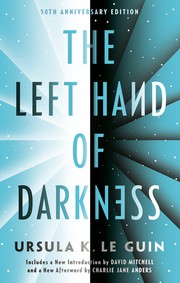 Ursula K. Le Guin · 1969The Left Hand of DarknessLvl 6Medium pace
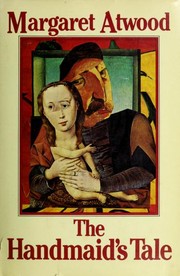 Margaret Atwood · 1985The Handmaid's TaleLvl 5Medium pace
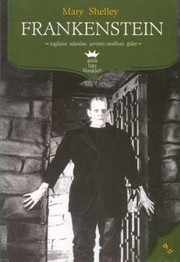 Mary Shelley · 1818FrankensteinLvl 4Medium pace