
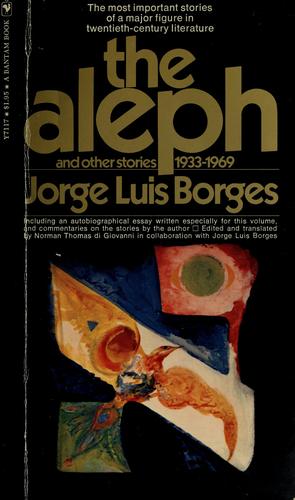
The Aleph
Jorge Luis Borges · 1899–1986 · Argentina
Originally El Aleph (Spanish)
Why it matters
A point in a Buenos Aires basement containing every other point in the universe, plus immortals, minotaurs, and theologians. Borges's second great collection; the metaphysical sublime with an Argentine shrug.
At a glance
Compressed metaphysical conceits and erudite allusion require slow, attentive reading.
Deep dive
How a basement in Buenos Aires that contains the whole universe is really an engine for jealousy, and what two other stories in the same book do with that same appetite for knowing everything.
Written for readers who have finished the book. No plot recap, and nothing here is safe to read first.
Themes & symbolism
The Aleph gives the book its title: a point under the dining room of a house on Calle Garay that contains every point in the universe at once. Borges, the character sharing his author's name, finds it only because Carlos Argentino Daneri, a mediocre poet writing an endless catalogue poem of the whole earth, needs a witness before the house is demolished. What the narrator has actually come for, year after year, is Beatriz Viterbo, the cousin he loved and still mourns. When the Aleph shows him letters proving an intimacy between Beatriz and the cousin he's come to despise, the metaphysics collapses into something smaller and more human: grief curdled into jealousy, dressed up as cosmology.
The Immortal runs the same appetite for totality through a different genre: a Roman tribune searches for a river that grants eternal life and finds the wish answered coldly. The Troglodytes squatting near a ruined, labyrinthine city are the immortals themselves, worn down to indifference because infinite time makes every act, including speech, equally pointless; one of them, filthy and silent, is Homer, who has simply forgotten why any of it mattered. Emma Zunz inverts the problem: instead of a truth too large to hold, Borges gives a young woman a truth too dangerous to speak plainly, so she manufactures a killing disguised as self-defense, built around one real feeling, her fury at the man who destroyed her father, convincing precisely because everything beneath it is true.
Calle Garay Is a Grief, Not a Cosmos
Borges spends the story's final pages doing something the plot doesn't require: lying to Daneri. He tells him he saw nothing in the basement, robbing Daneri of the one confirmation that his terrible poem is built on something real, a petty, satisfying cruelty from a narrator who has just been shown the entire universe and used the moment to settle a private score. The postscript's argument about whether the Aleph was genuine matters less than that swap: infinite knowledge, once acquired, gets spent on jealousy anyway.
A Woman's Fury as the Only True Thing in the Room
Emma Zunz plans her revenge for Aaron Loewenthal's frame-up of her father with the precision of an alibi and none of an alibi's coldness: she arranges to be assaulted by a sailor first, specifically so the marks left on her body will read as evidence of a different crime. Borges's closing line insists the story she tells the police afterward is essentially true, wrong in every date and name but exactly right about her shame and her hatred, which is the whole story's argument about what a confession is actually made of.
Where to go next
 Jorge Luis Borges · 1935A Universal History of InfamyLvl 5Fast paced
 Jorge Luis Borges · 1944FiccionesLvl 7Slow burn
 Jorge Luis Borges · 1975The Book of SandLvl 6Fast paced
 Julio Cortázar · 1959Blow-Up and Other StoriesLvl 6Medium pace
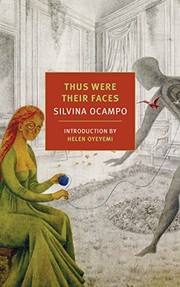 Silvina Ocampo · 1959Thus Were Their FacesLvl 5Fast paced
 Adolfo Bioy Casares · 1940The Invention of MorelLvl 5Fast paced