

The Invention of Morel
Adolfo Bioy Casares · 1914–1999 · Argentina
Originally La invención de Morel (Spanish) · translated by Ruth L. C. Simms
Why it matters
A fugitive hiding on a deserted island grows obsessed with a woman who appears each evening among visitors who never seem to notice him, and starts to suspect the island itself is not what it seems. Bioy's perfect metaphysical fantasy about image, love, and immortality: virtual reality imagined in 1940.
At a glance
A tight, puzzle-like plot demands careful tracking of an unreliable premise.
Deep dive
What Bioy's island machine actually says about the difference between being loved and being merely recorded — decades before anyone called it virtual reality.
Written for readers who have finished the book. No plot recap, and nothing here is safe to read first.
Themes & symbolism
The horror of the novel isn't that the island's guests turn out to be fake — it's how long the fugitive, and the reader alongside him, can go on preferring the beautiful repetition to the truth. Two suns, identical conversations, a week that loops without variation: these aren't glitches so much as clues the narrator resists reading, because reading them would mean giving up Faustine. Bioy is less interested in the mechanics of the machine than in what it reveals about desire — that a perfect, unchanging image can feel more sustaining than an uncertain, responsive person, and that the fugitive's isolation has already primed him to prefer a woman who can never actually reject him.
Morel's diary turns the fugitive's private obsession into a hall of mirrors: the man built his eternal recording device out of his own unrequited love for Faustine, who belonged to someone else during the real week he's immortalized, meaning every person on the island, Morel included, died to make the loop and never knew it. The fugitive falls in love with a projection of a woman already dead, pursuing an affection that was never available even when she was alive to give it — obsession compounding on obsession, each man in the chain mistaking a recorded image for a possible future.
A 1940 Invention Ahead of Its Time
Bioy imagines, decades before the technology existed, a device that captures not just image and sound but the full sensory weight of a recorded week, and treats it as coolly plausible rather than fantastical, which is why the book reads now like an uncannily early theory of virtual reality and recorded media generally: the fear that an image detailed enough might be indistinguishable from — and preferable to — the person it replaces. Borges, introducing the first edition, praised the plot as close to flawless; what he was responding to was this rare thing, a fantastic premise worked out with total logical rigor rather than atmosphere alone.
Love That Erases the Lover
The fugitive's final act — recording himself into the loop beside Faustine — isn't a rescue, it's a surrender. He gives up an actual, if lonely and hunted, life in exchange for an eternal illusion of requited love that requires his own death to produce and that Faustine, being a mere recording herself, can never register or reciprocate. Bioy frames this not as tragic waste exactly but as the logical endpoint of the whole book's argument: once presence and image become indistinguishable to an outside viewer, the difference stops mattering to a man desperate enough to stop insisting on it.
The last seal: what actually happens, and why it lands the way it does.
The ending, explained
Unable to bear only watching Faustine's image loop forever without ever being truly present to her, the fugitive uses Morel's machine on himself, layering a new recording of his own image into the endlessly repeating week so that, from now on, anyone who watches the loop will see him and Faustine spending it together. The process is fatal, as it was for the original group, and his manuscript — the novel itself — ends as his real body presumably dies mid-recording. His last hope isn't to be rescued or remembered accurately; it's narrower and sadder than that: that whoever eventually finds the island will perceive his projected image as genuinely there with her, rather than as an intruder spliced into someone else's memory.
Where to go next
 Jorge Luis Borges · 1944FiccionesLvl 7Slow burn
 César Aira · 1990GhostsLvl 5Slow burn
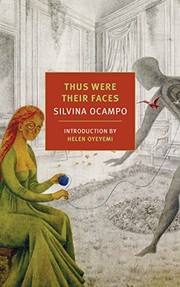 Silvina Ocampo · 1959Thus Were Their FacesLvl 5Fast paced
 Ricardo Piglia · 1980Artificial RespirationLvl 8Slow burn
 Julio Cortázar · 1959Blow-Up and Other StoriesLvl 6Medium pace
 Susanna Clarke · 2020PiranesiLvl 4Slow burn