
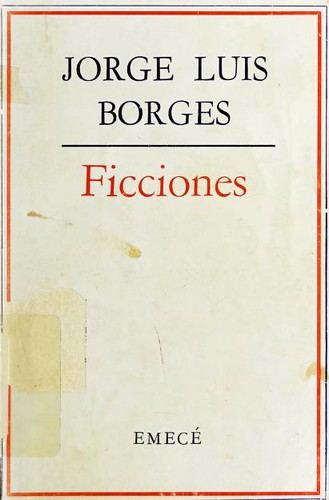
Ficciones
Jorge Luis Borges · 1899–1986 · Argentina
Originally Ficciones (Spanish)
Why it matters
The Library of Babel, forking paths, Pierre Menard rewriting Quixote word for word; seventeen miniature infinities. The most influential story collection of the century: world fiction's geometry redrawn in under two hundred pages.
At a glance
Dense philosophical puzzles and invented bibliographies packed into a few pages each.
Deep dive
How four short stories build entire impossible libraries, forged worlds, and rewritten classics, and why Borges never once raises his voice to sell you on any of them.
Written for readers who have finished the book. No plot recap, and nothing here is safe to read first.
Themes & symbolism
Tlön, Uqbar, Orbis Tertius opens with a phantom entry in a pirated encyclopedia, a country that shouldn't exist described with total bibliographic confidence, and Borges lets the joke curdle into something closer to dread: a secret society spends three centuries drafting an entire fictional planet, complete with its own idealist physics and a grammar with no nouns, and by the story's postscript, objects from that invented world are turning up in the real one. The invasion isn't military. It's that a sufficiently complete, sufficiently seductive system of thought, however invented, out-competes a messier reality once enough people find it easier to believe.
The Library of Babel takes the same idea and strips out the conspiracy: a universe built as an infinite honeycomb of hexagonal rooms holding every possible combination of the alphabet, meaning every book ever written and unfathomably more that are pure gibberish. Borges's librarians orbit between two despairs, an atheist's certainty that meaning is statistically buried and unrecoverable, and a mystic's hope that somewhere a shelf holds the catalogue that would explain all the others. Neither camp can search fast enough to settle it, which is the story's real subject: total information and usable knowledge turn out to be almost opposite conditions.
Pierre Menard, Author of the Quixote plays the joke straightest: a minor Symbolist decides not to copy Cervantes's novel but to compose it again, word for word, from his own twentieth-century French vantage, and Borges's mock-scholarly narrator insists the resulting text, though identical on the page, means something entirely richer, because a reader's own historical position now sits behind every sentence. The Garden of Forking Paths keeps that same interest in branching possibility but wires it to a wartime spy plot, Yu Tsun racing to pass a coded message before he's caught, discovering along the way that his own ancestor once built a labyrinth meant to represent every possible outcome of every decision occurring at once rather than choosing one. Chance and plot, for once in Borges, share the same architecture.
The Forger's Century
Borges wrote most of Ficciones during and just after the Second World War, working as a library assistant in Buenos Aires and going functionally blind by his forties, and the fictional plots keep circling the same real anxiety: what happens when an invented, internally consistent story replaces a true, disorganized one because it is simply more satisfying to believe. Tlön's secret encyclopedists are explicitly compared, in the story's closing lines, to a world sliding toward a totalizing ideology adopted because symmetry is more comforting than history. Borges never names the politics directly. He didn't need to; the mechanism he's describing, a fabricated total system quietly overwriting the actual world's untidiness, was already visible on the front page.
A Career Spent Refusing the Novel
Borges never wrote a novel, and Ficciones makes the refusal into a method rather than a limitation: several of these stories are framed as reviews, encyclopedia entries, or scholarly footnotes about books that don't exist, which lets him deliver a novel's worth of implied plot and philosophy in a few compressed pages. Pierre Menard is the clearest case, a few thousand words of close reading about a book its subject supposedly never finished, doing more work as literary theory than most actual novels manage as fiction. That compression became its own influence: the encyclopedic hoax, the fictional footnote, the story that pretends to summarize a longer book, all trace back to habits Borges developed here out of necessity as much as temperament.
Where to go next
 Jorge Luis Borges · 1935A Universal History of InfamyLvl 5Fast paced
 Jorge Luis Borges · 1949The AlephLvl 7Slow burn
 Jorge Luis Borges · 1975The Book of SandLvl 6Fast paced
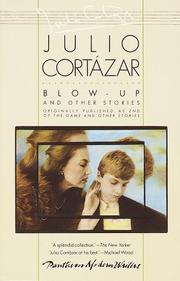 Julio Cortázar · 1959Blow-Up and Other StoriesLvl 6Medium pace
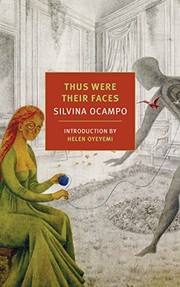 Silvina Ocampo · 1959Thus Were Their FacesLvl 5Fast paced
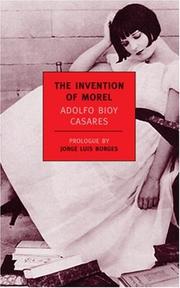 Adolfo Bioy Casares · 1940The Invention of MorelLvl 5Fast paced