
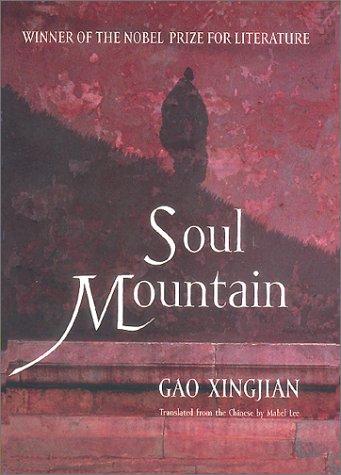
Soul Mountain
Gao Xingjian · b. 1940 · China / France
Originally Lingshan (Chinese) · translated by Mabel Lee
Why it matters
A journey to the source of the Yangtze, undertaken after a false cancer diagnosis, unfolds in alternating first- and second-person voices. Travelogue, memory, and folklore fused into the novel that helped win Gao the first Chinese-language Nobel Prize.
At a glance
Fragmented, plotless structure alternating pronouns and blending genres freely.
Deep dive
Why a writer who just learned he doesn't have cancer sets out anyway on a journey to a mountain that may not exist, and lets his own pronouns fracture along the way.
Written for readers who have finished the book. No plot recap, and nothing here is safe to read first.
Themes & symbolism
The premise inverts a reprieve into a crisis: an unnamed writer receives what turns out to be a false lung cancer diagnosis, the same disease that killed his father, and, freed from an execution date he'd already begun accepting, doesn't return gratefully to his old life but instead sets out toward Lingshan, 'Soul Mountain,' a place a fellow train passenger mentions almost in passing and that no map can confirm. Gao Xingjian made a real journey of some fifteen thousand kilometers over five months through Sichuan's forests and the Yangtze's source country, and the novel's travelogue passages, on panda reserves, Taoist hermits, and Miao and Qiang village ritual, carry the specific weight of things actually seen rather than researched.
The book's most radical choice is grammatical before it's thematic: the narrator splits across 'I' and 'you', with 'you' narrating an entire parallel courtship, an unnamed woman met and lost on the road, that 'I' never directly claims as his own. Loneliness, desire, and the search for Lingshan all turn out to be the same problem asked from different grammatical distances: how much of a self can a person actually locate, and does naming it 'I' bring anyone closer to finding it than calling it 'you' does?
Eighty-One Chapters, Two Pronouns Trading Places
The novel's eighty-one chapters split almost exactly down the middle between two grammatical registers, 'you' narrating the odd chapters through the first half and then the even ones for the rest, 'I' taking the alternating slots, so that partway through the book the two voices trade positions without announcement. Nothing marks the handoff inside the text itself, which is the method: Gao cares less about which pronoun is 'really' narrating than about showing that the distinction was always provisional, a scaffolding the reader supplies rather than one the book insists on.
A Nobel Won in Exile
Gao had already left China for France in 1987 and become a French citizen a decade later when the Swedish Academy awarded him the 2000 Nobel Prize in Literature, the first ever given for a work originally written in Chinese. Beijing's response bordered on erasure: Soul Mountain and Gao's other books remain unpublished on the mainland, and state media downplayed the prize as a political gesture rather than a literary judgment. Mabel Lee's English translation, years in the making alongside Gao himself, became for most non-Chinese readers the only door into a novel whose home country still won't publish it.
Where to go next
 Gao Xingjian · 1999One Man's BibleLvl 7Slow burn
 Xiao Hong · 1935The Field of Life and DeathLvl 6Slow burn
 Mo Yan · 1986Red SorghumLvl 7Fast paced
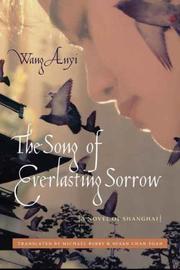 Wang Anyi · 1995The Song of Everlasting SorrowLvl 6Slow burn
 Yan Lianke · 2005Serve the People!Lvl 4Fast paced
 Luo Guanzhong · 1400Romance of the Three KingdomsLvl 8Fast paced