
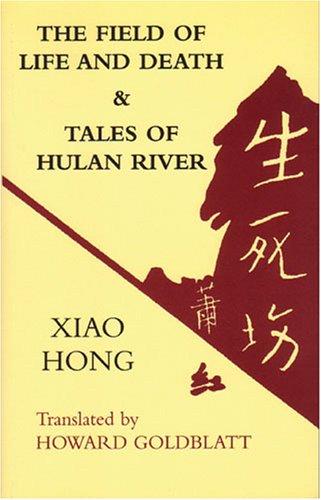
The Field of Life and Death
Xiao Hong · 1911–1942 · China
Originally Shengsi Chang (Chinese) · translated by Howard Goldblatt
Why it matters
Birth, toil, and death cycle through a Manchurian village as Japanese occupation descends. Xiao Hong renders peasant hardship and women's suffering in luminous, compressed prose: introduced by Lu Xun himself.
At a glance
Elliptical, poetic prose with loose chronology and compressed scene-cutting.
Deep dive
Why Xiao Hong lets a Manchurian village's endless cycle of birth and butchery run on for a hundred pages before the Japanese occupation even arrives, and what that ordering does to a reader's sense of which violence is the real subject.
Written for readers who have finished the book. No plot recap, and nothing here is safe to read first.
Themes & symbolism
For roughly the first half of the novel, no Japanese soldier appears at all. Xiao Hong instead spends her attention on birthing scenes staged with the same flat brutality as animal slaughter, a woman labors on a cold kang while a pig is butchered in the yard below, the two cries barely distinguishable through the wall, on Golden Bough's ruinous affair with Chengye, and on the casual violence husbands inflict on wives as an unremarkable feature of village weather. That structure is the argument: by the time occupation actually descends in the novel's second half, the reader has already spent a hundred pages learning that this village's women were dying by degrees long before any occupier showed up to accelerate it.
Golden Bough's arc supplies the clearest measure of that argument. Her affair with Chengye and the pregnancy that follows destroy her standing before she's out of her teens; widowed young, she goes to the city hoping to support herself mending clothes, and finds herself expected to sell her body to customers on top of her needle, then assaulted, not by the Japanese soldiers the title might lead a reader to expect, but by a Chinese soldier supposedly on her own side. Xiao Hong refuses the comforting shape where national occupation is the only violence worth naming; patriarchal village order earns no exemption just because a bigger catastrophe eventually arrives to share the blame.
Lu Xun's Introduction, and What It Got Right
Lu Xun, already China's most influential living writer, wrote the introduction that effectively made the twenty-four-year-old Xiao Hong's reputation with a single blurb, praising the manuscript's raw vitality and its refusal of sentimentality about peasant suffering. His endorsement got the book past a publishing world otherwise cold to an unknown, tubercular young woman writing about assault and butchery in the same flat register, and it's hard to imagine the novel reaching readers at all without it. What Lu Xun singled out has held up: the prose's refusal to soften or explain its cruelties is still the feature critics return to first, decades after his introduction outlived the specific literary politics that produced it.
The last seal: what actually happens, and why it lands the way it does.
The ending, explained
As Japanese forces tighten their hold on the region, the village's earlier miseries are answered rather than replaced by a new one. Old Mother Pockface is killed, and her son Tunnel Legs dies as well, casualties of an occupation that treats the whole village as expendable. Li Qingshan, who had briefly rallied villagers toward armed resistance, abandons that conviction once the actual costs of resisting become clear. Linghua and her grandmother, left with no path forward that doesn't run through starvation or worse, hang themselves rather than wait for the occupation to finish what village life had already started. Xiao Hong closes without a single surviving thread of hope, insisting to the last page that this village's two catastrophes, patriarchal and imperial, were never really in competition for which one killed people faster.
Where to go next
 Xiao Hong · 1942Tales of Hulan RiverLvl 5Slow burn
 Lu Xun · 1921The Real Story of Ah-Q and Other TalesLvl 5Fast paced
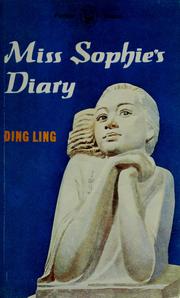 Ding Ling · 1928Miss Sophie's DiaryLvl 4Fast paced
 Lao She · 1937Rickshaw BoyLvl 3Medium pace
 Yu Hua · 1993To LiveLvl 3Fast paced
 Luo Guanzhong · 1400Romance of the Three KingdomsLvl 8Fast paced