
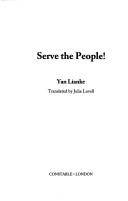
Serve the People!
Yan Lianke · b. 1958 · China
Originally Wei Renmin Fuwu (Chinese) · translated by Julia Lovell
Why it matters
A soldier's wife and her lover fuel a Cultural Revolution-era affair by smashing Mao portraits and slogans as foreplay. Political subversion disguised as farce, promptly banned in China upon publication.
At a glance
Brisk farcical plot, though its political satire assumes Cultural Revolution context.
Deep dive
What a wooden sign moved from its usual place on a dinner table comes to command in a household built entirely on Mao-era slogans, without giving away who ends up owing what.
Written for readers who have finished the book. No plot recap, and nothing here is safe to read first.
Themes & symbolism
Wu Dawang is exactly the model soldier the People's Liberation Army sets out to manufacture: peasant-born, tirelessly obedient, chasing an urban residence permit for his family through nothing but exemplary service. Yan Lianke plants him inside the Division Commander's household as an orderly and gives Liu Lian, the commander's restless young wife, a single instrument of total control: the wooden 'Serve the People!' sign that sits on the dining table by day and, moved to any other spot in the house, becomes her summons. That a slogan engineered to erase the self can be repurposed as a bedroom signal is the novel's whole method in miniature, turning the Party's own language against the discipline it was built to enforce.
The affair's real crescendo isn't sexual so much as iconoclastic: Wu and Liu compete to see who can destroy more of the compound's Mao portraits, plaster busts, and slogan boards, converting desecration into foreplay and foreplay into confession. Yan stages this as the most reckless act either character will ever commit, since in 1967 breaking a plaster Chairman Mao sits close to a capital offense, and the fact that it excites rather than terrifies them says everything about how thoroughly the cult's daily rituals have hollowed into performance for everyone forced to enact them. Wu Dawang's own arc gives the satire its double edge: a man who has built his entire identity on obedience discovers that the one transgression available to him, breaking the very icons he was trained to worship, feels less like rebellion than like the first genuinely free choice he's ever made, which makes his eventual reckoning that much harder to watch.
Banned for the Sign as Much as for the Sex
When Chinese censors banned Serve the People! in 2005, the official complaint singled out both the novel's sexual content and its treatment of Mao himself, precisely the two elements Yan had fused into a single act. The ban did nothing to slow the book's underground readership; excerpts had already spread through literary journals and online forums, and the notoriety cemented Yan's reputation as mainland China's most persistently censored major novelist, a status he has since matched with The Four Books and other work that has never cleared domestic publication either. Julia Lovell's English translation carried the novel to readers Chinese censorship couldn't reach, and its title alone, printed on covers worldwide, kept advertising the exact slogan Beijing wanted the book to stop associating with sex and sabotage.
The last seal: what actually happens, and why it lands the way it does.
The ending, explained
Liu Lian tells Wu she is pregnant and arranges for him to take home leave, framing it as an act of care rather than what it actually is. When his leave ends and he returns to the base, he finds it dismantled: the unit has been reorganized, transferred, and dispersed, and every witness to the affair scattered along with it. Only then does Wu understand that Liu orchestrated the entire relationship to secure an heir she and her husband could raise as legitimately theirs, using the model soldier's own obedience, and his eagerness to be used, to get exactly what she needed from him. The sign that once summoned him to her bed had, in the end, summoned him toward a fatherhood he would never be allowed to claim.
Where to go next
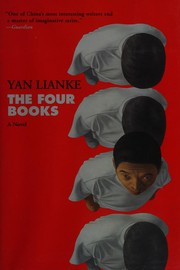 Yan Lianke · 2010The Four BooksLvl 7Medium pace
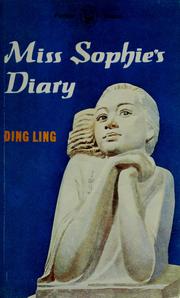 Ding Ling · 1928Miss Sophie's DiaryLvl 4Fast paced
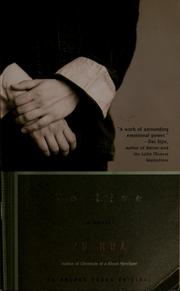 Yu Hua · 1993To LiveLvl 3Fast paced
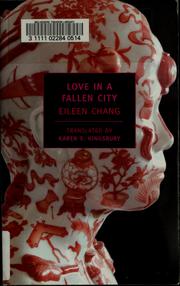 Eileen Chang · 1943Love in a Fallen CityLvl 5Medium pace
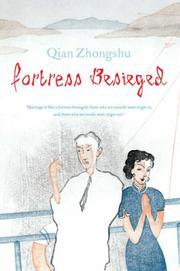 Qian Zhongshu · 1947Fortress BesiegedLvl 5Medium pace
 Luo Guanzhong · 1400Romance of the Three KingdomsLvl 8Fast paced