
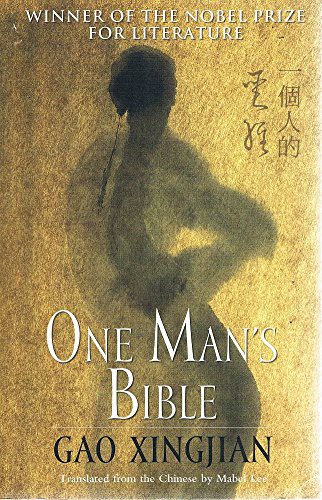
One Man's Bible
Gao Xingjian · b. 1940 · China / France
Originally Yi Ge Ren De Sheng Jing (Chinese) · translated by Mabel Lee
Why it matters
A Chinese writer in European exile confronts Cultural Revolution memories he spent decades suppressing, sliding between 'you' and 'he' to hold the self at arm's length. Gao's post-Nobel novel is as formally daring as Soul Mountain, and more directly political.
At a glance
Alternating second- and third-person narration across two timelines demands careful tracking.
Deep dive
A Chinese writer in exile lets a lover in a Hong Kong hotel room pull him back into memories he'd spent decades refusing to narrate in the first person, and the pronoun he settles on instead says everything about what survival cost him.
Written for readers who have finished the book. No plot recap, and nothing here is safe to read first.
Themes & symbolism
Gao splits his narrator in two, addressed as "you" in the present timeline of exile in Hong Kong and Europe, where an affair with Margarethe, a German Jewish woman fluent in Chinese, keeps surfacing questions about his past, and as "he" in the Cultural Revolution chapters, where the same man survives Mao-era China by becoming expert at self-erasure. The pronoun split isn't a stylistic flourish; it's the novel's actual argument about what survival under that system required, a permanent severance between the person doing the living and the person capable of witnessing it, since witnessing honestly, even to oneself, was itself dangerous.
The Cultural Revolution material draws directly on Gao's own biography, including his decision to burn an entire suitcase of his own manuscripts rather than risk their discovery, and the novel treats that act of self-censorship as the whole era's defining gesture: a writer destroying his own work not under direct threat but under the accurate anticipation of one, complicity manufactured out of fear before the state even has to ask. Margarethe's insistent questioning in the present timeline works as the novel's engine precisely because it forces "you" back toward a self "he" spent years training himself not to be.
Burning His Own Book Before Anyone Asked
The image of the narrator burning his own manuscripts, drawn straight from Gao's life, recurs as the novel's clearest evidence that the Cultural Revolution's violence didn't require direct denunciation to work; anticipated danger was often sufficient to make a writer censor himself more thoroughly than any official could have managed. Gao, writing after winning the Nobel Prize and settled in French exile, uses the memory less to indict any single persecutor than to indict the mechanism itself, a system so total that its subjects did its enforcement work on themselves, willingly, years before anyone came looking. That Gao only allowed himself to write this material at all once he was safely settled in Paris, decades removed from the events themselves, is its own quiet evidence of how long the fear that produced the original burning outlasted the regime that caused it.
The last seal: what actually happens, and why it lands the way it does.
The ending, explained
The novel doesn't resolve into reconciliation between the narrator's two selves so much as accept the split as permanent: Margarethe eventually recedes from the present-day story, replaced by Sylvie, a French artist untroubled by history who wants nothing from him but the man in front of her, and the narrator finds he can offer her exactly that, a self with no political past attached, because the self that lived through the Cultural Revolution has been sealed off in the third person for good. Gao ends not with catharsis but with a kind of practiced fluency in his own fracture, a man who has made peace with being permanently unable to say "I" about the years that mattered most.
Where to go next
 Gao Xingjian · 1990Soul MountainLvl 8Slow burn
 Xiao Hong · 1935The Field of Life and DeathLvl 6Slow burn
 Mo Yan · 1986Red SorghumLvl 7Fast paced
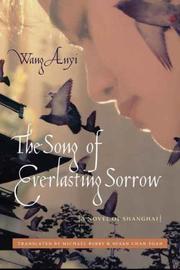 Wang Anyi · 1995The Song of Everlasting SorrowLvl 6Slow burn
 Yan Lianke · 2005Serve the People!Lvl 4Fast paced
 Luo Guanzhong · 1400Romance of the Three KingdomsLvl 8Fast paced