
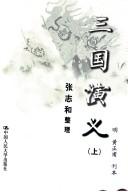
Romance of the Three Kingdoms
Luo Guanzhong · 1330–1400 · China
Originally Sanguo Yanyi (Chinese) · translated by Moss Roberts
Why it matters
The Han empire's collapse into three warring kingdoms unfolds through oath-bound brothers, scheming warlords, and battlefield strategists across a cast of hundreds. One of the Four Great Classical Novels, and the wellspring of Chinese historical and strategy fiction ever since.
At a glance
An enormous cast of historical figures and shifting alliances across decades demands sustained tracking.
Deep dive
Why the novel's opening line about unity and division isn't foreshadowing so much as the whole book's argument, stated before a single battle is fought.
Written for readers who have finished the book. No plot recap, and nothing here is safe to read first.
Themes & symbolism
"The empire, long divided, must unite; long united, must divide" isn't scene-setting, it's thesis. Shu-Han's claim to restore the Han, Wei's pragmatic seizure of the mandate, Wu's regional survival strategy — each kingdom marshals genuine virtue and genuine strategy, and the novel refuses to let any of them win permanently. Read against Confucian and Daoist historiography, this is cyclical determinism as literary structure: dynasties rise on virtue and collapse on corruption, and no cast of heroes, however brilliant, gets to arrest the wheel.
Loyalty (yi) is the currency the novel actually cares about pricing. The Peach Garden oath binding Liu Bei, Guan Yu, and Zhang Fei as sworn brothers becomes the moral spine the whole narrative measures itself against, and the novel keeps testing whether that loyalty is a virtue or a liability — most famously when Guan Yu, cornered at Huarong Pass, lets his sworn enemy Cao Cao escape out of a personal debt of gratitude, undercutting Shu's larger strategic cause for the sake of a private code. All three brothers eventually die chasing consequences of that same code — Guan Yu executed by Wu, Zhang Fei murdered by his own subordinates, Liu Bei dead from grief and a failed war of vengeance — and the novel never quite decides whether that's tragedy or the point.
Zhuge Liang and the Limits of Genius
Zhuge Liang's strategic set pieces — the empty-fort bluff that turns bare walls into a trap, the straw boats sent to "borrow" a hundred thousand arrows from an enemy fleet, the fire that wins Red Cliffs — made him Chinese literature's template for the strategist as near-supernatural figure, durable enough that "Kongming" is still shorthand for cunning centuries later, embedded in everyday chengyu. But the novel plays fair with its own thesis: his Six Expeditions against Wei end in stalemate and exhaustion, and he dies in camp with the mandate's outcome still unsettled. Even the era's most brilliant single mind can't outmaneuver a historical cycle the book has already told you is coming.
That failure is the novel's quiet rebuttal to the wuxia-adjacent genius myth it otherwise seems to be building. Zhuge Liang serves a doomed cause, Shu-Han, with total competence and total loyalty, on behalf of Liu Bei's dying wish that he continue restoring the Han — and loses anyway, generation after generation, to Wei's greater resources and to time itself. The novel admires him precisely because his brilliance can't buy the ending he's fighting for, which is the same lesson every kingdom in the book eventually learns.
The last seal: what actually happens, and why it lands the way it does.
The ending, explained
None of the three kingdoms wins the ending the novel spent hundreds of chapters building toward. Shu-Han falls to Wei; Wei is in turn usurped from within by the Sima family; and it's that new Jin dynasty, not any of the heroic houses readers have spent the whole book following, that finally reunifies China. The novel's famous opening line about division and unity turns out to be structural promise rather than color: the book closes by delivering exactly the reunification it predicted, just accomplished by an outside power rather than by the brotherhood, virtue, or genius the narrative spent its length celebrating — a deliberately deflating close that subordinates every individual triumph to the larger, indifferent cycle of history repeating itself.
Where to go next
 Shi Nai'an · 1370Water MarginLvl 7Fast paced
 Wu Cheng'en · 1592Journey to the WestLvl 6Fast paced
 Cao Xueqin · 1791Dream of the Red ChamberLvl 9Slow burn
 Lao She · 1937Rickshaw BoyLvl 3Medium pace
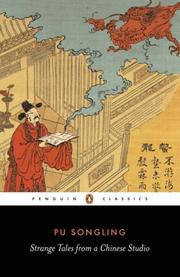 Pu Songling · 1766Strange Tales from a Chinese StudioLvl 5Fast paced
 Mo Yan · 1986Red SorghumLvl 7Fast paced