
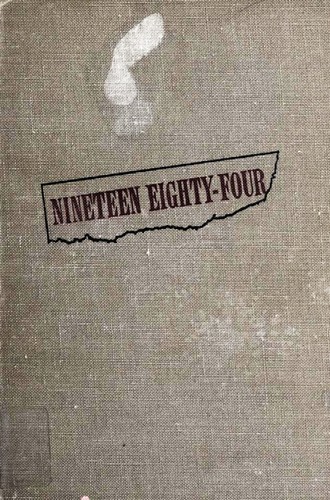
Nineteen Eighty-Four
George Orwell · 1903–1950 · England
Why it matters
Big Brother, doublethink, the memory hole, Room 101: a totalitarian future so precisely imagined it became the vocabulary we use for our own. The century's definitive dystopia, and its most quoted.
At a glance
Plain, propulsive prose, though its appended Newspeak essay rewards close attention.
Deep dive
The Appendix on Newspeak is written in the past tense — which means, buried in the back matter, Orwell may have hidden the one hopeful fact in the whole book.
Written for readers who have finished the book. No plot recap, and nothing here is safe to read first.
Themes & symbolism
Orwell's real subject isn't surveillance but language — Newspeak is designed so that by 2050 certain thoughts will be literally unsayable, "not because they were forbidden, but because there would be no words in which to express them." That's a more totalizing form of control than any telescreen: you don't need to watch a man who no longer has the vocabulary to think against you. The paperweight Winston buys, a piece of coral suspended in glass, becomes his private symbol of an unmonitored interior life and an unaltered past — which is exactly why the Party shatters it the moment it raids his and Julia's room above Mr Charrington's shop.
The Ministry of Truth's daily rewriting of history — Oceania has always been at war with Eastasia, yesterday's headline never existed — makes the same argument in a different register: control the record and you control what's thinkable as true, since, as O'Brien tells Winston, "reality exists in the human mind, and nowhere else." Room 101 completes the design. It isn't generic torture; it's torture custom-built to each prisoner's deepest fear, because the Party doesn't just want obedience, it wants Winston to want the thing he's being forced into — to betray Julia not under duress but as a genuine, willing act. That distinction, between compliance and belief, is the entire difference between a police state and Orwell's Oceania.
The Appendix's Buried Optimism
Orwell appends a dry linguistic essay, "The Principles of Newspeak," to the novel's end — and writes it entirely in the past tense, describing Newspeak as a project that was underway and was never completed by its target date of 2050. Critics have long read this as Orwell's one deliberately smuggled-in hope: whoever is narrating the Appendix is writing from a future in which Newspeak failed and Standard English survived to describe it, meaning Oceania's regime, however total it feels from inside Winston's story, did not last forever. Orwell never confirms it outright — but the tense is doing real work.
Where the Nightmare Came From
Orwell had watched propaganda from the inside, producing programming for the BBC's Eastern Service during the war, and Room 101 is named after an actual BBC meeting room he sat through tedious sessions in. The novel fuses that bureaucratic banality with what he'd witnessed of Stalinism — show trials, vanished photographs, rewritten front pages — and Britain's own wartime Ministry of Information. Big Brother's mustache borrows visibly from Stalin's propaganda image; the horror of Oceania is that almost none of its machinery is invented, only extended.
The last seal: what actually happens, and why it lands the way it does.
The ending, explained
In Room 101, faced with the cage of starved rats he fears more than death, Winston breaks completely and screams for the torture to be inflicted on Julia instead — the one betrayal the Party actually wanted, since it proves love can be reached and overridden, not just behavior. Released and hollowed out, he meets Julia once more; both admit what they did to each other and feel nothing, the current between them dead. Sitting in the Chestnut Tree Café, half-drunk on Victory Gin, Winston watches a bulletin celebrating a military victory and feels a rush of genuine love for Big Brother's face on the telescreen. The famous closing line — "He loved Big Brother" — is the point: Oceania's victory isn't Winston's silence, it's the successful replacement of his interior self with the Party's, achieved from the inside out.
Where to go next
 George Orwell · 1945Animal FarmLvl 2Fast paced
 Adam Johnson · 2012The Orphan Master's SonLvl 6Fast paced
 Anthony Burgess · 1962A Clockwork OrangeLvl 7Fast paced
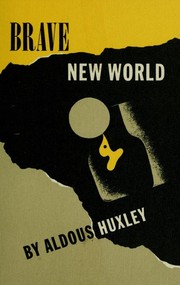 Aldous Huxley · 1932Brave New WorldLvl 4Medium pace
 Evelyn Waugh · 1945Brideshead RevisitedLvl 5Medium pace
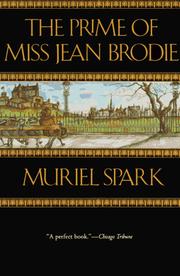 Muriel Spark · 1961The Prime of Miss Jean BrodieLvl 4Fast paced