
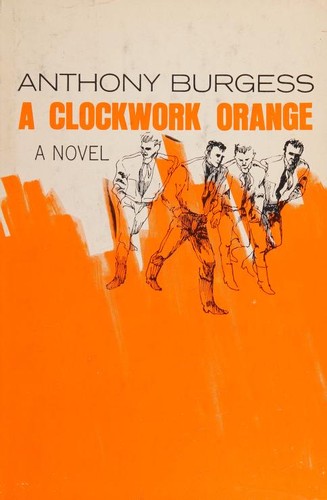
A Clockwork Orange
Anthony Burgess · 1917–1993 · England
Why it matters
A teenage gang leader's ultraviolence is narrated in Nadsat, an invented slang of Russian-inflected teen argot. Burgess asks whether a state has the right to erase a monster's capacity for choice, evil included.
At a glance
Narrated in Nadsat, an invented slang requiring sustained decoding throughout.
Deep dive
The novel you can buy today isn't always the one Burgess actually wrote the ending to — and the difference is the whole argument.
Written for readers who have finished the book. No plot recap, and nothing here is safe to read first.
Themes & symbolism
Nadsat, the Russian-inflected teen slang Alex narrates in, is often praised for its music, but its real function is moral insulation: 'the old ultra-violence' rendered in invented, faintly comic vocabulary (a beating is a 'tolchock,' a rape is barely named at all) lets Burgess stage horrific violence at a linguistic remove that implicates the reader in exactly the aestheticizing pleasure Alex himself takes in cruelty — you're seduced by the voice before you can fully process what the voice is describing, which is the point.
The Ludovico Technique — conditioning Alex to physical nausea at the mere thought of violence by pairing it with vomit-inducing drugs and (accidentally, since the prison psychiatrists reuse a Beethoven-scored film) the music he loves most — is Burgess's central provocation: Alex becomes incapable of violence, but also of art, sex, and self-defense, and the novel insists that a man engineered into goodness has been stripped of moral agency altogether, not improved by it. The prison chaplain says as much explicitly, warning that 'goodness is something chosen,' and Burgess structures the whole second act as proof that a state which can switch off a citizen's capacity for evil has also switched off the only thing that made him a person rather than a mechanism — a clockwork orange, organic on the outside, wound up and predictable within.
Alex's genuine, uncomplicated love of Beethoven and Mozart running alongside his taste for rape and assault is Burgess refusing the century's most comforting lie about art — that cultivated aesthetic sensitivity makes people more humane — years before that same juxtaposition of classical music and atrocity became a Holocaust-literature commonplace; Alex's synesthetic rapture at the Ninth Symphony is rendered in the same intense, sensuous prose as his violence, and the novel never lets the reader resolve the discomfort of the two running on the exact same wiring.
The Missing 21st Chapter
Burgess wrote the novel in twenty-one chapters — twenty-one standing, in his numerologically minded design, for the traditional age of adulthood — but his American publisher insisted the book would land harder without the final chapter, in which an older, bored Alex drifts away from violence entirely of his own accord and starts imagining a wife and a son. Burgess, needing the money, agreed, and for over two decades American readers, including Stanley Kubrick, who adapted the truncated US text for his 1971 film, knew only the twenty-chapter version ending on Alex's cheerful relapse into 'the old ultra-violence.' The complete twenty-one-chapter text wasn't published in the United States until 1986, by which point Kubrick's ending — bleaker, funnier, and far more famous — had effectively become the story's default shape for a generation of readers and viewers who'd never seen the chapter Burgess actually meant as the book's real conclusion.
The last seal: what actually happens, and why it lands the way it does.
The ending, explained
In Burgess's chapter twenty, the Ludovico conditioning is reversed by a government eager to defuse a scandal, and Alex is restored to full capacity for violence, savoring a fantasy of assault to Beethoven as the state rearms its own monster for political convenience. Kubrick's film, and the American edition it adapted, stop there. Burgess's actual chapter twenty-one continues: eighteen months on, running a new gang, Alex finds himself abruptly bored by violence, drifts into a café, and by chance meets Pete, his old accomplice, now married, employed, contentedly ordinary. The encounter triggers something like maturity — Alex starts imagining fatherhood and resolves, unprompted by any prison or drug, to grow up. Burgess's point was explicitly developmental rather than redemptive: violence, in his reading, is something most young men simply age out of, which makes it a far less alarming subject than either the state's forced cure or the shock ending most readers actually remember.
Where to go next
 Anthony Burgess · 1980Earthly PowersLvl 7Medium pace
 Muriel Spark · 1961The Prime of Miss Jean BrodieLvl 4Fast paced
 Kingsley Amis · 1986The Old DevilsLvl 4Medium pace
 George Orwell · 1949Nineteen Eighty-FourLvl 4Fast paced
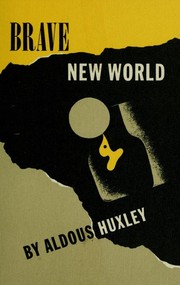 Aldous Huxley · 1932Brave New WorldLvl 4Medium pace
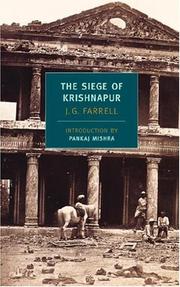 J. G. Farrell · 1973The Siege of KrishnapurLvl 5Medium pace