
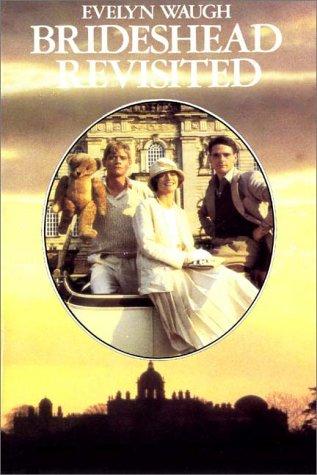
Brideshead Revisited
Evelyn Waugh · 1903–1966 · England
Why it matters
An officer recalls his enchantment with a doomed aristocratic Catholic family between the wars. Waugh trades his usual satire for elegy: nostalgia, faith, and lost grandeur rendered with a scalpel.
At a glance
Lush, nostalgic prose and a leisurely retrospective structure reward patience.
Deep dive
A middle-aged army officer stumbles back onto the country house of his youth, and Waugh turns the resulting flood of memory into an argument for grace he isn't sure he wants to make.
Written for readers who have finished the book. No plot recap, and nothing here is safe to read first.
Themes & symbolism
Charles Ryder's narration is explicitly retrospective and explicitly nostalgic — the novel's subtitle, 'The Sacred and Profane Memories of Captain Charles Ryder,' signals from the outset that this is memory doing moral work, not objective record — and Waugh uses that unreliability deliberately: Charles's Oxford idyll with Sebastian Flyte is rendered in the novel's most seductive prose precisely because Charles, an agnostic aesthete, is constructing the golden age he needs in order to explain everything that follows as a fall from it. The famous opening image of the ruined, army-requisitioned house triggers the whole flashback structure, so the entire novel is staged as elegy before a single scene of the remembered past has even begun.
Sebastian's disintegration into alcoholism, and his final years serving as an unofficial porter at a North African monastery, is the novel's least sentimental passage and its clearest statement of what Waugh actually believes redemption looks like: not a cure, not a return to charm, but a diminished, humiliated, barely functional holiness that has nothing to do with the beauty Charles fell in love with at Oxford. Waugh refuses Charles — and the reader — the satisfaction of a redeemed, healthy Sebastian, insisting instead that grace can operate through wreckage rather than despite it.
Lady Marchmain's suffocating Catholic piety is presented through Charles's skeptical eyes as a genuinely destructive force — it's implicated in Sebastian's flight into drink and exile — and yet the novel's own theology, articulated by Cordelia's talk of the 'twitch upon the thread,' insists that the faith Lady Marchmain embodied so damagingly is nonetheless true and will eventually reclaim every apparently lost Flyte, including the alcoholic Sebastian and the adulterous Julia. Waugh builds an uncomfortable double vision on purpose: the institution's human agents can be genuinely harmful while the thing they represent remains, in the novel's own terms, real and finally inescapable.
A Wartime Novel About a Lost World
Waugh wrote Brideshead in 1944 while on leave from military service, and later admitted the wartime paper rationing and his own anticipation of an impoverished postwar England pushed him toward what he called, with characteristic self-criticism, a 'lush' and 'gluttonous' style he wouldn't have indulged in peacetime — the prose's richness is partly a deliberate elegy for an aristocratic English world Waugh believed the war and the coming welfare state would finish off for good. He revised the novel substantially for a 1959 edition, trimming some of the more purple passages, though the original's more extravagant nostalgia remains the version most widely read and adapted.
The last seal: what actually happens, and why it lands the way it does.
The ending, explained
Charles's affair with Julia, begun years after Oxford and sustained through both their divorces, collapses on the eve of their wedding when Julia's dying father, Lord Marchmain, accepts on his deathbed the last rites he'd refused his whole adult life — a single sign of the cross that convinces Julia she cannot build a life on a second, doctrinally forbidden marriage, and she ends the engagement, choosing faith over Charles. The framing narrative then returns Charles, now a middle-aged army officer with no belief of his own, to a requisitioned, half-ruined Brideshead, where he finds the sanctuary lamp in the old private chapel — extinguished, he'd assumed, along with everything the family once meant — relit for the billeted soldiers. The detail undoes Charles's careful agnosticism: an old, unbidden prayer rises to his lips, and the novel closes with him, against every expectation it has cultivated, unmistakably moved by a grace he can't claim to believe in but can no longer deny.
Where to go next
 Evelyn Waugh · 1934A Handful of DustLvl 4Fast paced
 Kingsley Amis · 1986The Old DevilsLvl 4Medium pace
 E. M. Forster · 1924A Passage to IndiaLvl 6Medium pace
 William Golding · 1954Lord of the FliesLvl 3Fast paced
 George Orwell · 1949Nineteen Eighty-FourLvl 4Fast paced
 Paul Scott · 1977Staying OnLvl 4Slow burn