
My Childhood
Maxim Gorky · 1868–1936 · Russia
Originally Detstvo (Russian)
Why it matters
Gorky's memoir-as-novel recounts a brutal, impoverished upbringing among tanners and thieves in provincial Russia. The first volume of an autobiographical trilogy that reads with all the shape and force of fiction.
At a glance
Vivid but straightforward episodic memoir prose, plain despite its harsh subject matter.
Deep dive
Gorky remembers the household that raised him after his father's death with total, unsparing clarity, and the surprise of the memoir is how much tenderness he manages to locate inside a home built almost entirely on cruelty.
Written for readers who have finished the book. No plot recap, and nothing here is safe to read first.
Themes & symbolism
Aleksei's father dies when he is a small child, and his mother brings him to live with her parents in Nizhny Novgorod, a household ruled by his grandfather Vasily Kashirin, a dye-works owner whose piety and financial anxiety express themselves as near-constant physical violence against his wife, his sons, and Aleksei himself. Gorky, writing as an adult looking back at his own earliest memories, refuses to soften the beatings or explain them away as simply the era's harsh parenting; the violence is rendered specific, remembered blow by blow, and the household's other adults, Aleksei's feuding uncles chief among them, extend the same casual cruelty outward into a domestic life organized around who currently has the power to hurt whom.
Against all of that, Gorky sets his grandmother Akulina, a warm, endlessly resourceful storyteller whose folk tales, superstitions, and sheer capacity for tenderness under sustained abuse become the only stable source of love in the boy's early years, and the memoir's real argument is that her humanity survives the same household that hardens everyone else in it into cruelty or resignation. Gorky, who took his pen name from the Russian word for 'bitter', builds the book less as sentimental nostalgia than as an early case study in the conditions, poverty, patriarchal violence, a social order with almost no outlet for frustration besides the people closest to hand, that the mature revolutionary writer would spend his career arguing needed to be dismantled entirely.
Testimony as Political Formation
My Childhood was written in 1913, decades after the events it describes and after Gorky had already become both a major literary figure and a committed revolutionary, and the retrospective distance shapes how the memoir is told: individual memories are rendered with total sensory immediacy, but Gorky arranges them to build toward a diagnosis rather than simply a record, showing a reader exactly how a boy raised inside routine domestic brutality comes to see the wider social order, its landlords, its church, its casual violence toward the poor, as continuous with the household he escaped. The book became the first volume of an autobiographical trilogy, followed by In the World and My Universities, tracing Gorky's path from this childhood through years of itinerant labor to his eventual literary and political awakening.
The last seal: what actually happens, and why it lands the way it does.
The ending, explained
The memoir closes with Aleksei's mother remarrying and, not long after, dying, an event that finally severs the boy's already tenuous claim on his grandfather's household, and Vasily Kashirin, his own fortunes declining along with his authority, tells the boy directly that he is now old enough to go out and earn his own living in the world. Gorky ends not on catharsis but on plain expulsion, a child sent out from a violent home into an even less certain one, with only his grandmother's stories and his own hardening will to carry with him. The abruptness is deliberate: this is the first volume of a trilogy, and Gorky refuses the closing chapter any sense that the worst is now behind its narrator.
Where to go next
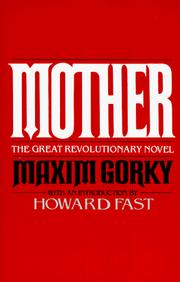 Maxim Gorky · 1906MotherLvl 3Medium pace
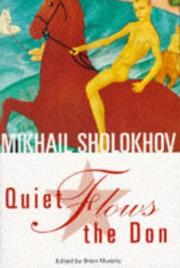 Mikhail Sholokhov · 1928And Quiet Flows the DonLvl 5Medium pace
 Aleksandr Solzhenitsyn · 1962One Day in the Life of Ivan DenisovichLvl 3Fast paced
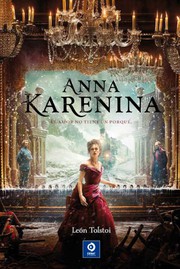 Leo Tolstoy · 1878Anna KareninaLvl 5Medium pace
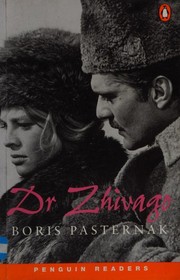 Boris Pasternak · 1957Doctor ZhivagoLvl 6Slow burn
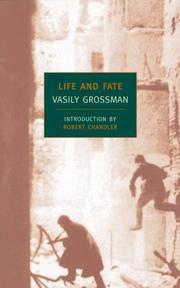 Vasily Grossman · 1980Life and FateLvl 7Medium pace