
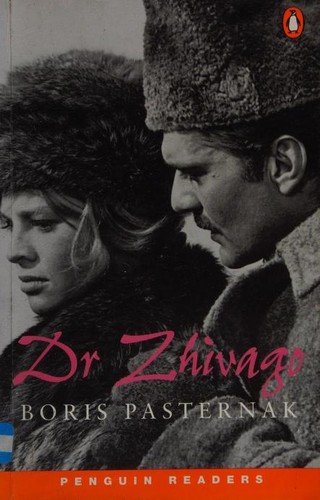
Doctor Zhivago
Boris Pasternak · 1890–1960 · Russia
Originally Doctor Zhivago (Russian)
Why it matters
A poet-physician carried by revolution, civil war, and a love called Lara: the individual soul asserted against history's machinery. Smuggled to the West, it won a Nobel the Soviet state forced Pasternak to refuse.
At a glance
Sprawling coincidence-driven plot, large cast, and lyrical, sometimes elliptical prose.
Deep dive
Pasternak buries his real argument in a hundred pages of coincidence and a coda of poems — this dive traces why the poems, not the plot, are the novel's actual ending.
Written for readers who have finished the book. No plot recap, and nothing here is safe to read first.
Themes & symbolism
Doctor Zhivago's plot runs on coincidence that would sink a lesser novel — Yuri, Lara, Komarovsky, and Strelnikov keep colliding across the vast, chaotic canvas of revolution and civil war with a frequency realism alone can't justify. That isn't clumsiness; it's conviction. Pasternak is arguing, structurally, for a private, almost mystical order underneath the era's official machinery of history — a claim the Soviet state, which insisted history moved by class forces and five-year plans, could not tolerate. Yuri's own art, his poetry, and his refusal to subordinate conscience to whichever faction currently holds him (he is conscripted by Red partisans, separated from both Tonya and Lara by circumstance more than choice) all assert the individual soul as a category history cannot fully absorb, even when it can crush the person carrying it.
Lara is less a conventional love interest than the novel's proof of that claim: shaped early by Komarovsky's manipulation and later married to the idealistic Pasha Antipov, she is the site where personal history and political history collide most violently, since Pasha's own transformation into the ruthless commander Strelnikov shows exactly what happens when a person lets revolutionary abstraction fully replace private conscience. Yuri, by contrast, never makes that trade, which is precisely why the system has no place for him — the novel's lyricism (its weather, its landscapes, its digressions into verse) is the register in which a conscience that refuses to be collectivized has to survive, since the plot itself offers it no safe home.
The Nobel Pasternak Couldn't Accept
Unable to publish the novel in the USSR, Pasternak had the manuscript smuggled to Italy, where it appeared in 1957 and became an international sensation almost overnight. The 1958 Nobel Prize followed, and with it Soviet pressure so severe — threats of expulsion from the country he refused to leave — that Pasternak was forced to publicly decline the award he had already accepted. He died two years later, still effectively in disgrace at home; only decades afterward was the Nobel formally accepted on his behalf by his family, a coda almost as fitting as the one Pasternak wrote for Yuri himself.
Why the Poems Are the Real Ending
Appending a full sequence of Yuri's own verse after the narrative proper closes is not a sentimental afterthought — it's Pasternak's structural rebuttal to everything the plot has just shown happening to his hero. The state can conscript Yuri, separate him from the people he loves, and grind his body down to an anticlimactic death on a Moscow street, but it cannot retroactively unwrite the poems, which survive as an artifact independent of the history that tried to absorb their author. Placing them after the prose, rather than quoting them within it, lets the novel end twice: once on Yuri's defeat, and once more, in a different register entirely, on the durability of what he actually made.
The last seal: what actually happens, and why it lands the way it does.
The ending, explained
The lovers are separated for good before the novel's actual ending: Strelnikov, hunted down by the regime he served, takes his own life, and Lara later vanishes, presumably arrested, her fate left offstage and unconfirmed — the state doesn't even grant her story a documented conclusion. Yuri returns to Moscow, remarries quietly, his health and spirit worn thin, and dies of a heart attack on a Moscow street after stepping off a stifling, overheated tram — an anticlimactic, unheroic death that underlines exactly how thoroughly the era ground down an exceptional life without granting it a exceptional death. Years later, old friends discover and read the poems he left behind, appended to the novel as its actual closing chapter: not history's verdict on Yuri, but the surviving proof that his private conscience outlasted it.
Where to go next
 Vasily Grossman · 1980Life and FateLvl 7Medium pace
 Mikhail Sholokhov · 1928And Quiet Flows the DonLvl 5Medium pace
 Aleksandr Solzhenitsyn · 1962One Day in the Life of Ivan DenisovichLvl 3Fast paced
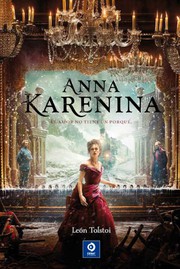 Leo Tolstoy · 1878Anna KareninaLvl 5Medium pace
 Maxim Gorky · 1906MotherLvl 3Medium pace
 Ivan Bunin · 1943Dark AvenuesLvl 4Medium pace