
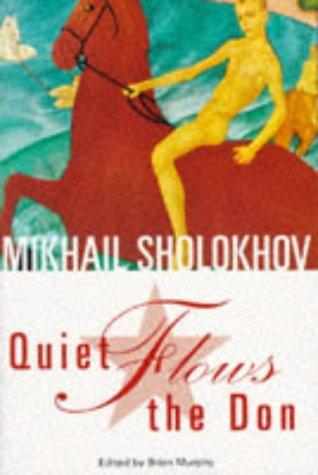
And Quiet Flows the Don
Mikhail Sholokhov · 1905–1984 · Russia
Originally Tikhiy Don (Russian)
Why it matters
A Don Cossack is torn apart by war, revolution, and civil war in a Tolstoyan epic of a people caught between two Russias. The Nobel-winning saga of the Cossack lands, its authorship debated ever since.
At a glance
A vast cast and regional dialect enrich an otherwise straightforward chronological saga.
Deep dive
Why a Cossack who fights for the Tsar, then the Reds, then the Whites, then no one, isn't a coward or an opportunist but the novel's most honest register of what a civil war actually asks of ordinary loyalty.
Written for readers who have finished the book. No plot recap, and nothing here is safe to read first.
Themes & symbolism
Grigory's oscillation between Aksinya, the married neighbor he can't stop loving, and Natalya, the wife he marries out of duty and slowly, painfully comes to value, is the novel's intimate rehearsal for the much larger oscillation that consumes his political life: every allegiance he forms — to Cossack tradition, to the Tsarist army, to the Reds, to the Whites — turns out to demand betraying some other thing he genuinely loves, and Sholokhov refuses to treat that as a character flaw. Deliberately writing in Tolstoy's shadow, he uses Grigory's switching sides not as opportunism but as the one truthful response available to a man who actually notices that Cossack land, family, and honor have no side in this war that isn't willing to crush them.
The Don River and the agricultural calendar it organizes — plowing, harvest, the wedding feasts that open the novel in a mode of settled abundance — recur as a measure of continuity being ground down by escalating, unglamorous violence; Sholokhov's battle scenes are rendered with a brutality that spares no faction, denying Red or White cause alike the dignity of having been worth the cost. The novel's refusal to let the Revolution's rightness feel self-evident, even from inside a book published under Stalin, is itself the argument: history here is not marching toward justice, it is simply consuming a people who had a whole intact way of life before it arrived.
A Contested Authorship
For decades, rumor and scholarship alike have questioned whether the young Sholokhov, barely in his twenties when the first volumes appeared, could have written a novel of this scope and control, with some researchers arguing he drew substantially, even plagiaristically, on an earlier, uncredited Cossack writer's manuscript. Forensic textual analysis commissioned decades later came down in Sholokhov's favor, but the question has never fully closed, and it hangs over the book as a strange irony: a novel this insistent on whose story gets told and by whom has its own authorship perpetually in dispute.
The last seal: what actually happens, and why it lands the way it does.
The ending, explained
By the war's last turns, Grigory has exhausted every side willing to have him, becoming simply a hunted deserter loyal to no faction, and his final attempt to flee with Aksinya ends when she is killed by stray gunfire on the road, forcing him to bury her himself with a saber for a shovel. Stripped of the last person and the last hope the novel held out for him, Grigory throws down his weapons at the threshold of his own home and returns to his children — no political vindication, no side proven right, only a broken man's return to the one loyalty, family and home soil, that the whole catastrophe never managed to touch. Sholokhov's bleak final suggestion is that ordinary human continuity, not any revolutionary cause, is what actually survives.
Where to go next
 Mikhail Sholokhov · 1932Virgin Soil UpturnedLvl 5Medium pace
 Vasily Grossman · 1980Life and FateLvl 7Medium pace
 Aleksandr Solzhenitsyn · 1962One Day in the Life of Ivan DenisovichLvl 3Fast paced
 Leo Tolstoy · 1878Anna KareninaLvl 5Medium pace
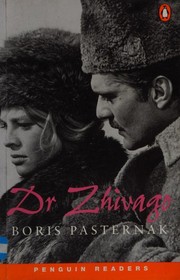 Boris Pasternak · 1957Doctor ZhivagoLvl 6Slow burn
 Maxim Gorky · 1906MotherLvl 3Medium pace