

One Day in the Life of Ivan Denisovich
Aleksandr Solzhenitsyn · 1918–2008 · Russia
Originally Odin Den Ivana Denisovicha (Russian)
Why it matters
One almost-good day in a labor camp, told in the zek's own idiom. Khrushchev personally approved publication; the Gulag's silence broke in a single morning. Few books have altered history more directly.
At a glance
Plain, procedural prose tracking a single day, though thick with camp-specific vocabulary.
Deep dive
The most subversive thing about Solzhenitsyn's novel might be its restraint — this dive looks at how a book that never raises its voice broke Soviet censorship in a single morning.
Written for readers who have finished the book. No plot recap, and nothing here is safe to read first.
Themes & symbolism
Solzhenitsyn's radical choice is scale and register, not incident: nothing resembling a plot happens across this day, and the prose, close to Shukhov's own peasant idiom, never once raises its voice, editorializes, or reaches for the camp's larger horrors in the abstract. That restraint is the book's ethics as much as its style. By staying inside one prisoner's granular calculus — a hidden trowel, bread sewn into a mattress bit by bit, the exact temperature at which work can be legally refused, the precise satisfaction of a well-laid brick wall — the novel treats Shukhov not as an object of pity or a symbol of totalitarian horror but as a full person whose competence, judgment, and self-respect remain intact under conditions built to strip all three away.
The small victories the day accumulates — an extra bowl of gruel earned by trickery, a smuggled bit of sausage, a stretch of bricklaying done with real craft and pride — aren't offered as consolation or irony. They're the novel's actual subject: survival with dignity as an active, skilled practice rather than a passive fact. Shukhov's status as a wrongly convicted former POW (captured by the Germans, escaped, then charged with spying on his return) universalizes the story, since that fabricated-treason arc befell enormous numbers of real Soviet soldiers — the novel's specificity about one man's day is also, deliberately, a stand-in for a whole unspoken national catastrophe. Solzhenitsyn's own years in the camp system sit behind every granular detail, from the exact bureaucratic language of counts and searches to the precise, hard-won knowledge of which small rule-bendings a guard will overlook and which will cost a man his ration — an authenticity that no amount of research from outside the wire could have produced.
The Thaw That Let It Through
Khrushchev personally approved the novel's 1962 publication in the journal Novy Mir as part of his de-Stalinization campaign, making it the first officially sanctioned Soviet work to depict the Gulag directly rather than through allegory or silence. The effect was seismic: a state-run press had just confirmed, in plain unmistakable detail, what millions of families already knew and no one had been permitted to say in print. The opening didn't last — the political tide reversed within a few years, and Solzhenitsyn's later work was banned and he was eventually exiled — but for one publication cycle, official Soviet literature broke its own silence about the camps from the inside.
Craft Under Erasure
The bricklaying sequence, where Shukhov loses himself in the pure technical pleasure of laying a wall well despite the cold, the guards, and the pointlessness of doing prison labor with any pride at all, is the novel's clearest thesis in miniature: a system engineered to erase individual worth cannot fully erase an individual's judgment about what counts as work done right. That pocket of professional absorption, stolen in the middle of a sentence meant to break him, is the closest the book comes to freedom.
The last seal: what actually happens, and why it lands the way it does.
The ending, explained
The novel closes on a tally: by the camp's grim arithmetic, this has been a good day — no illness, no stint in the punishment cells, a bit of extra food, a smuggled blade, a wall laid with real satisfaction. Shukhov drifts to sleep almost content. The narrator then notes, in the same flat register as everything before it, that Shukhov has another three thousand six hundred and fifty-three days left like this one on his sentence — a closing tally that lands as devastating precisely because the day just described has been, by every measure the camp allows, a triumph.
Where to go next
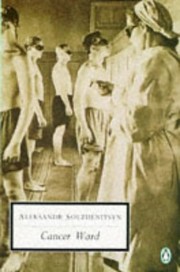 Aleksandr Solzhenitsyn · 1966Cancer WardLvl 5Medium pace
 Aleksandr Solzhenitsyn · 1968The First CircleLvl 6Medium pace
 Aleksandr Solzhenitsyn · 1971August 1914Lvl 7Slow burn
 Aleksandr Solzhenitsyn · 1973The Gulag ArchipelagoLvl 6Slow burn
 Mikhail Sholokhov · 1928And Quiet Flows the DonLvl 5Medium pace
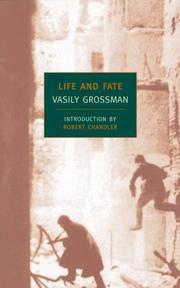 Vasily Grossman · 1980Life and FateLvl 7Medium pace