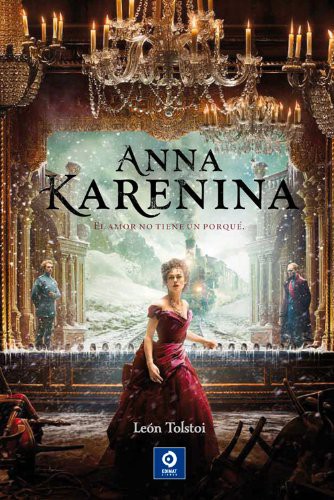
Anna Karenina
Leo Tolstoy · 1828–1910 · Russia
Originally Anna Karenina (Russian)
Why it matters
An adulterous passion and a searching marriage, braided into the supreme novel of family life. 'All happy families are alike...' opens fiction's most perfect big book: the one novelists themselves most often call the greatest.
At a glance
Long and multi-stranded but told in clear, patient realist prose throughout.
Deep dive
Why Tolstoy spends as much time on Levin's mowing fields and marriage proposals as he does on Anna's affair — and why that counterpoint, not the affair alone, is the whole argument.
Written for readers who have finished the book. No plot recap, and nothing here is safe to read first.
Themes & symbolism
Trains bracket Anna's story and do the novel's most concentrated symbolic work. She meets Vronsky at a station where a railway worker is crushed to death moments earlier — a detail Anna reacts to with visible dread, "a bad omen," and Tolstoy lets it sit there, unexplained, until she throws herself under a freight car in the same terminal district years later. In between, Vronsky breaks his mare Frou-Frou's back through a single careless move at the officers' steeplechase, and Tolstoy stages Anna's uncontrolled grief at the accident as the giveaway that exposes the affair to her husband — the horse's destruction previews what Vronsky's passion, however sincerely felt, will eventually do to Anna herself. Industrial modernity, in this novel, is never neutral machinery; it's fate with a schedule.
Levin's plotline, running the entire length of the book in counterpoint to Anna's, is not a subplot — it's the novel's other half of the same argument. Both characters are searching for an authentic life against the falseness of high society; Anna seeks it through romantic passion pursued outside marriage and finds it burns away the ordinary connections — her son, her place in society, eventually her own stability — that made life livable. Levin seeks it through land, labor, and marriage: the mowing scene, where he loses himself working a scythe alongside his peasants for an entire day, is the novel's clearest image of meaning found through immersion in ordinary, shared life rather than through isolating, transcendent passion.
Two Novels in One
Tolstoy structures the book as a sustained counterpoint — chapters alternate between Anna's Moscow-and-Petersburg world of drawing rooms and adultery and Levin's rural estate of farm accounts and marriage proposals, and the two plots barely touch (Levin and Anna meet exactly once, near the novel's end, and he's half-charmed against his own judgment). Adaptations routinely trim Levin to a subplot or cut Part 8 entirely, but that misreads the book's own architecture: Tolstoy built two case studies in the search for a meaningful life and is explicitly asking the reader to weigh one against the other.
What Anna Reads By
On the train where she first meets Vronsky, Anna reads an English novel by candlelight, restless and unable to concentrate — an early, throwaway-seeming detail. In her final interior monologue before the suicide, Tolstoy returns to it directly: she feels the candle by which she had been reading the book of her life flare up brighter than ever before it goes out forever. The image Tolstoy plants a thousand pages earlier is the one he cashes in at the very moment of her death, turning a minor domestic detail into the novel's most quietly devastating piece of foreshadowing.
The last seal: what actually happens, and why it lands the way it does.
The ending, explained
Isolated by scandal, addicted to opium, and reading Vronsky's every delay as proof his love is dying, Anna boards a train to reach him, and at the station her earlier premonition returns with the force of certainty. She throws herself under a freight car, and Tolstoy renders her death from inside her own consciousness, her rage and jealousy replaced in the last instant by horror at what she's doing — too late. But this is not where the novel ends. Part 8 follows Levin alone, still gripped by the crisis of faith that's shadowed him throughout, until a conversation with the peasant Fyodor about living "for the soul, for God, for truth" resolves it — not through argument but through recognizing he has always, unconsciously, known how to live rightly. He keeps this privately, without becoming a different man outwardly, and returns to Kitty and ordinary domestic life. Tolstoy's real ending isn't Anna's annihilation; it's Levin's quiet, sustainable faith.