

Maxim Gorky
Russia
Rough-hewn and declamatory, working-class speech and hard physical detail marshaled toward open moral instruction, sincerity favored over subtlety at every turn.
Born Alexei Peshkov in Nizhny Novgorod, Gorky was orphaned young and raised by a violent grandfather before running away as a teenager to spend years wandering Russia as a dishwasher, baker, and dockworker. That itinerant education in poverty supplied his pen name, Gorky, meaning the bitter one, and the raw material for the autobiographical trilogy beginning with My Childhood.
He moved in revolutionary circles close to Lenin personally, though he publicly criticized Bolshevik violence in a series of newspaper essays written just after the 1917 revolution. He left Soviet Russia in 1921 and settled in Sorrento, partly for his tuberculosis and partly from friction with the new government, before Stalin lured him back in 1932.
Once home he became the figurehead of the newly created Union of Soviet Writers and the doctrine of Socialist Realism that Mother had anticipated decades earlier. He died in 1936 under circumstances long rumored, never proven, to have been engineered by the secret police, and his native city was renamed Gorky in his honor.
Lines of influence
No descendants recorded, yet.
Their books in the atlas
- 1906
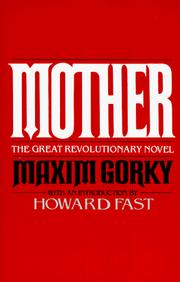 MotherLvl 3political novel
 - 1913
 My ChildhoodLvl 4autobiographical fiction
Meanwhile, elsewhere
 1859–1952Knut HamsunNorwayWestern Europe · Norway
 1867–1936Luigi PirandelloItalyWestern Europe · Italy
 1864–1936Miguel de UnamunoSpainWestern Europe · Spain
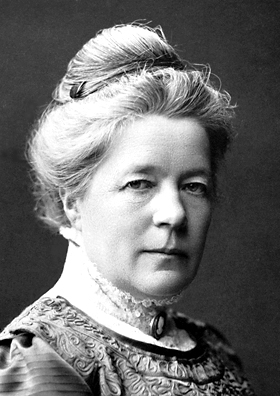 1858–1940Selma LagerlöfSwedenWestern Europe · Sweden
 1865–1936Rudyard KiplingEnglandWestern Europe · England
 1866–1944Romain RollandFranceWestern Europe · France
If you like Gorky, try
 1905–1984Mikhail SholokhovRussiashared movement: The Soviet Century · both shaped by Tolstoy · kindred genres: family saga, political novel
 1918–2008Aleksandr SolzhenitsynRussiashared movement: The Soviet Century · both shaped by Tolstoy · kindred genres: political novel, autobiographical fiction
 1828–1910Leo TolstoyRussiashaped Gorky · both write in Russian · neighboring movements
 1890–1960Boris PasternakRussiashared movement: The Soviet Century · both shaped by Tolstoy · both write in Russian
 1905–1964Vasily GrossmanUkraine / Russiashared movement: The Soviet Century · both shaped by Tolstoy · both write in Russian
 1870–1953Ivan BuninRussiaboth shaped by Tolstoy · kindred genres: autobiographical fiction · both write in Russian