
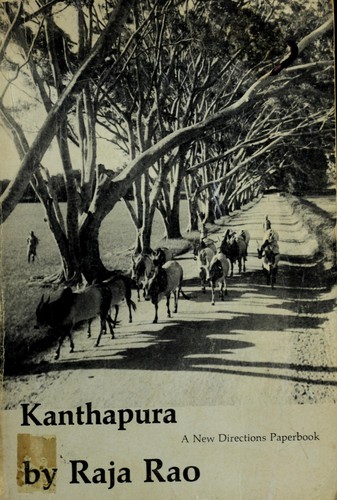
Kanthapura
Raja Rao · 1908–2006 · India
Why it matters
An old woman narrates her village's Gandhian awakening against colonial landlords in English bent to the rhythms of Indian oral storytelling. A formal experiment as much as a political one.
At a glance
A single breathless run-on sentence style mimics oral narration, unfamiliar to English readers.
Deep dive
An old woman narrates her village's slide into the independence movement in the same breath she'd use for a legend about gods, and what happens to Kanthapura once the story it borrowed catches up with it.
Written for readers who have finished the book. No plot recap, and nothing here is safe to read first.
Themes & symbolism
Achakka, the old woman who narrates Kanthapura entirely as spoken storytelling addressed to an unnamed listener, tells the arrival of the independence movement in her Mysore village using the same unpunctuated, looping cadence a grandmother would use for a sthala-purana, a local legend explaining how a place got its gods and its name. Rao's English is deliberately not standard English: the long comma-spliced sentences, the constant asides to relatives and gossip, the habit of circling back before moving forward, are built to carry the rhythm of spoken Kannada storytelling rather than the prose of an English novel. The form is the argument before a single political event happens, this is how the village already understands change, through legend, not through newspaper chronology.
Kanthapura's streets are laid out by caste before the novel begins, a Brahmin quarter, a Sudra quarter, a Potters' quarter, a Weavers' quarter, and a Pariah quarter set apart from all of them, and the satyagraha that young Moorthy brings back from the city redraws that map without moving a single house. Moorthy's Gandhian campaign against the British-run Skeffington coffee estate and the toddy shops that keep the village docile forces every quarter to declare a side, and his own decision to renounce his Brahmin sacred thread and sit and eat among the Pariah families costs him an excommunication from the orthodox elders and, not long after, his mother Narsamma's death from the sheer shame of it. The political geography and the ritual geography turn out to be the same map.
Gandhi himself never appears on the page. He is reported, quoted, prayed to from a distance, and Rao lets Moorthy absorb his mythic charge instead: the villagers start speaking of him in the same register they use for the goddess Kenchamma who guards Kanthapura, and of the British as a kind of Ravana to be overcome rather than a colonial administration to be negotiated with. Independence, in Achakka's telling, isn't a rupture with the old cosmology. It's the old cosmology finally getting a contemporary plot to attach itself to.
A Grandmother's Syntax as Argument
Rao said in his own preface that an Indian writer in English had to find a way to carry the tempo of Indian life into a borrowed language, and Kanthapura is his demonstration rather than his theory: Achakka's sentences run on, double back, and pile clause on clause the way an oral storyteller holds a room, refusing the tidy, paragraphed distance of a colonial-language narrator describing colonized life from outside it. The style is the novel's clearest evidence that a village telling its own story on its own terms was itself a form of swaraj.
Kenchamma's Village Against Skeffington's Estate
The Skeffington coffee estate, worked by villagers under conditions the novel details as close to bonded labor, gives the satyagraha campaign its first concrete target well before it becomes a fight over salt or cloth, and Rao uses the estate to show colonial extraction as a plain economic fact sitting right next to the village rather than an abstraction debated in Delhi. Kenchamma, the goddess Achakka insists has protected Kanthapura since its founding, is invoked against the estate almost interchangeably with Gandhi, so the boycott reads simultaneously as anticolonial politics and as a village calling on its oldest patron to see off a new kind of demon.
The last seal: what actually happens, and why it lands the way it does.
The ending, explained
The campaign against the coffee estate and the toddy shops draws a violent police response: the women of Kanthapura, having taken over the marches after the men are arrested, are beaten and driven off, and the village itself is looted and burned in the crackdown that follows. Moorthy is imprisoned along with the other satyagrahis, and the survivors abandon Kanthapura outright, resettling in a neighbouring village rather than rebuilding on the ashes of the old one. Achakka closes her telling from that displacement, not from a village restored, insisting all the same that Kanthapura will rise again under Swaraj once the fighting is done. The novel ends, in other words, exactly where the sthala-purana form requires it to, not with victory, but with a legend's confidence that the story isn't finished yet.
Where to go next
 Raja Rao · 1960The Serpent and the RopeLvl 8Slow burn
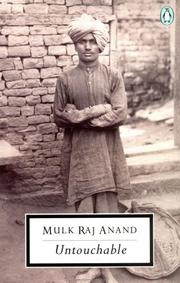 Mulk Raj Anand · 1935UntouchableLvl 3Fast paced
 U. R. Ananthamurthy · 1965SamskaraLvl 6Slow burn
 O. V. Vijayan · 1969The Legends of KhasakLvl 7Slow burn
 Alan Paton · 1948Cry, the Beloved CountryLvl 4Medium pace
 Ayi Kwei Armah · 1968The Beautyful Ones Are Not Yet BornLvl 6Slow burn