
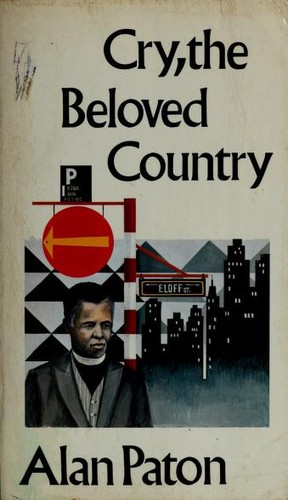
Cry, the Beloved Country
Alan Paton · 1903–1988 · South Africa
Why it matters
A Zulu pastor searches Johannesburg for his lost son, finding a nation's racial catastrophe just before apartheid's formal beginning. South Africa's best-known novel of grief and moral reckoning.
At a glance
Biblical, rhythmic prose reads simply despite its stately, formal cadence.
Deep dive
A Zulu priest travels from his rural parish to Johannesburg to find his sister and son, and Paton builds an entire moral argument about fear out of what a country does to people who leave home to survive.
Written for readers who have finished the book. No plot recap, and nothing here is safe to read first.
Themes & symbolism
Stephen Kumalo's journey out of the Ixopo hills to find his sister Gertrude and his son Absalom in Johannesburg follows a route thousands of real Zulu families were already walking by 1948, driven off eroding, over-farmed land and into a city with no framework ready to receive them decently. Paton doesn't treat Ndotsheni's soil erosion as background scenery; he makes it the material cause underneath everything that follows, the reason young men leave home in the first place, and the novel's opening chapters linger on the ruined land specifically so that Absalom's later crimes read as the far end of a chain that starts with an eroding hillside rather than with any inherited badness in him.
Paton builds the novel around a formal mirror: Kumalo, searching Johannesburg for his lost son, and James Jarvis, a wealthy white farmer near Ndotsheni whose son Arthur is murdered during a robbery, are brought together by a single act of violence that implicates one man's child in the other's grief. What lets the novel avoid easy sentimentality is that the bridge between the two fathers isn't built on Kumalo's suffering alone; Jarvis is changed by reading his own dead son's essays on racial justice, discovering only after Arthur's death the convictions he never fully understood while Arthur was alive to hold them.
Paton's prose leans hard into repetition and cadence, biblical parallelism crossed with the rhythms of Zulu praise language, and the recurring refrain of fear, fear of the tribe breaking, fear of the city, fear of what one generation cannot hand safely to the next, turns the novel into something closer to a sustained lament than a piece of social realism. Published the same year the National Party formalized apartheid into law, the novel reads today as a warning issued at the exact moment the country stopped listening to it.
What Arthur Jarvis Left Behind
Arthur Jarvis never appears alive on the page; the reader meets him entirely through his own writing, essays and notes on South African race relations that his father discovers only while grieving him, unfinished arguments about justice that Arthur never lived to publish or defend in person. Paton uses this device to make Arthur, alone among the novel's white characters, the book's clearest moral voice, and to make James Jarvis's transformation depend not on personal contact with Black suffering but on the posthumous, almost accidental inheritance of his son's convictions.
The last seal: what actually happens, and why it lands the way it does.
The ending, explained
Absalom is tried for Arthur Jarvis's killing and sentenced to hang, a verdict Paton frames as legally consistent and morally insufficient in the same breath, since none of Absalom's accomplices, who deny any real involvement, are convicted alongside him. Kumalo returns to Ndotsheni with his son's pregnant young fiancee and Gertrude's abandoned child in tow, only to find James Jarvis has begun quietly funding an agricultural extension program for the village, dam repairs and better farming methods that address the very soil collapse the novel opened with. On the morning of Absalom's execution, Kumalo climbs the mountain above Ndotsheni alone to keep vigil as dawn breaks, and Paton closes on that image, restoration arriving for the land at exactly the moment it is too late for the son.
Where to go next
 Chinua Achebe · 1958Things Fall ApartLvl 4Medium pace
 Mulk Raj Anand · 1935UntouchableLvl 3Fast paced
 André Brink · 1979A Dry White SeasonLvl 5Medium pace
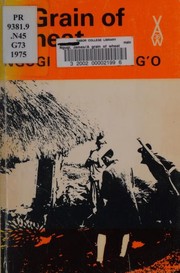 Ngũgĩ wa Thiong'o · 1967A Grain of WheatLvl 6Slow burn
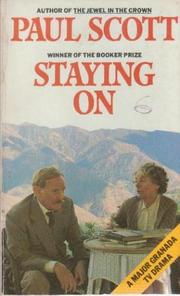 Paul Scott · 1977Staying OnLvl 4Slow burn
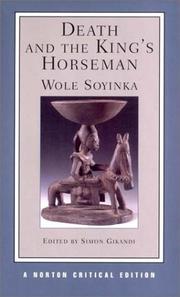 Wole Soyinka · 1975Death and the King's HorsemanLvl 6Medium pace