
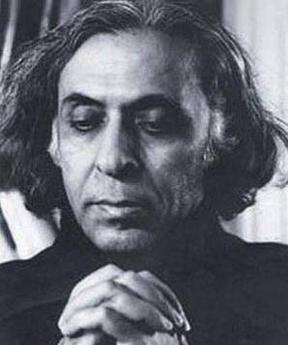
Raja Rao
India
Incantatory and run-on, sentences piling clause on clause like a storyteller refusing to pause; English bent until it sounds like oral epic.
Rao studied at Montpellier and the Sorbonne, immersing himself in French literature and philosophy while also deepening a lifelong engagement with Vedantic thought and Gandhian nationalism that would define his fiction's concerns far more than its settings ever suggested. He wrote in English by choice but treated the language as raw material to be reshaped rather than a fixed inheritance.
Kanthapura (1938), his first and most celebrated novel, is narrated by an old village woman recounting her community's Gandhian awakening in a single sprawling, breathless sentence-style modeled on oral Puranic storytelling, forcing English syntax to carry an entirely different tradition's rhythm. His preface to the novel, arguing that Indian writers in English must find 'a dialect which will someday prove to be as distinctive,' became a foundational statement for Indian writing in English.
He later taught philosophy for decades at the University of Texas at Austin, publishing intermittently, and died in the United States in 2006.
Their books in the atlas
- 1938
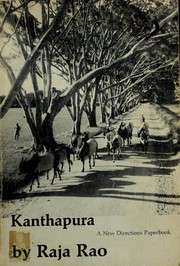 KanthapuraLvl 6colonial & postcolonial
 - 1960
 The Serpent and the RopeLvl 8philosophical novel
Meanwhile, elsewhere
 1904–2005Ba JinChinaEast Asia · China
 1911–2011Ernesto SabatoArgentinaLatin America · Argentina
 1911–2006Naguib MahfouzEgyptMiddle East · Egypt
 1910–2003Rachel de QueirozBrazilLatin America · Brazil
 1913–2005Claude SimonFranceWestern Europe · France
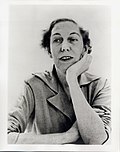 1909–2001Eudora WeltyUnited StatesNorth America · United States
If you like Rao, try
 1905–2004Mulk Raj AnandIndiashared movement: Postcolonial Literatures · kindred genres: colonial & postcolonial, political novel · same region & era
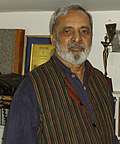 1932–2014U. R. AnanthamurthyIndia (Karnataka)shared movement: Postcolonial Literatures · kindred genres: colonial & postcolonial, philosophical novel · same region & era
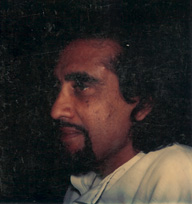 1930–2005O. V. VijayanIndia (Kerala)shared movement: Postcolonial Literatures · kindred genres: philosophical novel · same region & era
 1903–1988Alan PatonSouth Africashared movement: Postcolonial Literatures · kindred genres: colonial & postcolonial, political novel
 1939–2023Ayi Kwei ArmahGhanakindred genres: colonial & postcolonial, political novel · neighboring movements
 b. 1934Wole SoyinkaNigeriakindred genres: colonial & postcolonial, political novel · neighboring movements