
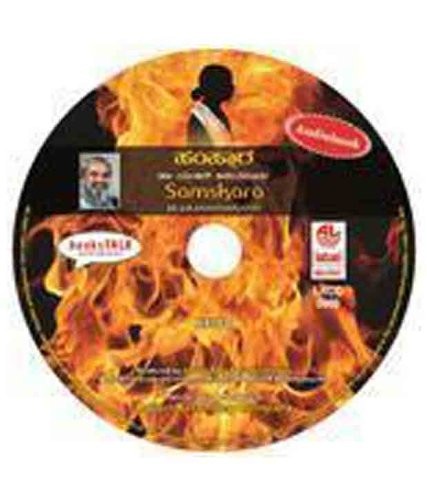
Samskara
U. R. Ananthamurthy · 1932–2014 · India (Karnataka)
Originally Samskara (Kannada) · translated by A. K. Ramanujan
Why it matters
An orthodox village priest must decide whether to perform funeral rites for a fellow Brahmin who lived in open defiance of caste law, and no scripture will tell him how. A single unanswerable question unravels an entire caste order from within.
At a glance
Dense ritual and caste-law detail underpins a compact but morally intricate crisis.
Deep dive
A Brahmin scholar spends his whole life being the one man in the village qualified to answer any ritual question, until a corpse in his own street produces a question the scriptures won't settle for him.
Written for readers who have finished the book. No plot recap, and nothing here is safe to read first.
Themes & symbolism
Praneshacharya has built his entire identity on being the agrahara's authority on dharma, a scholar who married an invalid wife specifically, he tells himself, to have the chance to earn merit through selfless service, and who has spent decades being consulted on exactly this kind of ritual problem. Naranappa, the Brahmin who spent his life eating meat, drinking, and living openly with his low-caste mistress Chandri, dies in the same street, and by dying leaves a body no orthodox Brahmin will touch and no lower-caste neighbour is permitted to cremate, since only a Brahmin can perform a Brahmin's last rites. Ananthamurthy lets that impasse sit and rot, literally, while Praneshacharya searches the scriptures for a loophole they were never built to provide.
The scandal isn't that the texts fail to answer him. It's what happens instead: Chandri, grateful for his efforts and moved by an intimacy the scripture-bound Acharya has never let himself feel, and Praneshacharya, alone with her for a moment his whole disciplined life hasn't prepared him for, has sex with her, the very transgression he has spent the novel refusing to grant Naranappa's memory any sympathy for. Having become, in a single unplanned act, exactly the kind of Brahmin he was supposed to judge, he can no longer perform Naranappa's rites at all, and the crisis of unclaimed dharma turns out to have been solved by the last person in the agrahara willing to admit he'd solved it.
A Scholar Loses His Fixed Name
Once Praneshacharya leaves the agrahara, unable to face it as the man he was, the novel strips him of the title that has always come before his name: strangers he meets on the road, at a fair, in a gambling den, know him only as a stranger, and Ananthamurthy uses that anonymity to let a man built entirely out of ritual obligation discover, for the first time in his life, an identity that isn't handed to him by his caste and his learning.
A Corpse the Whole Village Has to Reckon With
Naranappa's decomposing body, left unburned while the Brahmins argue scripture, becomes the novel's most literal image for what happens when a community's rules can't process a life that broke them: rats reportedly carry disease out from the corpse, other Brahmins begin sickening and dying, and the plague spreading from the one body no one will touch reads as Ananthamurthy's judgment on a system that would rather let contagion spread than let its categories bend.
The last seal: what actually happens, and why it lands the way it does.
The ending, explained
After days spent wandering outside the agrahara among cockfights, festival crowds, and an easy, disreputable companion named Putta who treats him as an ordinary man rather than an Acharya, Praneshacharya starts back toward the village he fled, carrying the knowledge of what he did with Chandri and no clear plan for what he'll say when he arrives. Ananthamurthy ends the novel on that return journey rather than on the confession itself, Praneshacharya walking back into the community that made him, uncertain whether he'll tell the truth or fold it into one more silence the agrahara knows how to keep. The unfinished walk is the point: a man whose whole authority rested on having an answer for everything is last seen still without one.
Where to go next
 Banu Mushtaq · 2025Heart Lamp: Selected StoriesLvl 4Fast paced
 O. V. Vijayan · 1969The Legends of KhasakLvl 7Slow burn
 Raja Rao · 1938KanthapuraLvl 6Medium pace
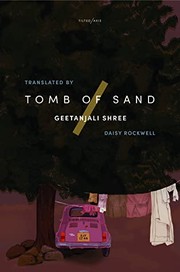 Geetanjali Shree · 2018Tomb of SandLvl 8Slow burn
 Albert Camus · 1942The StrangerLvl 3Medium pace
 Walker Percy · 1961The MoviegoerLvl 5Slow burn