
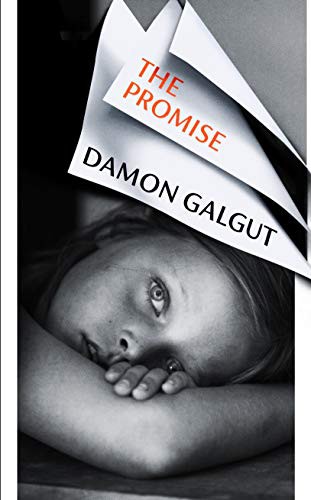
The Promise
Damon Galgut · b. 1963 · South Africa
Why it matters
One Afrikaner family gathers for four funerals across three decades, each marking their broken promise to a Black servant. Post-apartheid South Africa's moral reckoning rendered in restless, shifting narration.
At a glance
A roving, unstable narrative voice slides between characters' minds mid-sentence throughout.
Deep dive
Why Galgut's narrator refuses to hold still — and what four funerals spanning apartheid to the present are actually counting.
Written for readers who have finished the book. No plot recap, and nothing here is safe to read first.
Themes & symbolism
The promise itself is a deliberately small thing — one house, one Black woman's claim to land she already lives on — made purposefully disproportionate to the historical weight Galgut hangs on it: South Africa's transition is one long deferred promise of land and repair, and the Swarts' private failure to make good on a dying woman's wish becomes a scale model of the national one. Salome is present at every funeral and central to none of them, glimpsed at the edge of scenes that are supposedly about her future, which is the novel's cruelest formal joke: the person the promise concerns has the least claim on the narrative's attention, exactly as she has the least claim on the family's actual behavior.
The narration's restless third person — sliding mid-sentence between characters' heads, occasionally addressing the reader directly, refusing to settle anywhere for long — isn't a stylistic flourish, it's an argument about whose perspective gets to organize a country's story. No single Swart is allowed to be the novel's stable moral center, because the point is that none of them deserves that authority, including Amor, whose fidelity to the promise is real but comes awfully late and costs her almost nothing to maintain compared to what it costs Salome to wait for it. The four funerals mark not progress but repetition: each generation finds a fresh reason to defer the same debt.
The Voice That Won't Sit Still
Galgut's camera-like narration — swooping into a character's head then pulling back to comment archly from outside it — echoes the free indirect style of Woolf while doing something more pointed: it refuses the reader the comfort of a trustworthy guide through South African history, forcing the same disorientation onto the reader that the country's own transition produced. The technique is the novel's real formal achievement, more than its plot, and it's why the book reads as an argument about narrative authority as much as a story about one family's failure. Galgut has pointed to Faulkner's As I Lay Dying as a touchstone, and the debt shows: the same restless hopping between consciousnesses that Faulkner used to fracture one family's grief becomes, in Galgut's hands, a way of implicating an entire nation's collective evasion.
The last seal: what actually happens, and why it lands the way it does.
The ending, explained
Having outlived her father, brother, and sister, Amor is the last Swart standing, and the only one who never wanted the family's wealth to begin with. She finally transfers the house and land to Salome — now elderly — and her son Lukas, formalizing the promise Manie made and broke thirty-odd years earlier. Galgut frames it not as restitution but as arrival: correct, and decades too late, granted only once nearly everyone with a stake in delaying it is dead. The gesture doesn't undo what Salome lost waiting, and the novel is careful not to let it stand in for the country's own unresolved, much larger version of the same broken promise.
Where to go next
 J. M. Coetzee · 1999DisgraceLvl 5Medium pace
 Arundhati Roy · 1997The God of Small ThingsLvl 7Slow burn
 Alaa Al Aswany · 2002The Yacoubian BuildingLvl 4Fast paced
 Geetanjali Shree · 2018Tomb of SandLvl 8Slow burn
 Bernardine Evaristo · 2019Girl, Woman, OtherLvl 4Fast paced
 Ali Smith · 2016AutumnLvl 5Slow burn