
The Modern Breakthrough & the Nordic Novel
Brandes demands literature 'put problems under debate,' and Scandinavia collects Nobels like berries.
Georg Brandes's 1871 Copenhagen lectures demanded that literature 'put problems under debate' rather than console, and the demand pulled Scandinavia decisively into European modernity almost overnight. Knut Hamsun answered from the opposite direction a generation later: Hunger tracks a starving, unnamed writer's nervous system in real time, hallucination and pride and shame arriving faster than plot, a founding document of the modernist interior that predates Joyce and Woolf by three decades and unsettled Hamsun's own later, disgraced politics not at all.
The generation Hamsun helped launch collected Nobel Prizes the way Scandinavia collects berries: Selma Lagerlöf became literature's first female laureate for legend-spinning fiction rooted in Swedish folklore; Sigrid Undset reconstructed medieval Norway's texture and faith down to the stitch in Kristin Lavransdatter; Halldór Laxness gave Iceland a stubborn, self-defeating crofter as its national epic in Independent People; and Karen Blixen, writing as Isak Dinesen, turned her own failed Kenyan farm into a storyteller's aristocratic elegy in Out of Africa. A handful of small-language literatures, briefly, ran the table.
How to spot it on the page
- Literature deployed explicitly to 'put problems under debate,' not console
- A single mind's hunger, pride, or shame tracked in real time, faster than plot
- Medieval or folk material reconstructed with painstaking, almost archival fidelity
- A stubborn, self-defeating protagonist standing in for a whole nation's temperament
- Landscape (farm, fjord, homestead) elegized as a failed or fading way of life
- A small national literature punching far above its language's population
What it left behind
Brandes's demand exhausted itself once the movement's writers had made their case and modernism moved its center to other capitals, but the Nobels kept coming for decades after: eight Scandinavian laureates between 1903 and 1955 alone. Hamsun's tracked, hungry nervous system anticipated stream of consciousness outright, and the small-language ambition it licensed, that a fjord or a farm could carry a whole literature's claim on world attention, never really left Nordic fiction.
Defining works
For a guided order with notes, follow the reading path →
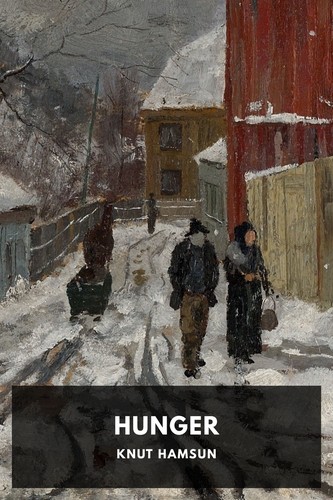
Knut Hamsun · 1890
A starving young writer wanders Kristiania, his mind lurching between pride, delusion, and hallucination. Hamsun narrated the irrational churn of consciousness a generation before the modernists claimed it.
Selma Lagerlöf · 1891
A defrocked, charismatic priest drifts through a cycle of linked tales across Sweden's Värmland countryside. Lagerlöf transformed regional folklore into sweeping romantic myth and won Sweden literature's first Nobel Prize.
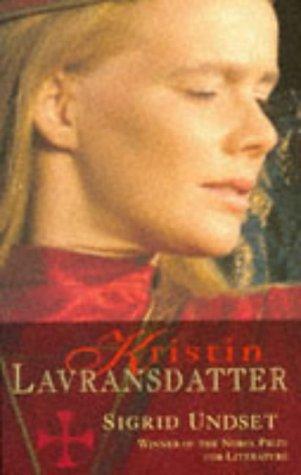
Sigrid Undset · 1920
One woman's whole life (passion, marriage, motherhood, faith, and guilt) across fourteenth-century Norway. Undset gives the medieval world a modern psychology so dense it seems to breathe.
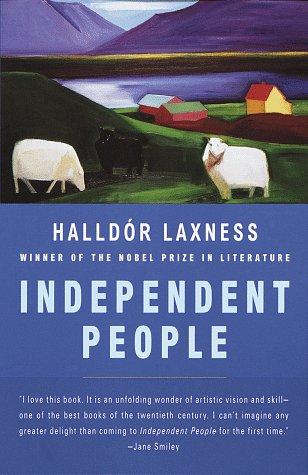
Halldór Laxness · 1934
A stubborn Icelandic sheep farmer sacrifices everyone he loves to his dream of owing nothing to anyone. Laxness's saga-inflected tragicomedy of pride and poverty on the volcanic edge of Europe.
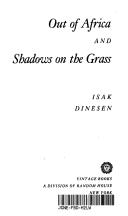
Isak Dinesen (Karen Blixen) · 1937
A Danish baroness remembers her failing Kenyan coffee farm, her Kikuyu workers, and a doomed love affair with elegiac, unsentimental precision. One of the century's most stylistically perfect memoirs-as-novel.
Authors of this movement
 1832–1910Bjørnstjerne BjørnsonNorwaystart with Synnøve Solbakken
 1857–1919Karl GjellerupDenmarkstart with The Pilgrim Kamanita
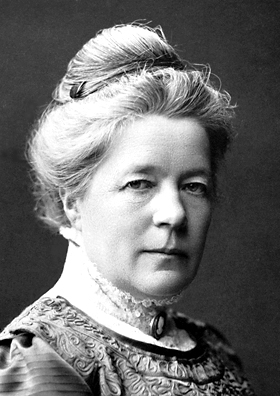 1858–1940Selma LagerlöfSwedenstart with Gösta Berling's Saga
 1859–1952Knut HamsunNorwaystart with Hunger
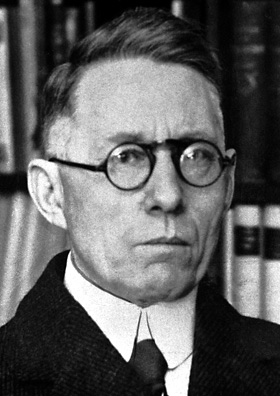 1873–1950Johannes V. JensenDenmarkstart with The Long Journey
 1882–1949Sigrid UndsetNorwaystart with Kristin Lavransdatter
 1885–1962Isak Dinesen (Karen Blixen)Denmarkstart with Out of Africa
 1888–1964Frans Eemil SillanpääFinlandstart with The Maid Silja
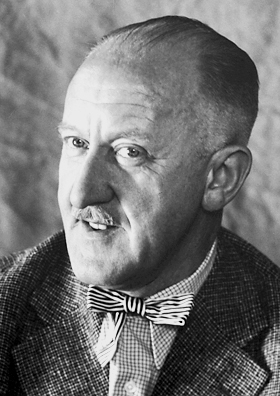 1902–1998Halldór LaxnessIcelandstart with Independent People