
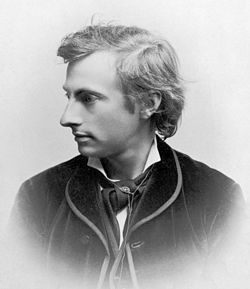
Karl Gjellerup
Denmark
Grave, hymn-like storytelling that treats doctrine as drama: cool Northern prose warming itself at Eastern fires.
Gjellerup took a theology degree in Copenhagen and promptly renounced it, converted by Darwin and by Georg Brandes's freethinking Modern Breakthrough; his early novels wore their atheism as a badge. German on his mother's side and by temperament, he settled near Dresden and increasingly wrote in German first.
The naturalist grew steadily more mystical (Schopenhauer, Wagner, then the Pali scriptures) until The Pilgrim Kamanita (1906) staged his conversion in fiction: a merchant's son meets a wandering monk he fails to recognize as the Buddha, and pursues his beloved across celestial rebirths toward the extinction of self.
The 1917 Nobel, shared with Pontoppidan and citing his 'varied and rich poetry, inspired by lofty ideals,' baffled Denmark, which had half forgotten him. He died near Dresden two years later, one of the prize's genuinely strange, serene figures.
Their books in the atlas
- 1906
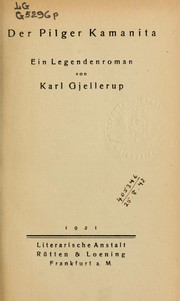 The Pilgrim KamanitaLvl 5philosophical novel
Meanwhile, elsewhere
 1846–1916Henryk SienkiewiczPolandRussia & Eastern Europe · Poland
 1843–1916Henry JamesUSA / EnglandNorth America · USA / England
 1861–1941Rabindranath TagoreIndia (Bengal)South Asia · India (Bengal)
 1862–1937Edith WhartonUSANorth America · USA
 1862–1922Ōgai MoriJapanEast Asia · Japan
 1847–1912Bolesław PrusPolandRussia & Eastern Europe · Poland
If you like Gjellerup, try
 1832–1910Bjørnstjerne BjørnsonNorwayshared movement: The Modern Breakthrough & the Nordic Novel · kindred genres: romance · same region & era
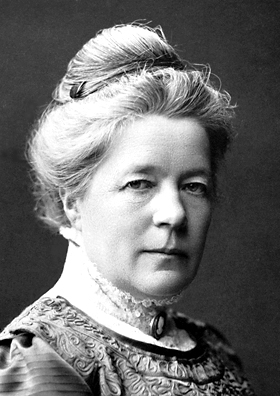 1858–1940Selma LagerlöfSwedenshared movement: The Modern Breakthrough & the Nordic Novel · kindred genres: romance · same region & era
 1859–1952Knut HamsunNorwayshared movement: The Modern Breakthrough & the Nordic Novel · same region & era
 1882–1949Sigrid UndsetNorwayshared movement: The Modern Breakthrough & the Nordic Novel · same region & era
 1877–1962Hermann HesseGermany / Switzerlandkindred genres: philosophical novel · both write in German · same region & era
 1830–1914Paul HeyseGermanykindred genres: romance · both write in German · same region & era