
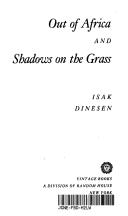
Out of Africa
Isak Dinesen (Karen Blixen) · 1885–1962 · Denmark
Why it matters
A Danish baroness remembers her failing Kenyan coffee farm, her Kikuyu workers, and a doomed love affair with elegiac, unsentimental precision. One of the century's most stylistically perfect memoirs-as-novel.
At a glance
Elegant, elegiac essayistic prose loosely organized rather than plotted.
Deep dive
A memoir arranged like an elegy that already knows, from its first page, exactly how the story is going to end.
Written for readers who have finished the book. No plot recap, and nothing here is safe to read first.
Themes & symbolism
Dinesen structures the book around three things she loves precisely because she can't fully own or control them: the farm, whose failure at the wrong altitude for coffee is foretold in the very grammar of her opening line ('I had a farm in Africa'); the Kikuyu squatters whose lives run alongside rather than under hers, however unequally; and Denys Finch Hatton, whose freedom and refusal to be tied down are exactly what she loves him for, which means she can never actually keep him. The essayistic, non-chronological arrangement lets the shadow of the ending fall backward over even the happiest early chapters — this is a book that begins already in mourning for what it's about to describe.
Her portraits of Farah, her Somali major-domo, and Kamante, the cook boy she nurses back from illness, are attentive and specific in a way most colonial writing of the period never bothers to be — and also unmistakably shaped by the same colonial framework that put her on that land in the first place, at times treating African characters as picturesque or essentially childlike even at its most affectionate. When the farm is sold and the squatters are displaced, Dinesen renders it as her own personal grief; modern readers tend to notice, more than her contemporaries did, that it's also a dispossession happening to other people, and that the prose's elegant restraint is exactly where the book's blind spot is sharpest.
The book's title in the original Danish, Den afrikanske Farm, is more literal than the English — 'the African Farm' rather than the retrospective, already-departed 'Out of Africa' — and the shift matters: the English title announces the leaving before the book has even begun, framing seventeen years of a specific, working life as a single, completed act of loss. Everything Dinesen describes, however precisely observed in the moment, is narrated by a woman who already knows she doesn't live there anymore.
A Style Out of Its Time
Dinesen's voice — formal, aristocratic, organized by mood and memory rather than plot — reads like a nineteenth-century saga-teller transplanted deliberately out of step with the modernism dominating fiction when the book appeared in 1937. It's the same instinct that produced Seven Gothic Tales: a writer choosing ornate, old-fashioned storytelling as a considered aesthetic position, not an accident of provincial isolation, and using its unfashionable formality here to hold genuine devastation at exactly the distance it needs to stay readable.
The last seal: what actually happens, and why it lands the way it does.
The ending, explained
The farm's failure — years of frost damage, an altitude simply wrong for coffee, and falling prices after the postwar boom ends — finally forces its sale, and in the middle of that loss, Denys Finch Hatton is killed when his small plane crashes while surveying game. She buries him in the Ngong Hills; the book records, and later legend embellished, that lions were seen lying on his grave afterward. She leaves Kenya for Denmark for good with both the land and the man gone in the same season, and the prose's composure never fully breaks even here — which is itself the performance of the loss, a restraint that lets the reader feel the size of what's missing precisely because the narrator won't say it outright.
Where to go next
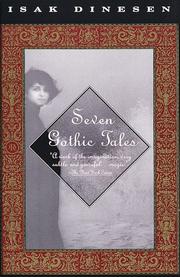 Isak Dinesen (Karen Blixen) · 1934Seven Gothic TalesLvl 6Slow burn
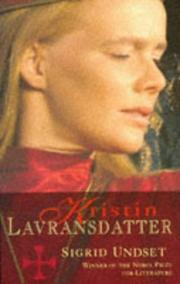 Sigrid Undset · 1920Kristin LavransdatterLvl 6Slow burn
 Johannes V. Jensen · 1922The Long JourneyLvl 6Medium pace
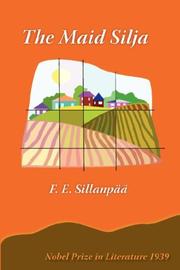 Frans Eemil Sillanpää · 1931The Maid SiljaLvl 4Medium pace
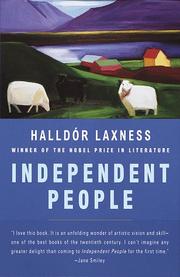 Halldór Laxness · 1934Independent PeopleLvl 6Medium pace
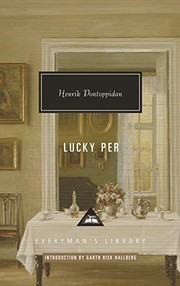 Henrik Pontoppidan · 1904Lucky PerLvl 6Medium pace