
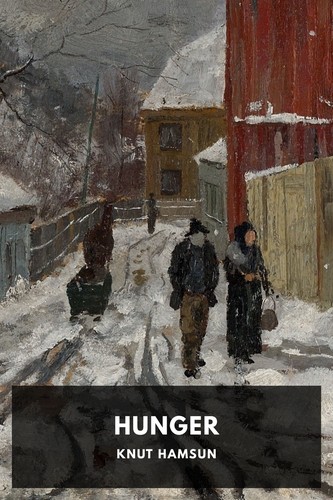
Hunger
Knut Hamsun · 1859–1952 · Norway
Originally Sult (Norwegian)
Why it matters
A starving young writer wanders Kristiania, his mind lurching between pride, delusion, and hallucination. Hamsun narrated the irrational churn of consciousness a generation before the modernists claimed it.
At a glance
Plotless, associative interior monologue tracking a starving mind's erratic logic.
Deep dive
Why the narrator keeps refusing food, inventing names for himself, and manufacturing his own ruin — and why Hamsun ends the book with nothing resolved.
Written for readers who have finished the book. No plot recap, and nothing here is safe to read first.
Themes & symbolism
Pride, not poverty, is the engine: the narrator is repeatedly offered money, food, and shelter and either refuses it outright, returns it moments later, or gives it to someone worse off, as though starving with his dignity intact matters more than simply not starving. He invents a different name and profession for himself with nearly every stranger he meets — journalist, out-of-towner, a man of means momentarily short on cash — performances that let him experience, briefly, a self undamaged by circumstance before hunger collapses the performance again. Ylajali, the woman he becomes fixated on, exists almost entirely in his head; the actual encounters are brief and thin, but the internal romance he builds around her is elaborate, sustained, and considerably more real to him than his own physical collapse.
Hunger itself is generative here, not just depleting — the narrator's mind under starvation produces free-associative leaps, invented words, sudden hallucinations and mood swings that Hamsun renders without apology or clinical distance, decades before this kind of unmediated interior monologue had a name. Kristiania is drawn as an indifferent machine rather than a villain: doors close, editors don't reply, landladies wait, and the city simply continues, unmoved by whether he eats.
He does have one real success in the book, an article he manages to sell to a newspaper editor for a few kroner, and the novel treats it not as a turning point but as a cruelty: proof that he can write, immediately swallowed back into the same cycle of hunger and delay, because a single sale changes nothing structural about his situation. Hamsun refuses to let ambition or evident talent function as an escape hatch — the narrator's identity as a writer is the one thing he clings to even as it fails, repeatedly, to feed him.
Before Freud, Before Joyce
Hamsun described his aim as tracking "the unconscious life of the mind," and Hunger's feverish, associative prose predates the modernists who are usually credited with inventing this register — Kafka and Isaac Bashevis Singer both named Hamsun as a direct influence, and the book's plotless, humiliation-cycling structure reads like a rough draft for a whole later tradition of alienated urban narrators with no exit and no arc.
Kristiania as Antagonist
The city is drawn with a specificity — named streets, particular doorways, the same pawnshop returned to again and again — that makes it function almost as a character, but a resolutely indifferent one: it never punishes the narrator so much as simply declines to notice him. That refusal to personify Kristiania as cruel, rather than merely unmoved, is what keeps the novel from tipping into melodrama; the city's silence is scarier than outright hostility would be, because there's no one there to blame.
The last seal: what actually happens, and why it lands the way it does.
The ending, explained
After one final cycle of near-starvation, delusion, and public humiliation, the narrator abruptly signs on as a sailor aboard a Russian ship and leaves Kristiania behind. There's no epiphany, no rescue, no death — just departure, and a city that will presumably do the same thing to the next arrival. Hamsun refuses the redemption arc a lesser novel would supply: the ending isn't a resolution to the hunger, only an exit from the specific place it's been happening, which is closer to how deprivation actually ends for most people than any tidier plot would allow.
Where to go next
 Knut Hamsun · 1917Growth of the SoilLvl 4Slow burn
 Frans Eemil Sillanpää · 1931The Maid SiljaLvl 4Medium pace
 Fyodor Dostoevsky · 1866Crime and PunishmentLvl 6Fast paced
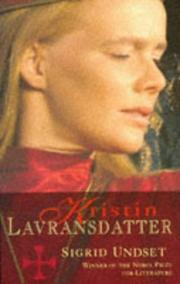 Sigrid Undset · 1920Kristin LavransdatterLvl 6Slow burn
 Bjørnstjerne Bjørnson · 1857Synnøve SolbakkenLvl 3Medium pace
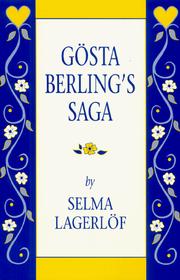 Selma Lagerlöf · 1891Gösta Berling's SagaLvl 6Medium pace