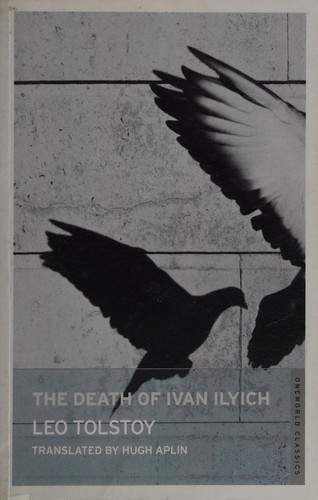
The Death of Ivan Ilyich
Leo Tolstoy · 1828–1910 · Russia
Originally Smert Ivana Ilyicha (Russian)
Why it matters
A judge who lived correctly discovers, dying, that he never lived at all. Eighty pages that outweigh most shelves: the essential story about mortality, and late Tolstoy's art at its most merciless and merciful.
At a glance
Short and lucid, though its relentless focus on dying demands sustained attention.
Deep dive
A respectable judge falls while hanging curtains in his new apartment, a bruise that shouldn't matter at all, and Tolstoy uses the slow unraveling that follows to ask what it would take for a perfectly ordinary life to turn out to have been wrong.
Written for readers who have finished the book. No plot recap, and nothing here is safe to read first.
Themes & symbolism
Tolstoy states his verdict on Ivan Ilyich's life in the novella's most quoted line before the story even properly begins: 'Ivan Ilyich's life had been most simple and most ordinary and therefore most terrible.' Every one of his career choices, his marriage, his furniture, has been selected for propriety and social advancement rather than any felt conviction, and the illness that follows his fall functions as an X-ray, revealing that a life optimized entirely for how it looks to other people has nothing underneath to fall back on once the audience stops mattering.
The people around Ivan Ilyich, his wife, his colleagues, his doctors, respond to his dying with an elaborate, mutually agreed-upon lie, the polite fiction that he is merely unwell rather than terminal, because acknowledging his death honestly would force everyone to acknowledge their own. Gerasim, the young peasant servant hired to empty his bedpan, is the only person who breaks the pattern, treating Ivan Ilyich's dying plainly, without euphemism, and even offering him physical comfort, holding his legs up for hours because it eases the pain, a simple honesty about mortality that the entire educated, propertied world around Ivan Ilyich has trained itself out of.
A Trivial Injury as the Story's Real Villain
Tolstoy is exact about the injury's triviality on purpose: Ivan Ilyich bumps his side against a window frame while adjusting curtains to prove, fussily, exactly how a fashionable room should look, an accident so minor nobody in the story, including him, initially thinks it worth mentioning. That the fatal illness traces back to a moment of pure decorative vanity is Tolstoy's bluntest joke at his protagonist's expense, and its disproportion to the suffering that follows is the point: death doesn't require a dramatic cause, only an ordinary body and time. Tolstoy wrote the novella in the years after his own religious crisis, when he had come to regard the comfortable, propertied life he shared with Ivan Ilyich's class as a form of slow self-deception, and the story reads as that crisis turned into fiction rather than argument.
The last seal: what actually happens, and why it lands the way it does.
The ending, explained
In his last days, doubled over in a black sack of pain his family insists on calling recovery, Ivan Ilyich finally allows himself the question he's spent his whole life avoiding: what if his entire respectable existence was wrong, not unlucky, but wrong, a life spent performing what was expected rather than living anything real? The recognition should be devastating, and instead it loosens something: he feels sudden pity for his wife and son standing at his bedside instead of resentment, and reaches, in his final hour, for forgiveness rather than justification. The pain that has organized his last months simply stops, replaced by light; his last audible words, meant as 'forgive me,' come out garbled as 'let me by,' and Tolstoy renders his actual death not as horror but as a kind of arrival, the terror gone the moment the honesty he'd avoided his whole life finally caught up with him.