
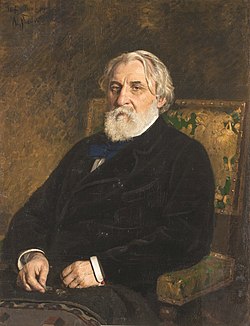
Ivan Turgenev
Russia
Unhurried and elegiac, a cultivated melancholy that never raises its voice, watching characters' hopes come undone with tenderness rather than judgment.
Turgenev's mother ran her serf-owning estate with casual cruelty, and his early sketches of peasant life were later credited with hardening opinion toward emancipation. He spent most of his adult life following the opera singer Pauline Viardot across Europe, a devotion that never became a marriage and left him permanently between two worlds: Russian by subject, French by address.
Fathers and Sons drew fire from both left and right on publication, radicals feeling mocked, conservatives feeling humored, which suited a writer allergic to certainty of any kind. He quarreled bitterly with Dostoevsky and, for years, with Tolstoy, and wrote First Love, his most perfect novella, out of the same wistful, self-implicating distance he brought to everything: the ache of watching desire happen to someone else.
Lines of influence
Their books in the atlas
- 1852
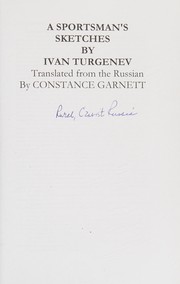 A Sportsman's SketchesLvl 3short story collection
 - 1856
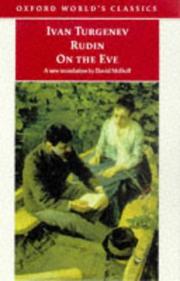 RudinLvl 3psychological novel
 - 1860
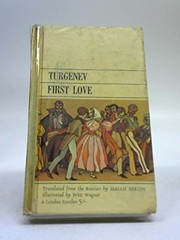 First LoveLvl 3bildungsroman
 - 1860
 On the EveLvl 3psychological novel
 - 1862
 Fathers and SonsLvl 3psychological novel
 - 1867
 SmokeLvl 4psychological novel
Meanwhile, elsewhere
 1802–1885Victor HugoFranceWestern Europe · France
 1811–1896Harriet Beecher StoweUnited StatesNorth America · United States
 1815–1882Anthony TrollopeEnglandWestern Europe · England
 1819–1898Theodor FontaneGermanyWestern Europe · Germany
 1819–1890Gottfried KellerSwitzerlandWestern Europe · Switzerland
 1819–1891Herman MelvilleUSANorth America · USA
If you like Turgenev, try
 1809–1852Nikolai GogolUkraine / Russiashaped Turgenev · shared movement: The Russian Golden Age · both shaped by Pushkin
 1799–1837Alexander PushkinRussiashaped Turgenev · shared movement: The Russian Golden Age · both write in Russian
 1828–1910Leo TolstoyRussiashared movement: The Russian Golden Age · both shaped by Pushkin · kindred genres: psychological novel, family saga
 1814–1841Mikhail LermontovRussiashared movement: The Russian Golden Age · both shaped by Pushkin · kindred genres: psychological novel, short story collection
 1880–1934Andrei BelyRussiaboth shaped by Gogol · kindred genres: psychological novel, political novel · both write in Russian
 1843–1916Henry JamesUSA / Englandshaped by Turgenev · kindred genres: psychological novel, bildungsroman