War and Peace
Leo Tolstoy · 1828–1910 · Russia
Originally Voyna i Mir (Russian)
Why it matters
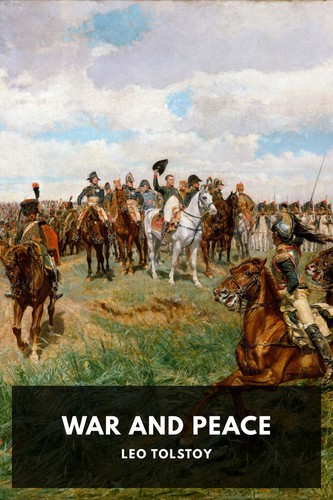
Napoleon invades Russia and five families live through it: battle, ballroom, birth, and death rendered with a clarity no novelist has matched. Less a book than a second life; the standard against which 'epic' is measured.
At a glance
Hundreds of characters, French-language passages, and essayistic digressions on history and free will.
Deep dive
Whether history is made by great men issuing orders or by millions of small wills nobody controls, argued through a Russian aristocracy dancing, fighting, and philosophizing its way through the Napoleonic Wars.
Written for readers who have finished the book. No plot recap, and nothing here is safe to read first.
Themes & symbolism
Tolstoy builds two Napoleons: the one the world reveres as a chess master moving armies by will, and the one his novel actually shows, a small, overheated man who believes his own legend and is far less in control of Borodino than the battle's outcome. Kutuzov, dismissed by his own staff as a passive old man, is the novel's real hero of history precisely because he understands that no general commands events — he reads the army's mood, refuses unnecessary battles, and lets the French destroy themselves retreating through winter they were never prepared for. The title's Russian pun matters: mir means both peace and a whole community bound together, so the novel keeps insisting that its ballrooms, estates, and family dinners are not a break from the real subject but the thing war interrupts and threatens.
Pierre's arc supplies the book's spiritual center: he tries Freemasonry, philanthropic estate reform, and Napoleon-worship before a French firing squad and captivity teach him what none of his reading could, embodied in Platon Karataev, the peasant prisoner whose wordless, present-tense acceptance of whatever happens to him — hunger, cold, his own death — models a wisdom Pierre's intellect had been straining toward all along. Andrei's parallel education runs through the vast, indifferent sky at Austerlitz, which shrinks his Napoleonic ambition to nothing, and later through a slow, forgiving death from his Borodino wounds that finally lets him release his grudge against Natasha. Both men's plots converge on the same argument: meaning isn't achieved by grasping for it but by surrendering the illusion that you were ever steering.
The Historian's Digressions
Tolstoy periodically halts the narrative outright to argue, in his own essayistic voice, against the 'great man' theory of history — insisting that battles are won or lost by the aggregate morale of thousands of unrecorded soldiers, not by a commander's genius, and that historians who credit Napoleon or Alexander with events are mistaking effect for cause. The second epilogue abandons plot entirely to press this argument at length, proposing a kind of historical determinism where free will operates only at the scale of the individual life, never at the scale of nations. Readers have argued for a century about whether this makes the novel a treatise wearing fiction's clothes; Tolstoy clearly thought the digressions and the story were making one continuous argument, not two separate books stapled together.
The last seal: what actually happens, and why it lands the way it does.
The ending, explained
The epilogue settles Pierre and Natasha into marriage and unglamorous domestic life — she's traded her girlish radiance for absorbed, unfashionable motherhood, he for a happy, argumentative household — alongside Nikolai Rostov's parallel marriage to Marya Bolkonskaya, a quieter match built on practical devotion rather than romantic fire. Tolstoy poses this deliberately against the war years' idealized passions: real peace, it turns out, looks domestic and slightly unglamorous rather than heroic. The second epilogue then drops story altogether to argue that history is an aggregate of innumerable small wills, not the property of commanders — the same lesson Pierre and Andrei each learned in their own bodies now generalized into the novel's closing thesis.