
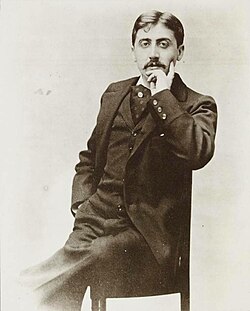
Marcel Proust
France
Long, winding, subordinate-clause sentences that follow a thought to its farthest edge: reading time itself dilating to match the mind's associations.
Proust suffered from asthma so severe that he built his adult life around avoiding it: lining his bedroom on the boulevard Haussmann with cork against noise and dust, sleeping by day, and receiving Paris's most fashionable salons only by letter. He spent his twenties and thirties as a society dilettante before starting, around 1908, the novel that would consume the rest of his life.
Swann's Way was rejected by several publishers, including André Gide at the Nouvelle Revue Française, who later called the refusal the greatest regret of his editorial career; Proust paid to print it himself in 1913. He kept revising and extending the cycle through the First World War, won the Prix Goncourt for its third volume in 1919, and died in 1922 of pneumonia, still correcting proofs of installments published after his death.
Lines of influence
Their books in the atlas
- 1913
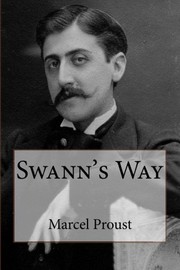 Swann's WayLvl 8modernist
 - 1919
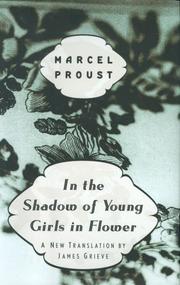 In the Shadow of Young Girls in FlowerLvl 9modernist
 - 1920
 The Guermantes WayLvl 9modernist
 - 1921
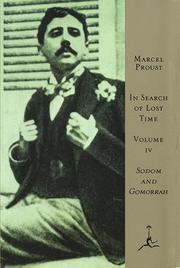 Sodom and GomorrahLvl 9modernist
 - 1923
 The PrisonerLvl 9modernist
 - 1925
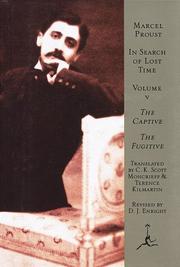 The FugitiveLvl 8modernist
 - 1927
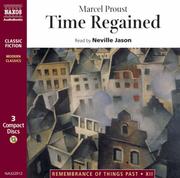 Time RegainedLvl 9modernist
Meanwhile, elsewhere
 1870–1953Ivan BuninRussiaRussia & Eastern Europe · Russia
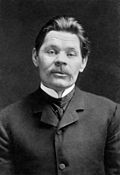 1868–1936Maxim GorkyRussiaRussia & Eastern Europe · Russia
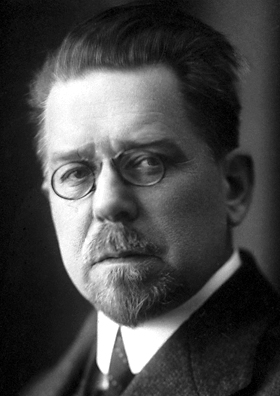 1867–1925Władysław ReymontPolandRussia & Eastern Europe · Poland
 1862–1937Edith WhartonUSANorth America · USA
 1871–1945Theodore DreiserUnited StatesNorth America · United States
 1862–1922Ōgai MoriJapanEast Asia · Japan
If you like Proust, try
 1821–1880Gustave FlaubertFranceshaped Proust · both shaped by Balzac · both shaped Ernaux
 1882–1941Virginia WoolfEnglandshaped by Proust · shared movement: High Modernism · kindred genres: modernist, psychological novel
 1900–1976Eyvind JohnsonSwedenshaped by Proust · shared movement: High Modernism · kindred genres: modernist
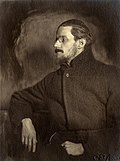 1882–1941James JoyceIrelandshared movement: High Modernism · both shaped by Flaubert · both shaped Woolf
 b. 1940Annie ErnauxFranceshaped by Proust · both shaped by Flaubert · both write in French
 1873–1939Ford Madox FordEnglandshared movement: High Modernism · both shaped by Flaubert · kindred genres: modernist, psychological novel