
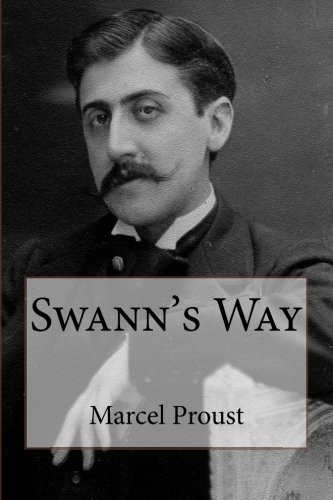
Swann's Way
Marcel Proust · 1871–1922 · France
Originally Du côté de chez Swann (French)
Why it matters
The gateway to In Search of Lost Time: the madeleine, Combray, and Swann's anatomized jealousy. Rejected by publishers (Proust paid for printing), it opens the twentieth century's supreme novel: memory itself made architecture.
At a glance
Extremely long sentences and minute introspective analysis of memory and sensation.
Deep dive
Why a volume with no plot to speak of already contains the whole method — a madeleine, a goodnight kiss, and a stranger's jealousy standing in for everything the next six books will do at scale.
Written for readers who have finished the book. No plot recap, and nothing here is safe to read first.
Themes & symbolism
The madeleine is the whole novel's method compressed into one scene: the narrator's willed attempts to remember Combray produce nothing, and it's an accident of taste — cake soaked in tea — that resurrects the entire lost town, complete and whole, in a way no deliberate effort could. That distinction between voluntary and involuntary memory isn't a passing observation; it's the architectural principle Proust will build seven volumes on. The past isn't gone, this scene argues, it's stored below consciousness, waiting for the right sensory key, and a novel can be built entirely out of the search for those keys.
The child's nightly agony over his mother's goodnight kiss looks like a minor domestic episode, but it's the book's true opening wound: love here is already inseparable from anxiety, absence, and the fear of not being loved enough, long before Swann's affair with Odette gives that anxiety its adult, ruinous form. "Un Amour de Swann" then works as a diagnostic flash-forward — years before the narrator was born, an older man suffers the exact structure of desire the boy is only beginning to learn, proving that jealousy in this novel is never really about the beloved. Odette barely needs to do anything; Swann's mind manufactures her betrayals for her, out of a phrase of music, a lit window, a lie half-believed. Love, Proust suggests, is a machine for generating your own suffering, and the person you love is almost incidental to it.
The Two Ways
Combray splits, for the boy, into two walking routes — the Méséglise way past Swann's house, and the Guermantes way toward the aristocratic château — and they harden into opposed poles of his imagination: sensual awakening and rustic nature on one side, noble lineage and inaccessible beauty on the other. He believes, as children do, that the two ways are permanently separate, incompatible; part of the wider novel's slow revelation (well beyond this volume) will be discovering they were always secretly connected. Place names carry this same disproportion throughout the book — "Guermantes," "Balbec," "Venice" swell in the boy's mind into whole imagined worlds, richer than any place could actually be, so that the entire final section is essentially a meditation on the gap between the name and the thing, anticipation and encounter, which will recur every time the adult narrator finally visits somewhere he has only dreamed of.
Where to go next
 Marcel Proust · 1919In the Shadow of Young Girls in FlowerLvl 9Slow burn
 Marcel Proust · 1920The Guermantes WayLvl 9Slow burn
 Marcel Proust · 1921Sodom and GomorrahLvl 9Slow burn
 Marcel Proust · 1923The PrisonerLvl 9Slow burn
 Marcel Proust · 1925The FugitiveLvl 8Slow burn
 Marcel Proust · 1927Time RegainedLvl 9Slow burn