
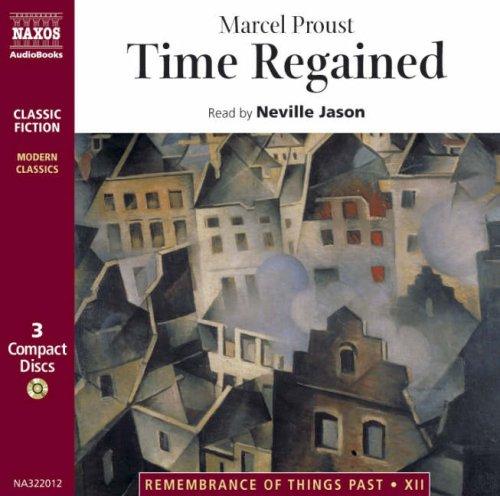
Time Regained
Marcel Proust · 1871–1922 · France
Originally Le Temps retrouvé (French)
Why it matters
Decades on, a tripped paving stone unlocks the same involuntary memory as the madeleine, and the narrator finally grasps that the novel he's lived is the one he must now sit down to write. The cathedral's capstone: art redeeming lost time.
At a glance
A long closing meditation on memory and art demands the whole cycle held in mind at once.
Deep dive
A tripped paving stone in a courtyard sets off the same buried memory the madeleine did decades earlier, and the narrator finally understands what the whole preceding cycle was for.
Written for readers who have finished the book. No plot recap, and nothing here is safe to read first.
Themes & symbolism
The uneven paving stone that trips the narrator on his way into the Prince de Guermantes's courtyard triggers an involuntary memory of Venice with the same force the madeleine once summoned Combray, and Proust deliberately rhymes the two scenes across seven volumes: a starched napkin, the clink of a spoon against a plate, and a book glimpsed on a shelf each detonate further buried recollections in the same afternoon, until the accumulation finally convinces the narrator that these moments, not deliberate memory, are the actual material a novel could be built from. He has spent the whole cycle doubting his own vocation as a writer, and this cascade arrives as something close to a verdict handed down by his own nervous system rather than a decision he talks himself into.
Inside the party, everyone the narrator once knew has aged past recognition, faces powdered and stooped in a way he first mistakes for a costume, an elaborate joke about disguise, before realizing the disguise is simply time itself, applied slowly enough that no single day of it was visible. Proust stages abstraction as literal social comedy, the novel's whole hidden subject suddenly made visible on actual bodies gathered in a single room, grotesque and moving at once, old rivals and old loves reduced to the same slack, unfamiliar faces.
Charlus in Wartime Paris
The Baron de Charlus, seen wandering wartime Paris during air raids, has declined into something both pitiable and exposed: his masochistic visits to a male brothel that Jupien now runs are glimpsed by the narrator directly, chains and a barred room among the furnishings, and his open Germanophile sympathies, spoken indiscreetly at a moment when patriotism has become the era's one mandatory performance, finish off what remains of his social standing. The Verdurins, meanwhile, prosper through opportunistic wartime hosting, their salon busier than ever, proving that the aristocracy's moral bankruptcy survives into a national emergency more or less fully intact.
A Granddaughter Who Is the Whole Novel's Argument
Mademoiselle de Saint-Loup, daughter of Gilberte and Robert, arrives at the party as a living fact the narrator can only marvel at: in her, the Méséglise way and the Guermantes way, opposite poles of his childhood imagination in Swann's Way, are literally, biologically united, a single girl carrying both bloodlines the boy once thought could never touch, standing in front of him as proof that his own oldest private mythology has quietly become a fact of the world.
The last seal: what actually happens, and why it lands the way it does.
The ending, explained
Watching the aged, unrecognizable guests, the narrator understands that his own body carries the same erosion, and that only a book, built out of exactly the kind of involuntary memory the paving stone just supplied, could rescue any of this from simply vanishing with him. The novel ends on his resolve to begin writing, against the pressure of his own failing health and limited remaining time, the very book the reader has just finished, seven volumes folding shut into the single moment their author finally decides to start.
Where to go next
 Marcel Proust · 1913Swann's WayLvl 8Slow burn
 Marcel Proust · 1919In the Shadow of Young Girls in FlowerLvl 9Slow burn
 Marcel Proust · 1920The Guermantes WayLvl 9Slow burn
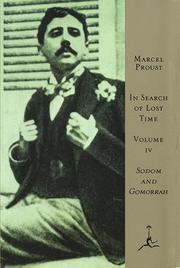 Marcel Proust · 1921Sodom and GomorrahLvl 9Slow burn
 Marcel Proust · 1923The PrisonerLvl 9Slow burn
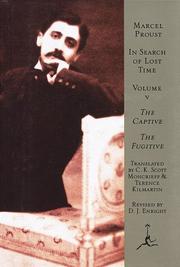 Marcel Proust · 1925The FugitiveLvl 8Slow burn