
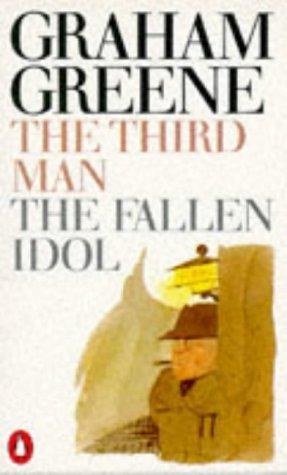
The Third Man
Graham Greene · 1904–1991 · England
Why it matters
A pulp novelist arrives in bombed-out, four-power Vienna to find his old friend supposedly dead and the black market running the city. Greene's screenplay-turned-novella distills noir atmosphere into a twist that still lands.
At a glance
Short and plot-driven, written in the same lean style as the film's screenplay.
Deep dive
Postwar Vienna's black market for penicillin turns a missing-persons investigation into the discovery that the friend being searched for is the one profiting from it.
Written for readers who have finished the book. No plot recap, and nothing here is safe to read first.
Themes & symbolism
Greene sets the story in Vienna carved into four occupation zones, British, American, French, and Soviet, with a neutral International Zone patrolled by a different power each month, and builds his plot around a crime specific to that ruined city, penicillin stolen from military hospitals, diluted to stretch supply, and resold on the black market, injuring and killing the children it's meant to cure. Harry Lime, the charming friend Rollo Martins has crossed Europe to see, turns out to be running exactly this racket, and Greene refuses to let his charm cancel out what dilution does to a ward full of meningitis patients; the reader is asked to hold both facts about Harry at once rather than resolve them into a simple villain.
Rollo Martins writes pulp Westerns under the name Buck Dexter and arrives in Vienna trying to read the city the way he'd read a plot, expecting clear heroes and a solvable mystery, and Greene keeps undercutting him for it, most pointedly by handing the actual narration to Calloway, the British military policeman investigating Harry, rather than to Rollo. Calloway's flat, procedural voice, correcting Rollo's romantic assumptions at nearly every turn, makes the novella an argument about genre itself, that the tidy detective story Rollo wants to be living inside cannot survive contact with occupied Vienna's actual moral arithmetic.
The Cuckoo Clock Welles Wrote Himself
The Prater Ferris wheel speech, where Harry looks down at the tiny figures below and asks Rollo whether he'd really feel pity if one of those dots stopped moving, and goes on to compare Italy's centuries of bloodshed and its Michelangelo against Switzerland's five hundred years of peace and its cuckoo clock, is the line most readers remember from the film, and Orson Welles wrote it himself on set, not Greene. Greene's novella, published to accompany the screenplay rather than to compete with it, carries the same rationalization in blunter form without that particular flourish, a reminder that the story's most quotable cynicism belongs to its actor as much as its author.
Anna's Silence at the Second Funeral
Anna Schmidt, Harry's lover and a Czech refugee facing deportation to Soviet-controlled territory, never stops loving him even after Rollo shows her the hospital ward Harry's penicillin ruined, and Greene never fully explains that loyalty away as naivety. She uses Harry's forged papers to survive and owes him a debt Rollo cannot outbid with sincerity, and her refusal to reward Rollo's help with anything like romance is the novella's clearest sign that decency, in this particular Vienna, does not get paid back in the currency it's offered.
The last seal: what actually happens, and why it lands the way it does.
The ending, explained
Calloway lures Harry into Vienna's sewer system to arrest him, and Rollo, agreeing to help despite his loyalty to his old friend, is given a gun and a chance to end the chase himself rather than let Harry hang for the deaths his racket caused; Harry, cornered and shot, dies in the tunnels beneath the city he's been draining of medicine. At the reburial that follows, this time in Harry's real grave rather than the staged one that opened the investigation, Rollo waits for Anna to acknowledge him. She walks past without a glance, unwilling to trade one man's memory for another man's company, and Greene ends the novella on that refusal rather than on any reward for Rollo's help.
Where to go next
 Graham Greene · 1938Brighton RockLvl 5Fast paced
 Graham Greene · 1940The Power and the GloryLvl 5Medium pace
 Graham Greene · 1951The End of the AffairLvl 5Medium pace
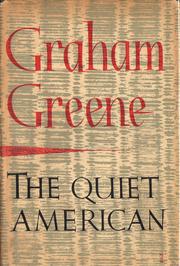 Graham Greene · 1955The Quiet AmericanLvl 5Medium pace
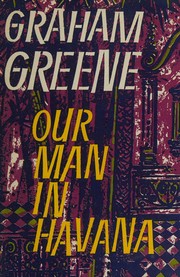 Graham Greene · 1958Our Man in HavanaLvl 4Fast paced
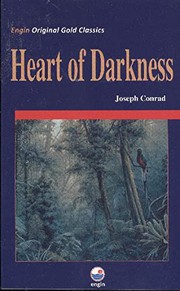 Joseph Conrad · 1899Heart of DarknessLvl 7Slow burn