
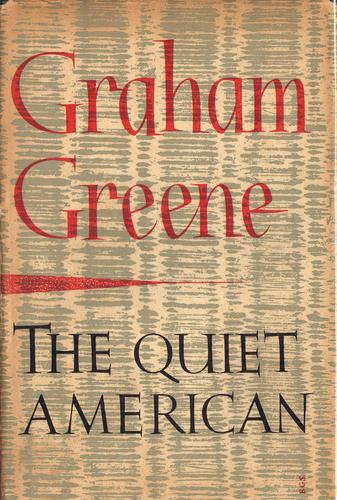
The Quiet American
Graham Greene · 1904–1991 · England
Why it matters
An idealistic American aid worker and a jaded British journalist compete for a Vietnamese woman as Saigon slides toward war. Greene's prophetic indictment of American innocence abroad, written years before the war it foresaw began in earnest.
At a glance
Cool, ironic prose masks a dense moral and political argument beneath a spare thriller plot.
Deep dive
An idealistic young American's textbook theory about Vietnamese democracy collides with the maimed bodies in a Saigon square, and a cynical British journalist has to decide what his own neutrality is actually worth.
Written for readers who have finished the book. No plot recap, and nothing here is safe to read first.
Themes & symbolism
Alden Pyle arrives in early-1950s Saigon armed with York Harding's theory of a democratic Third Force, neither French colonialism nor communism, and puts that theory into practice by supplying plastic explosives to the renegade General The for a bombing staged in a crowded square and blamed on the Communists. Greene based the scene on a real 1952 bombing he witnessed in Saigon, and he refuses Pyle the comfort of good intentions mattering, staging the aftermath, a legless torso, a mutilated child, in specific enough physical detail that Pyle's abstract theory of a better Vietnam has to answer directly to it, years before America's own war there made the critique impossible to ignore.
Thomas Fowler insists throughout that he's not engage, a journalist reporting rather than intervening, and Greene builds the whole novel around exposing that claimed neutrality as itself a moral position, one Fowler abandons the moment his own jealousy over Phuong gets entangled with his horror at Pyle's bombing. Phuong herself, courted by both men, gets offered permanence by the earnest Pyle and casual, semi-permanent arrangement by the already-married Fowler, and Greene keeps her interior life almost entirely offstage, a choice that's been read both as the novel's central flaw and as a deliberate indictment of how completely both men, for all their differences, treat her as a country to be won rather than a person to be asked.
A Novel Read as Anti-American Before America's War Began
Published in 1955, years before large-scale American involvement in Vietnam, the novel was widely read on publication as an attack on American foreign policy, and the 1958 Hollywood film adaptation altered the plot specifically to soften that reading, reworking Pyle into someone closer to a hero and undercutting the very critique Greene had built the book around. Greene's own years as a journalist covering the French Indochina War gave the novel's Saigon its density of specific, lived detail, and later American readers who lived through the actual war have often found Pyle's earnest, catastrophic idealism less like satire and more like prophecy.
The last seal: what actually happens, and why it lands the way it does.
The ending, explained
Fowler, unable to stop Pyle's operations through argument and unwilling to watch more bombings staged in his name, passes information to the Communist contact Mr. Heng that leads directly to Pyle's death, an act he never fully admits to himself as a moral choice rather than a jealous one. Phuong returns to him once Pyle is gone, and a letter arrives from his estranged wife back in England finally agreeing to a divorce he'd assumed she would never grant, so Fowler ends the novel getting everything he wanted, the woman, the freedom, the war reported rather than fought. Greene lets that ending curdle rather than satisfy: Fowler's last thought is a wish that there were someone left to whom he could say he was sorry, since the one man who might have understood the apology is the one he helped remove.
Where to go next
 Graham Greene · 1938Brighton RockLvl 5Fast paced
 Graham Greene · 1940The Power and the GloryLvl 5Medium pace
 Graham Greene · 1950The Third ManLvl 3Fast paced
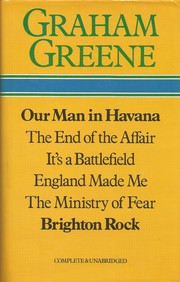 Graham Greene · 1951The End of the AffairLvl 5Medium pace
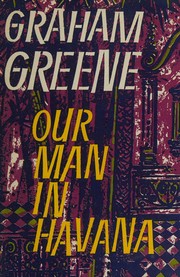 Graham Greene · 1958Our Man in HavanaLvl 4Fast paced
 Joseph Conrad · 1899Heart of DarknessLvl 7Slow burn