
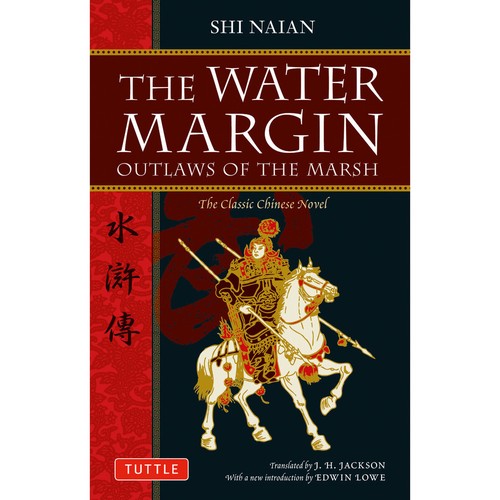
Water Margin
Shi Nai'an · 1296–1372 · China
Originally Shuihu Zhuan (Chinese)
Why it matters
108 outlaws, driven from society by corrupt officials, band together at a marsh stronghold in a sprawling epic of brotherhood and rebellion. One of the Four Great Classical Novels, and the ancestor of Chinese martial fiction.
At a glance
Enormous cast and episodic classical-vernacular structure spanning generations of outlaws.
Deep dive
Why a band of outlaws whose whole identity is built on defying corrupt officials keeps steering itself back toward serving the very empire that wronged them — the ambivalence readers have argued over for centuries.
Written for readers who have finished the book. No plot recap, and nothing here is safe to read first.
Themes & symbolism
The novel's foundational move is to make outlawry the moral high ground: every major figure at Liangshan arrives there because a corrupt official, a false accusation, or a rigged system left honorable conduct impossible within respectable society. Lin Chong, a skilled instructor destroyed by a superior's scheme to steal his wife, and Wu Song, whose bare-handed tiger kill and later vengeance for his murdered brother both mark him as a man of real virtue failed by official justice, are typical rather than exceptional — the book insists, case after case, that the empire's own corruption is what manufactures its rebels. The marsh stronghold becomes a rough utopia built on loyalty and brotherhood as an explicit substitute for the failed official order, and the novel is careful throughout to direct its outlaws' anger at corrupt officials and local tyrants specifically, never at the emperor or the imperial institution itself — a distinction that keeps the rebellion contained rather than revolutionary.
Song Jiang's leadership crystallizes what the brotherhood values: he is not the strongest fighter among the 108, but his reputation for personal loyalty, generosity, and righteousness makes him the figure the others will follow, which tells you the novel's real hierarchy is moral and social rather than martial. That same reputation, though, is what eventually steers the group toward the amnesty and back into imperial service — Song Jiang's virtues are exactly the ones a state built on hierarchy and obligation can still appeal to, even after that state has already failed every one of these men once.
Episodic Backstories and the Novel's Shape
Much of the book's length comes from self-contained chapters following individual outlaws' grievances and adventures before they ever reach Liangshan, a structure that builds the brotherhood's moral case one biography at a time rather than through a single continuous plot. That episodic looseness, alongside the novel's constant hand-to-hand combat and its cast of morally clear-cut heroes and villains, is exactly what made it the direct ancestor of the entire wuxia martial-fiction tradition that followed it in Chinese popular culture. Individual chapters — Wu Song's tiger fight, Lin Chong's frame-up and exile — have circulated for centuries as freestanding stories in their own right, performed and adapted independently of the novel's larger arc, which says something about how loosely the whole is actually stitched together compared to how tightly each of its parts is constructed.
The last seal: what actually happens, and why it lands the way it does.
The ending, explained
Rather than remain outlaws indefinitely, the brotherhood accepts an imperial amnesty under Song Jiang's insistence on eventual loyal service — a choice that has divided readers ever since, since it trades the group's rebellious energy for reintegration into the very system that produced their grievances. Sent to fight foreign invaders and rebel forces on the state's behalf, the outlaws are killed off in overwhelming numbers during these campaigns, and Song Jiang himself is ultimately poisoned by suspicious court officials despite his loyalty. Unwilling to let his closest companion Li Kui survive to avenge him and cause fresh disorder, Song Jiang poisons Li Kui alongside himself. Loyal service to the empire finishes off the brotherhood as completely as continued rebellion might have — a bitterly ironic close that denies the ending any clean triumph.
Where to go next
 Luo Guanzhong · 1400Romance of the Three KingdomsLvl 8Fast paced
 Wu Cheng'en · 1592Journey to the WestLvl 6Fast paced
 Cao Xueqin · 1791Dream of the Red ChamberLvl 9Slow burn
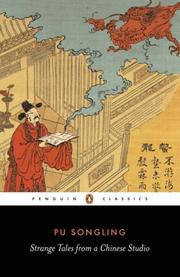 Pu Songling · 1766Strange Tales from a Chinese StudioLvl 5Fast paced
 Mo Yan · 1986Red SorghumLvl 7Fast paced
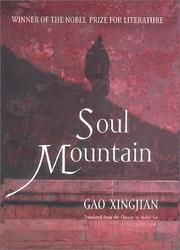 Gao Xingjian · 1990Soul MountainLvl 8Slow burn